251117 - Rare African wooden grave statue of a Bongo tribe - South Sudan.


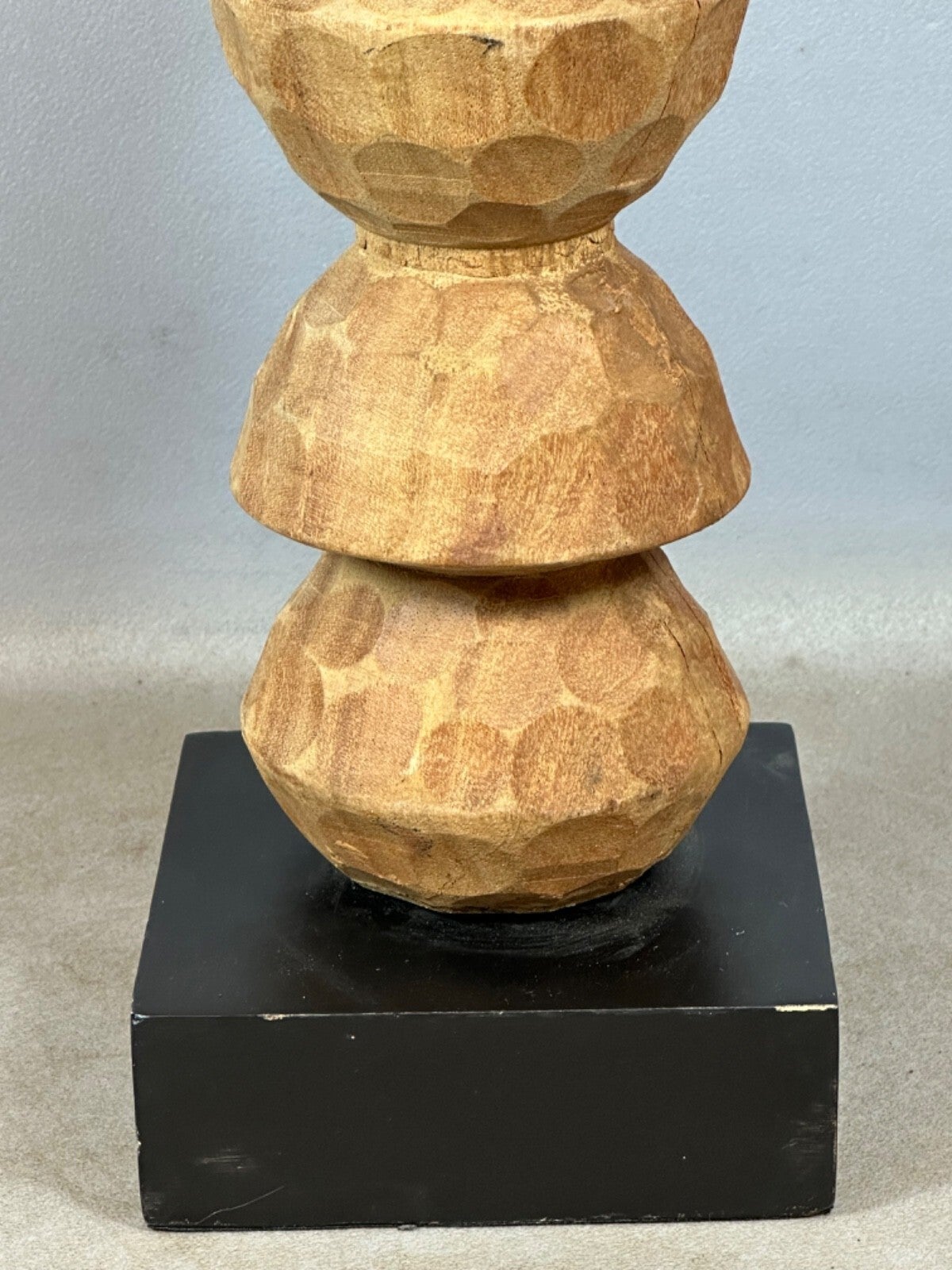


Tribal used African wooden grave statue of the Bongo tribe with stand - South Sudan.
Hand carved from a single piece of wood.
Dimensions: Height: 67 cm without the stand and 72 cm with the stand.
This Bongo statue is dated second half of the 20th century and comes with a certificate of Authenticity.
Provenance and history of the piece: This Bongo statue is collected in Longo, Sudan, Bahr El Ghazal province, nowadays South Sudan, Western Bahr El Ghazal province, by comboni father Elvio Gostoli.
A true, unquestionable masterpiece.
Since the 1970s, wooden Bongo funerary sculptures of male figures have been collected in Europe and described as important examples of African tribal art. These sculptures are rare and sporadically offered.
These large Bongo or Belanda sculptures originate from the Bongo people of southern Sudan. They were noted as early as the nineteenth century when travellers reported large carved grave or memorial stones placed above large stone graves. Carved figures on a plinth or abstracted pole-like sculptures surmounted by a carved head were at best idealized representations of the dead rather than portraits of a specific person. Among the large bongo sculptures, male elites, warriors, leaders or locally important figures were recognized and honored. Within a small enclosed grave, the large figurative sculptures formed part of scenes of smaller figures representing family members, while the abstracted pole-style of burial figures often has a ribbed neck, with each ridge thought to indicate a slain enemy or large animal. Created with a ceremony in which dishes of food were left at the place of grace, the figures and poles were also said to protect against sorcery.
The bongo sculptures associated with burial practices were carved from a tree trunk, the base of which was buried sixty to eighty centimetres in the ground. They were placed in front of or in the middle of a burial mound and surrounded by stones, each as much as three metres in diameter.These graves were located near villages and the figures on them were completely exposed to the weather. Because the villages in this region were moved when the ground was no longer suitable for cultivation, the older graves are now largely lost in the savannah, with no paths leading to them. The low density of the bongo population makes it impossible to find many of these graves unless the local population is actively involved. This fact explains why the pole at the base of the sculpture is sometimes cut off with a machete: the bongos, who respect their ancestors and their old graves, do not want to disturb the ground by removing the buried part of the sculpture.We must ask ourselves what factors have influenced these funerary sculptures over the years and what their longevity is. Carved from hard wood, the hardness and natural resistance of the wood have given these sculptures great durability. The greatest damage to the carvings is therefore caused by moisture, especially during the rainy season. Erosion usually starts in the heartwood and many of the sculptures become more or less hollow. Annual forest fires are another cause of destruction, as traces on some pieces show, but because the hard wood is difficult to burn, the sculptures are often only superficially charred.