260120 - Extremely Rare Antique end 18th, begin 19th cent - coptic wooden icon - Ethiopia.







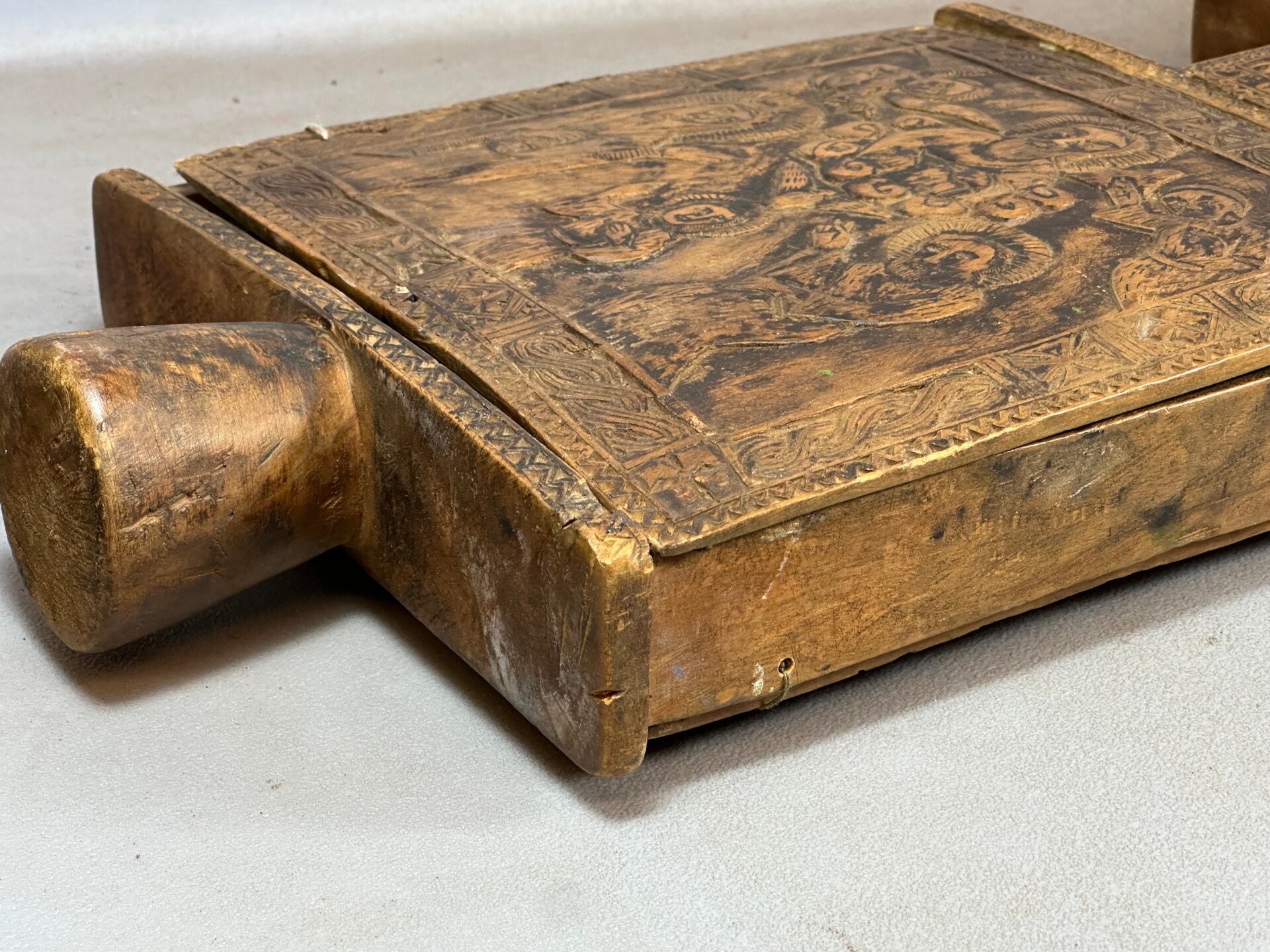
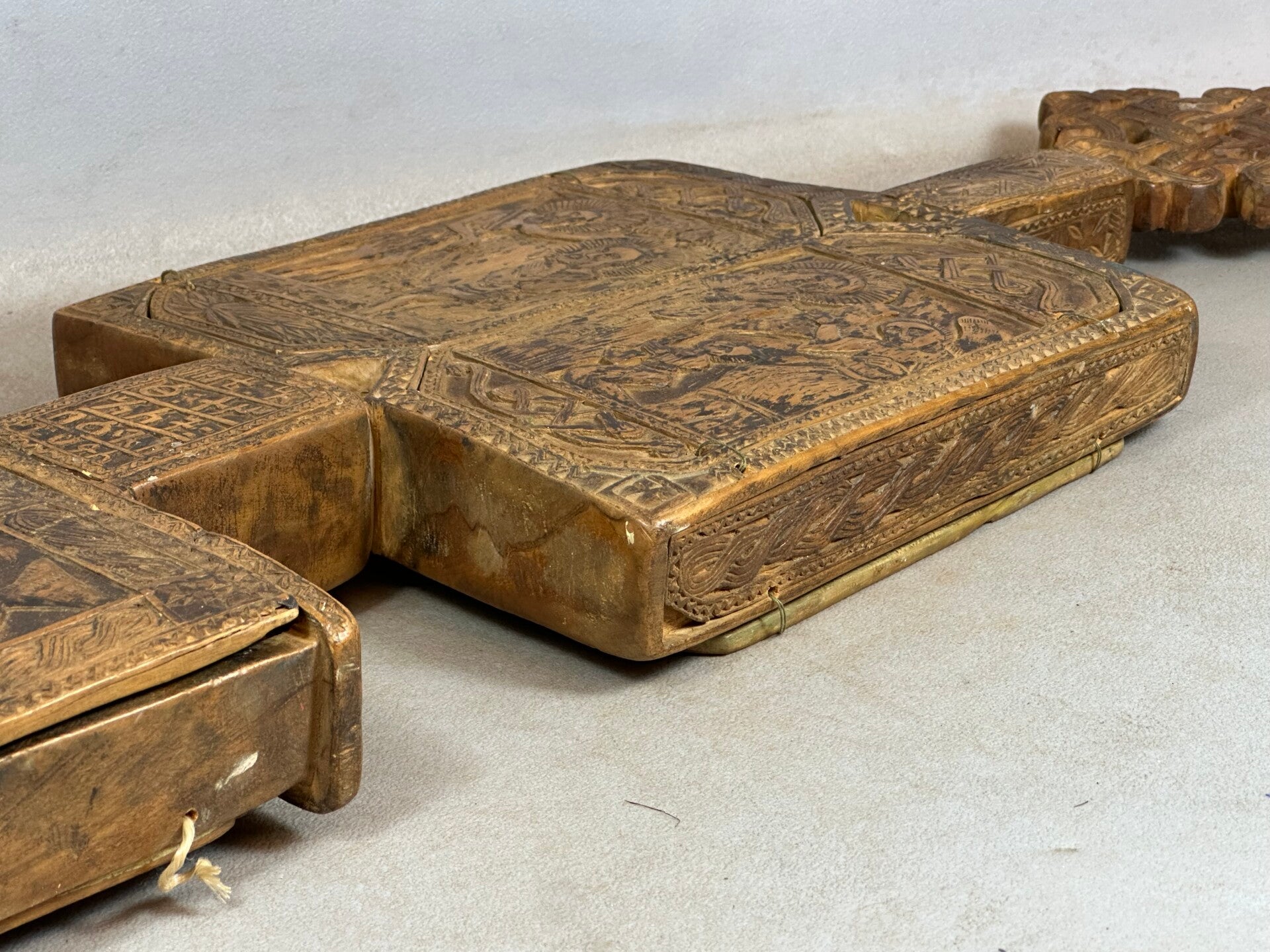
Extremely Rare Antique Ethiopian Coptic wooden icon from the orthodox coptic Church in Ethiopia.
Size: 84 cm x 42 cm when the icon is open.
Size: 84 cm x 22 cm when the icon are closed.
Dating: late 18th-early 19th century, from the Gondar school, Probably olive or fig wood, painted with tempera and natural pigments on gesso. This icon comes with a certificate of authenticity.
Due to age, the cords holding the shutters have deteriorated, and the shutters have become loose. You can reattach the shutters as you see fit, using the wire or rope that once held them in place.
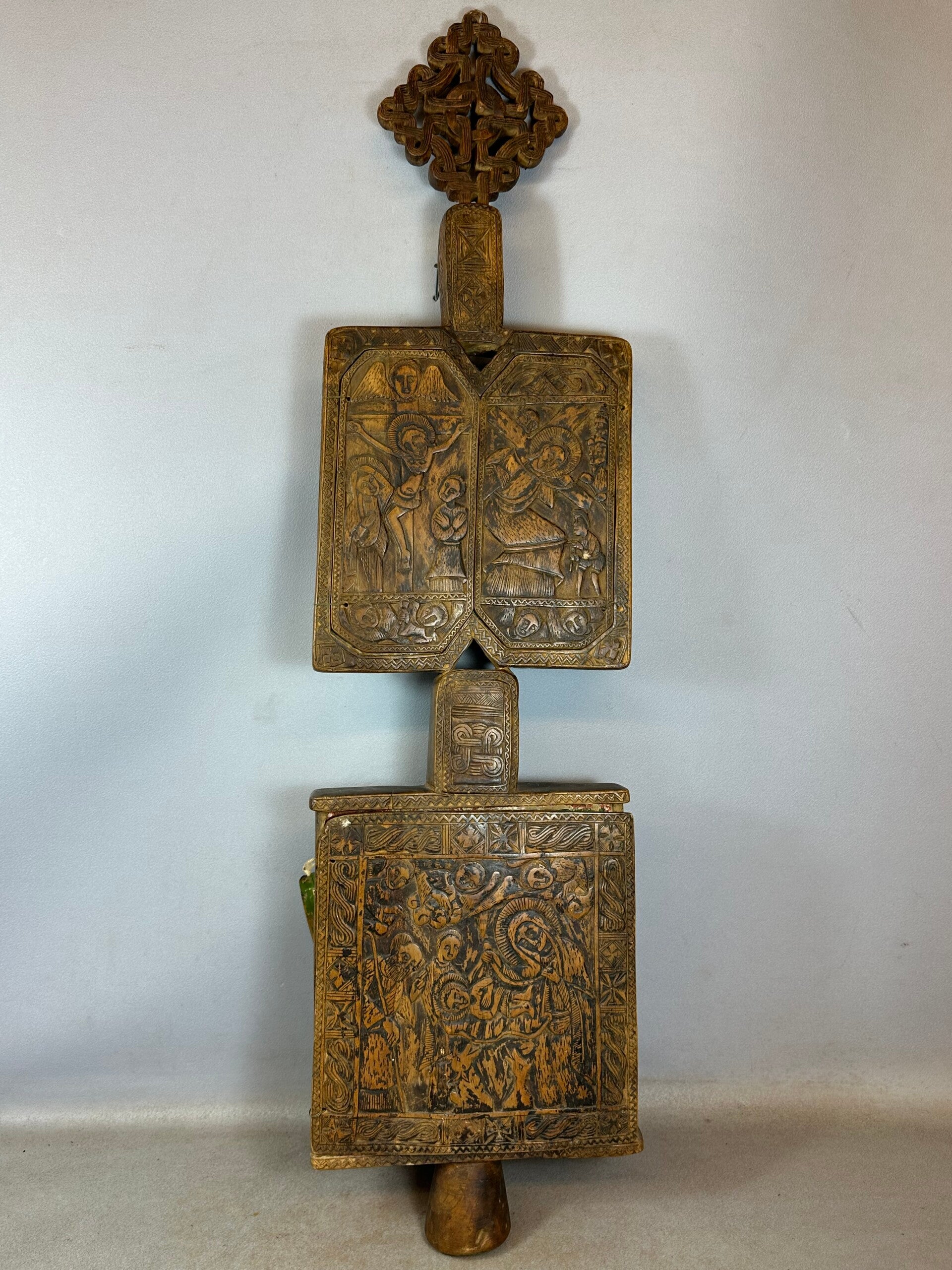
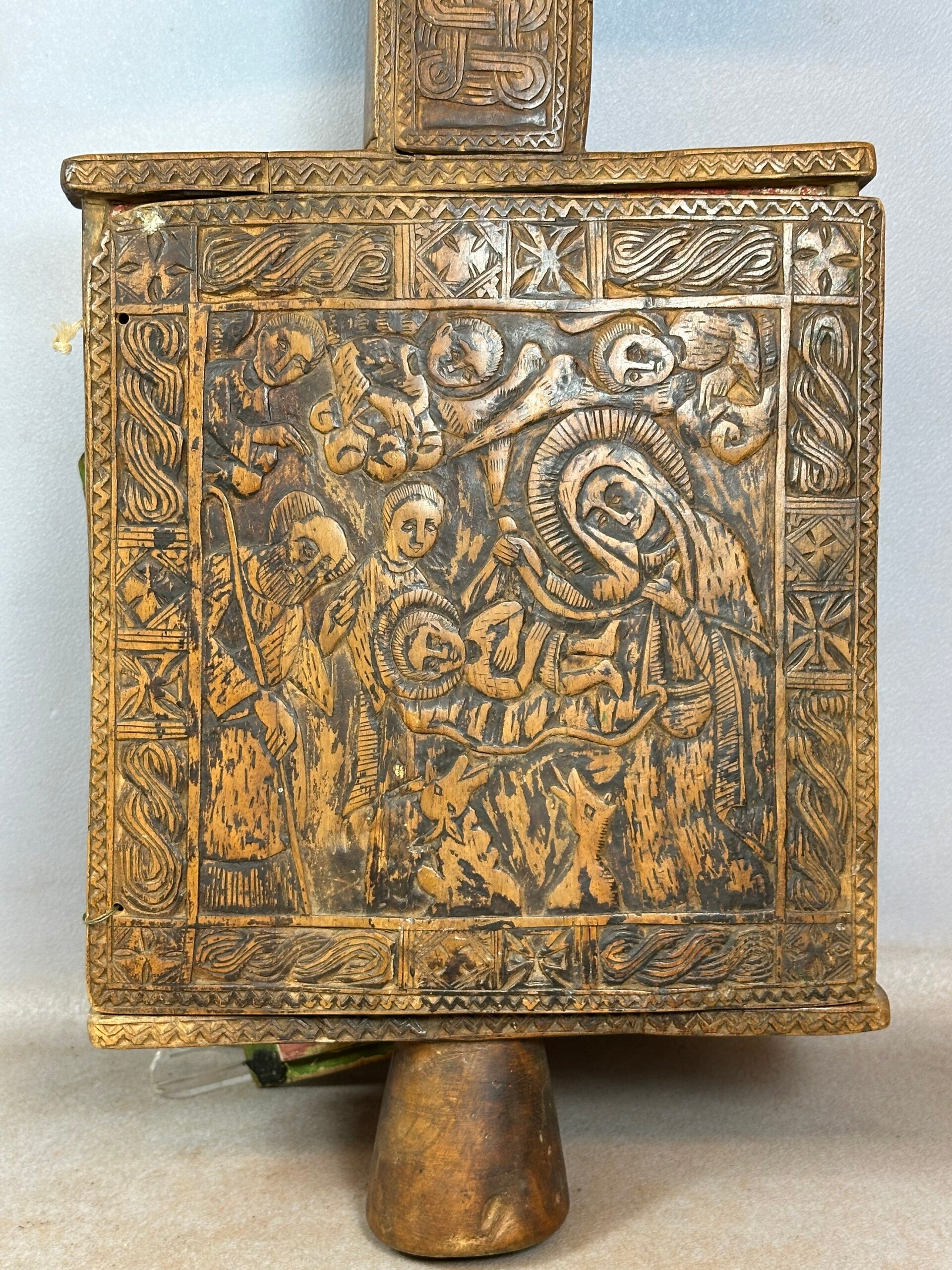
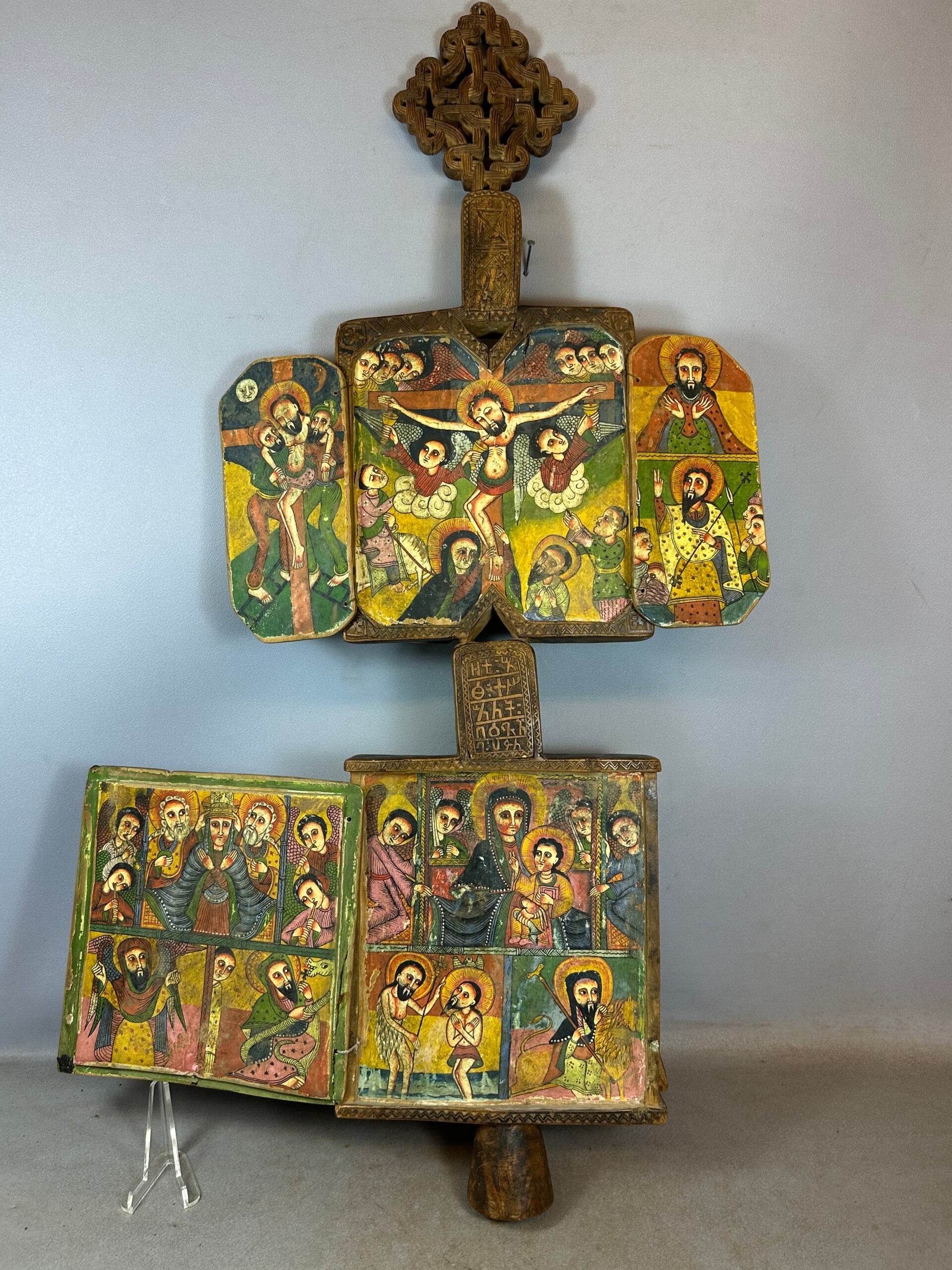
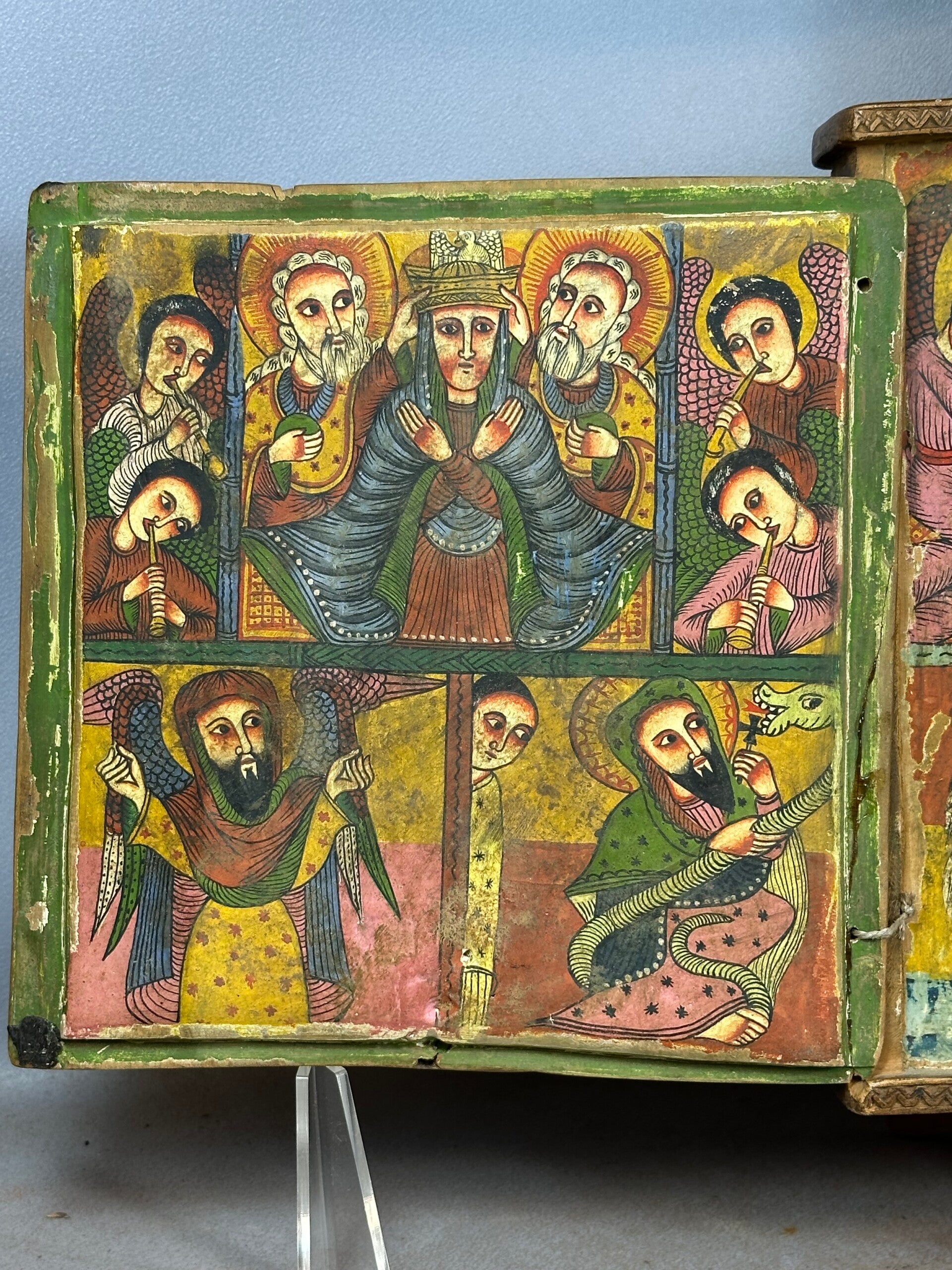
A large and relatively rare double-sided, winged processional icon (Ethiopian-Coptic tradition, so-called processional diptych), circa 18th–19th century, consisting of two painted, folding triptychs on wood (totaling approximately 75 cm high), crowned with a carved cross. The panels are painted in tempera and depict scenes from the life of Christ, the Virgin Mary, and the saints, in the typical colorful Gondar style. When closed, finely carved relief scenes are visible, with a short inscription in Ge'ez.
The style, form, and inscriptions are typical of the late Gondärine tradition (18th–19th century), used within the Ethiopian-Coptic Church for processions during religious holidays such as Timkat or Meskel. The exterior carvings and interior tempera paintings are iconographically related to pieces in the Institute of Ethiopian Studies (Addis Ababa) and to some examples in the British Museum and the V&A (London).
This icon is a large, double-sided, portable processional cross icon (sometimes called a "tabot icon") from Ethiopia, within the Coptic Orthodox tradition. The Ethiopian Church has been a daughter church of Alexandria since the 4th century. The wooden cross-shaped handle with an openwork top is typical of Ethiopian processional crosses. The double-sided paintings with hinged wings are intended for liturgical processions: the icon could be closed, opened, or turned depending on the feast or context.
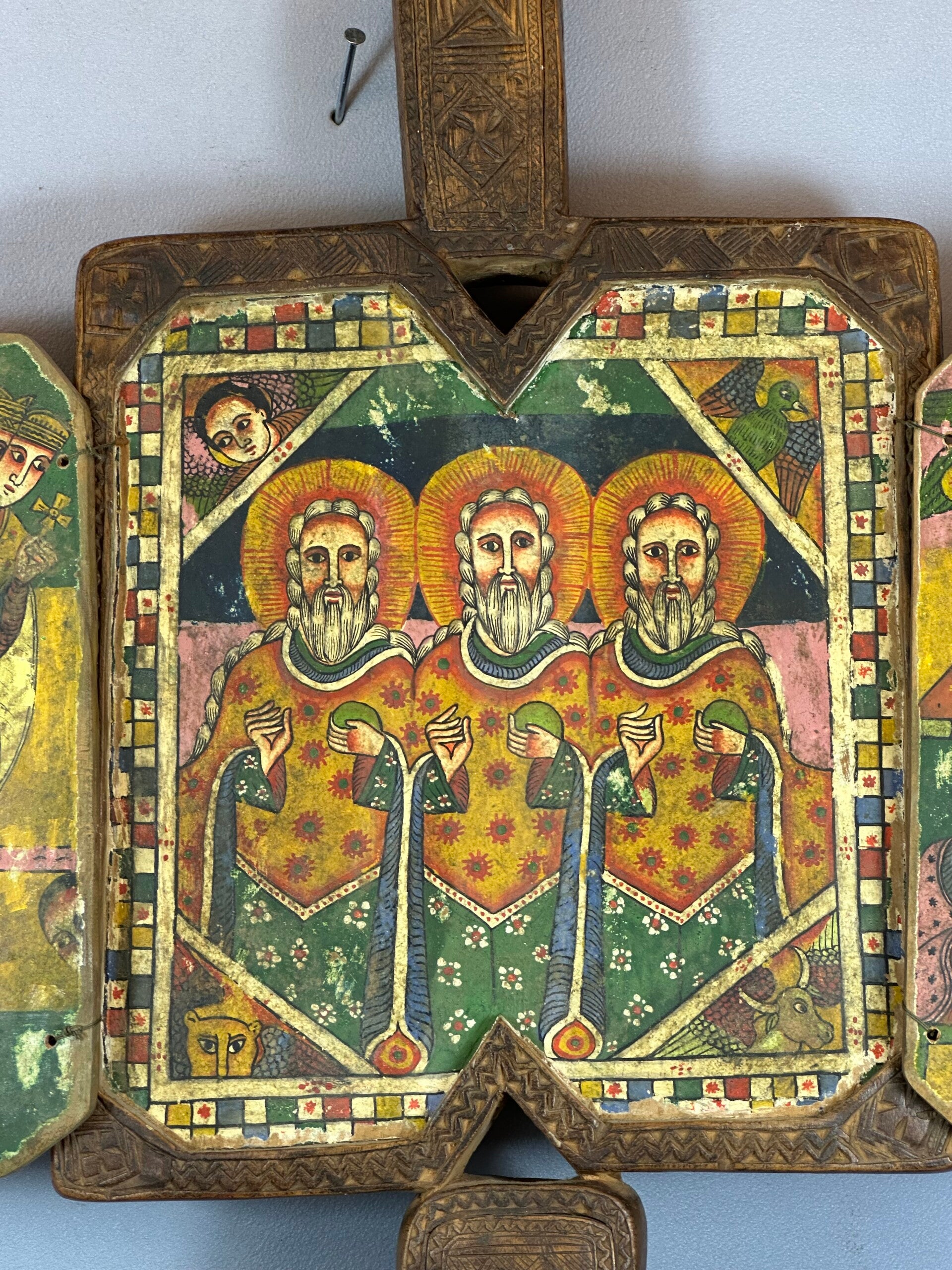
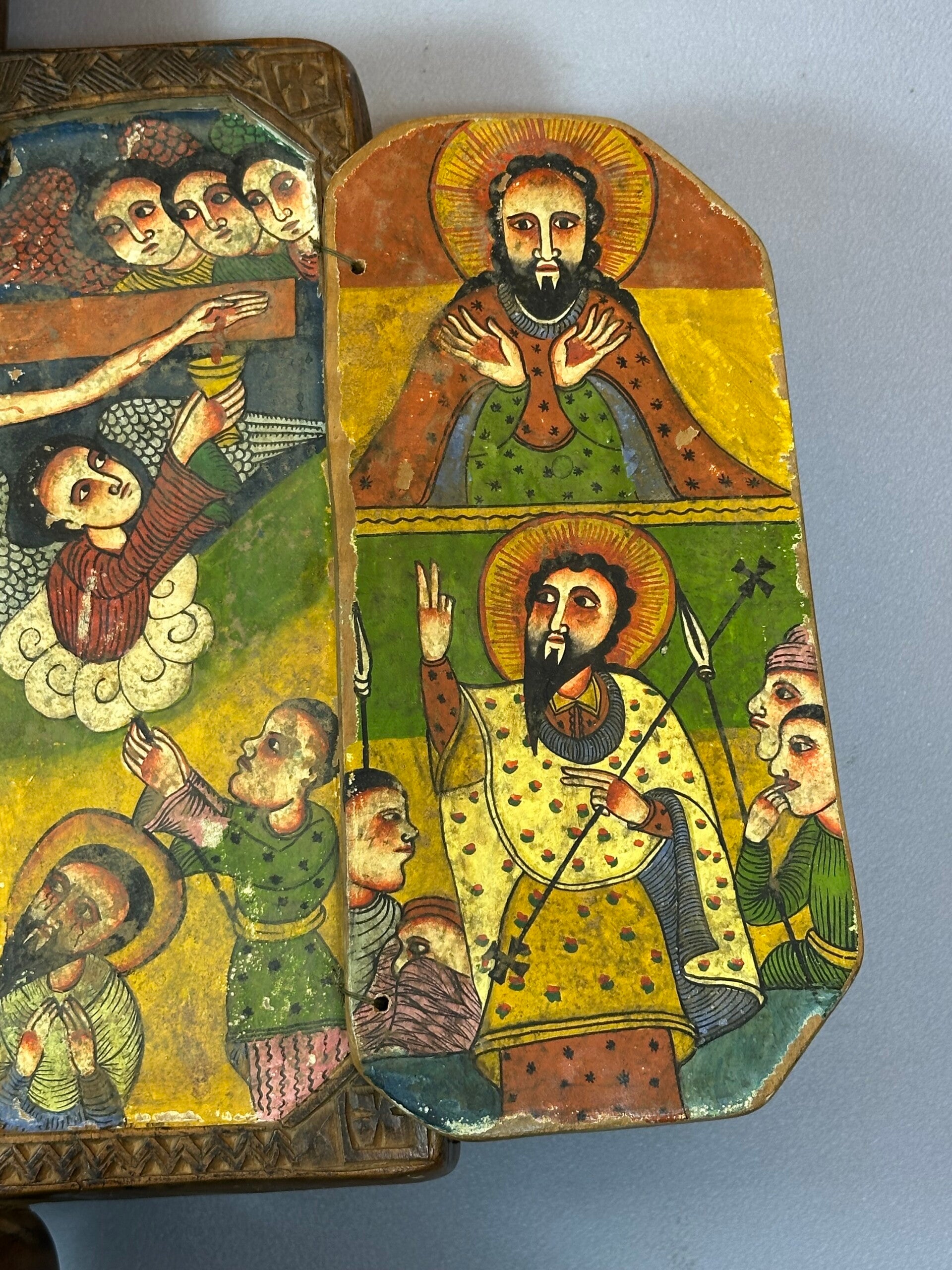
Scene Description: First Side (with the Three Saints): Central scene: Three saints in identical poses, presumably the Three Virgin Martyrs or the Three Holy Patriarchs (Abraham, Isaac, Jacob), but more often in Ethiopian icons these are Saint George (Giyorgis), Saint Mercurius, and Saint Theodorus, the patron saints of soldiers. The borders have a geometric mosaic pattern derived from the Byzantine style. Side panels: Various battle scenes on horseback, clearly recognizable as Saint George and Saint Mercurius defeating the dragon or enemies of the faith. Lower panels: angels and martyrdom scenes.
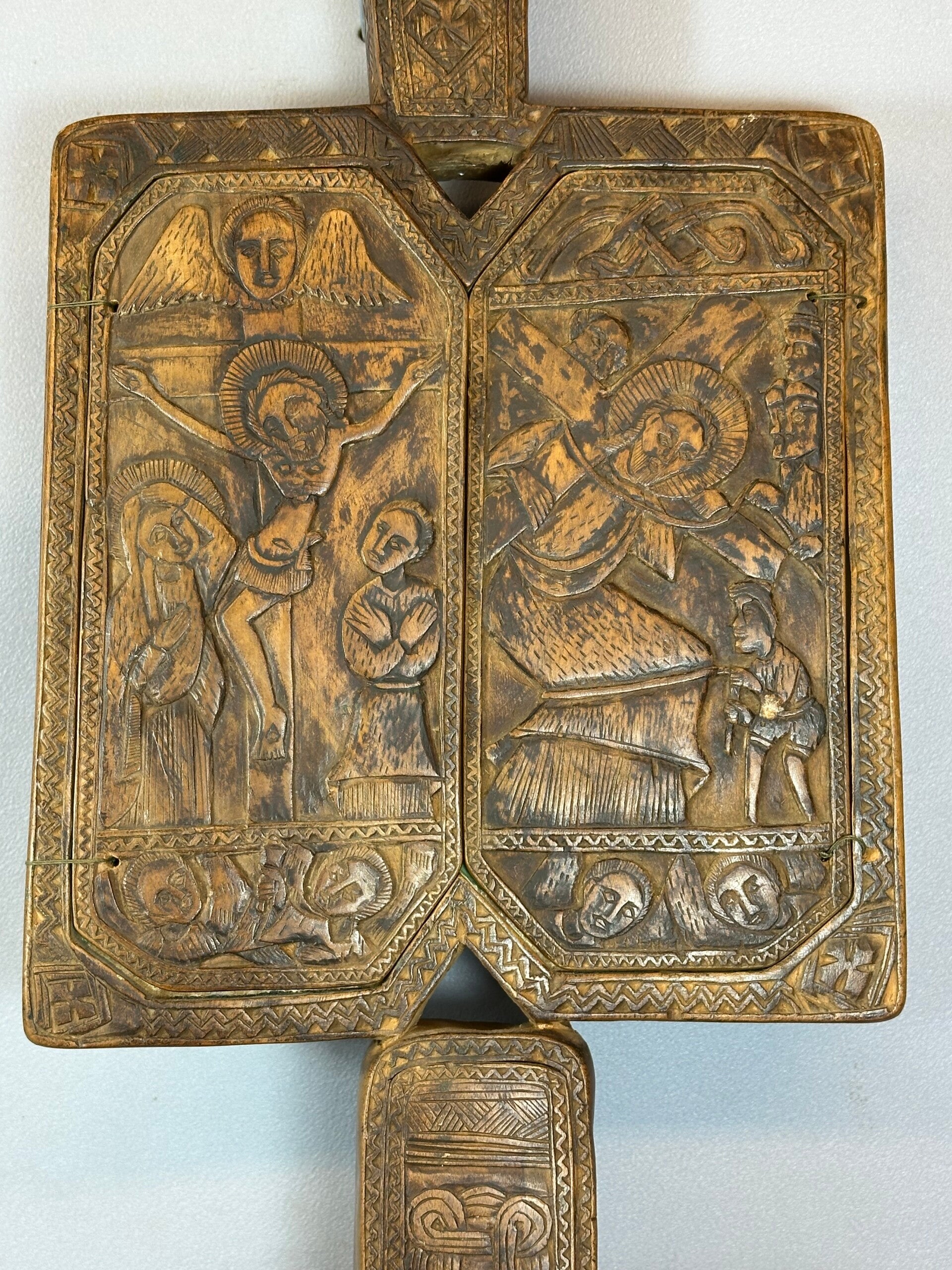
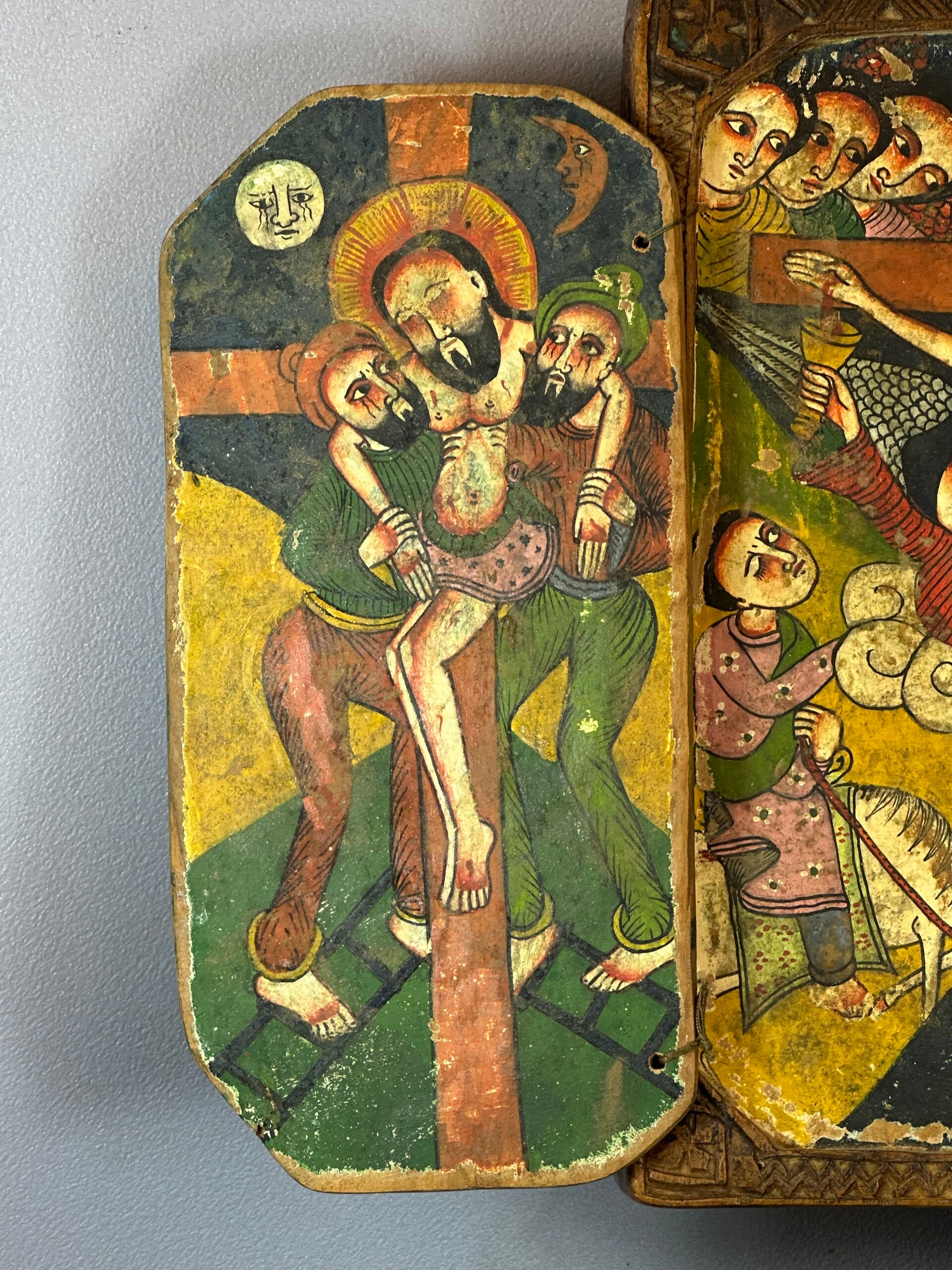
Second side depicting the Crucifixion) Central scene: Christ on the cross, surrounded by six angels with open wings, two collecting the blood from the wounds. At the foot: Mary and John, in strong emotional expression. The background is intensely colored in green, red, and yellow—a characteristic of the Gondärine palette. The figures are frontal, with large almond-shaped eyes, a typical feature of Coptic-Ethiopian iconography.
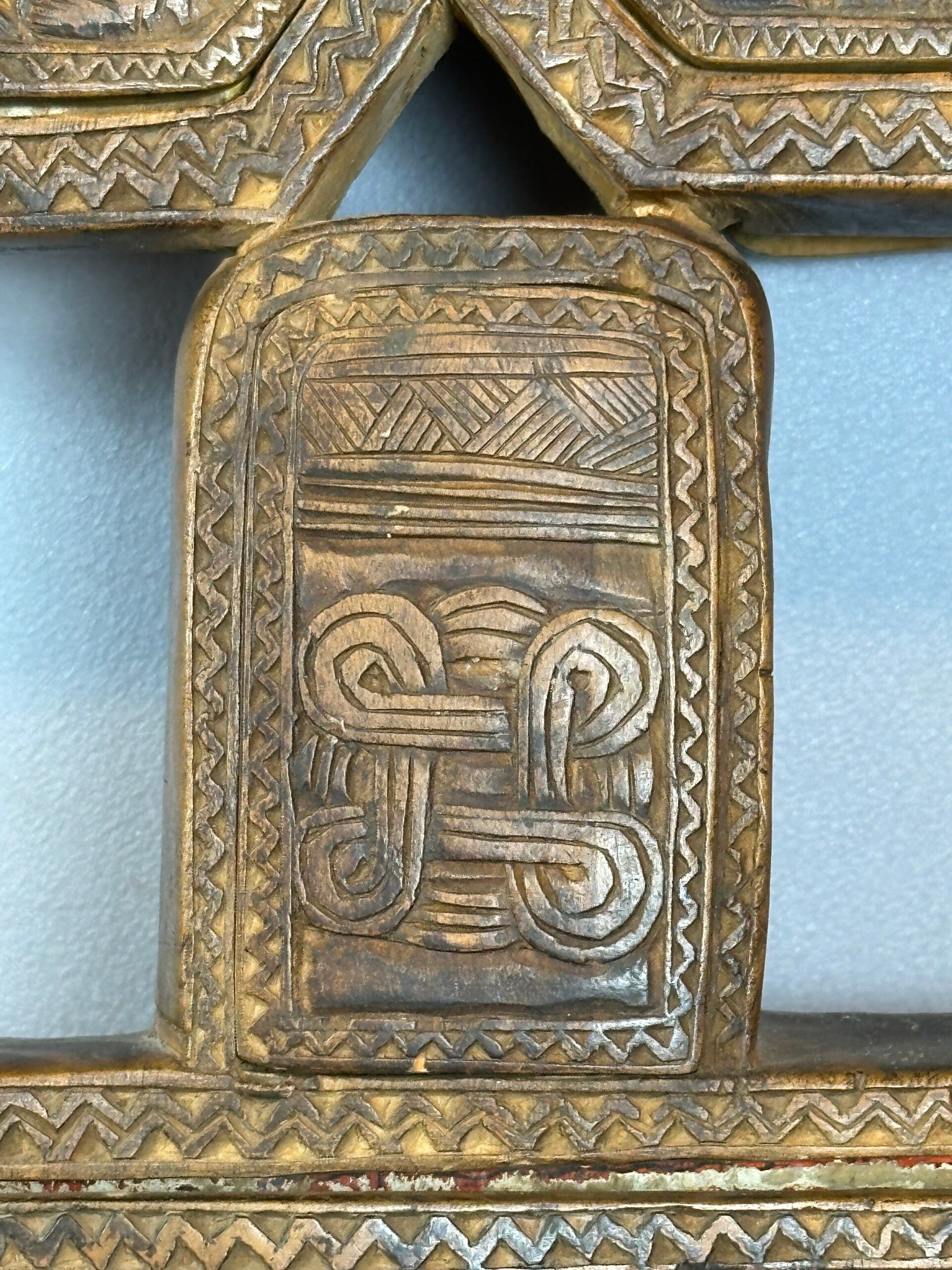
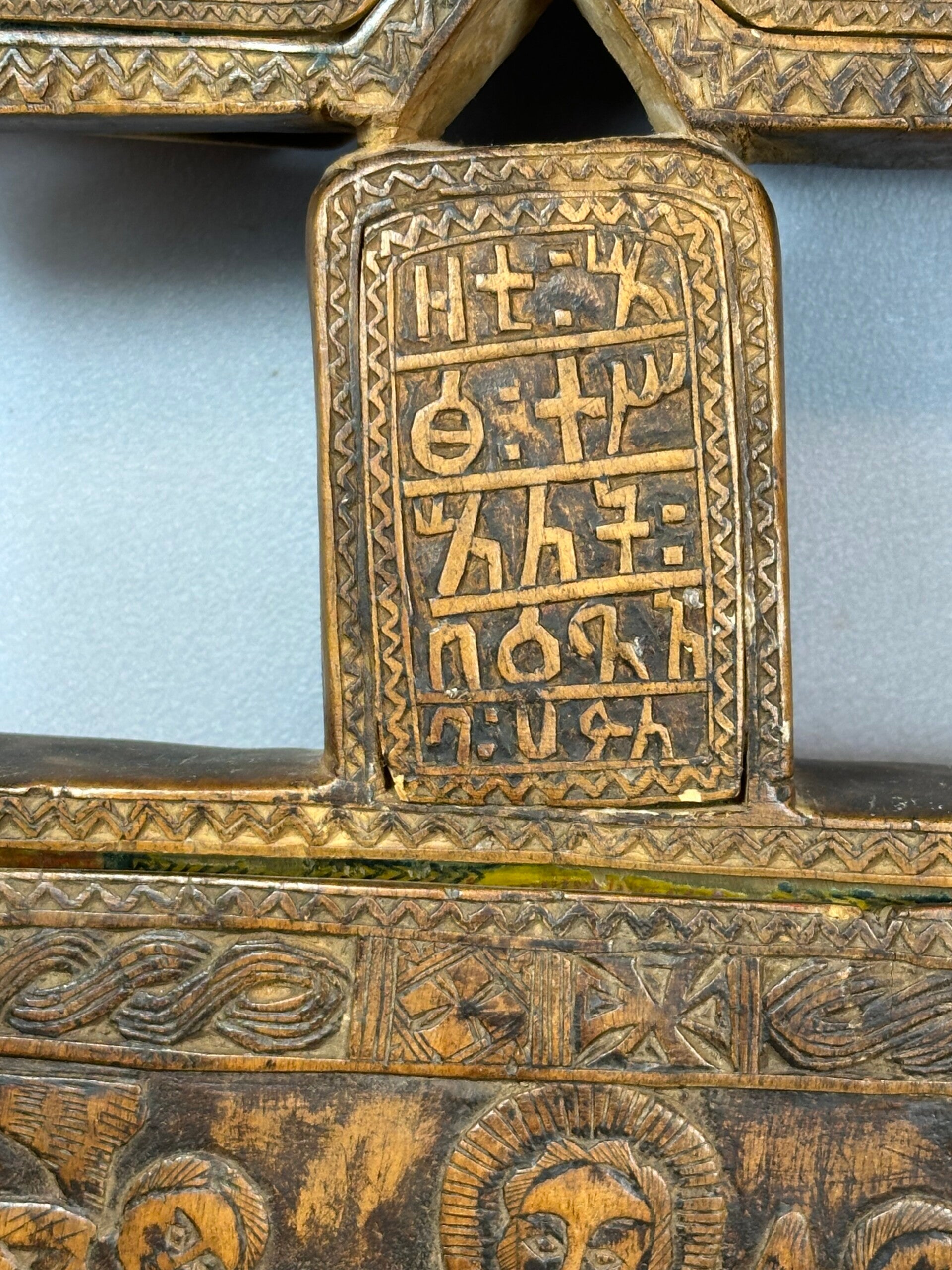
Side Panels: Left: The Carrying of the Cross or Way to Golgotha. Right: The Resurrection or Noli me tangere. Top: A Coptic cross carved from wood, purely decorative and symbolic. Bottom Panel: Left: Old Testament and saintly figures, presumably prophets. Right: Mary and Child, John the Baptist, and other saints. The inscription on the connector appears to be written in Ge'ez (Classical Ethiopic), not Coptic, confirming an Ethiopian origin.
Stylistic features: The frontal composition and symmetrical layout recall early Coptic icons from Wadi Natrun, but with vibrant colors typical of Ethiopian folk art. Colors are intense yellow, green, red, and orange with black contour lines. Facial features are highly stylized, with emphasis on the eyes (large and almond-shaped), small mouth, and thin nose, intended to reveal the soul, not the physical. The style is naive-realistic, but with theological significance: perspective is absent (=heavenly space without depth).
Context and Function; This type of icon was carried in processions during feasts such as Timkat (Epiphany) or Meskel (Finding of the True Cross). When closed, it protected the painting; when open, it was displayed on the altar or during pilgrimages. The combination of the cross shape and the icon makes this a hybrid object between a reliquary, a cross, and an altar icon.
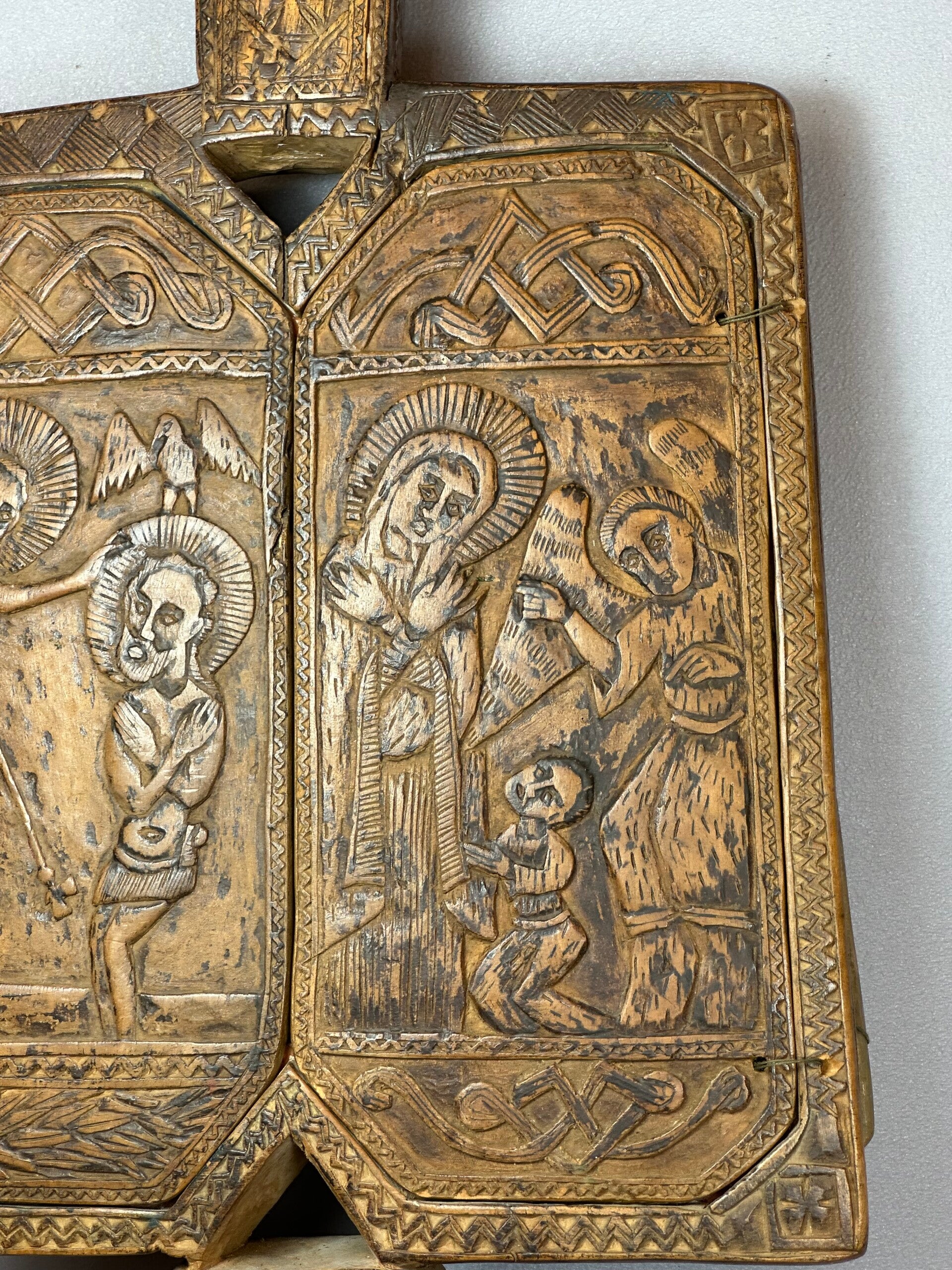
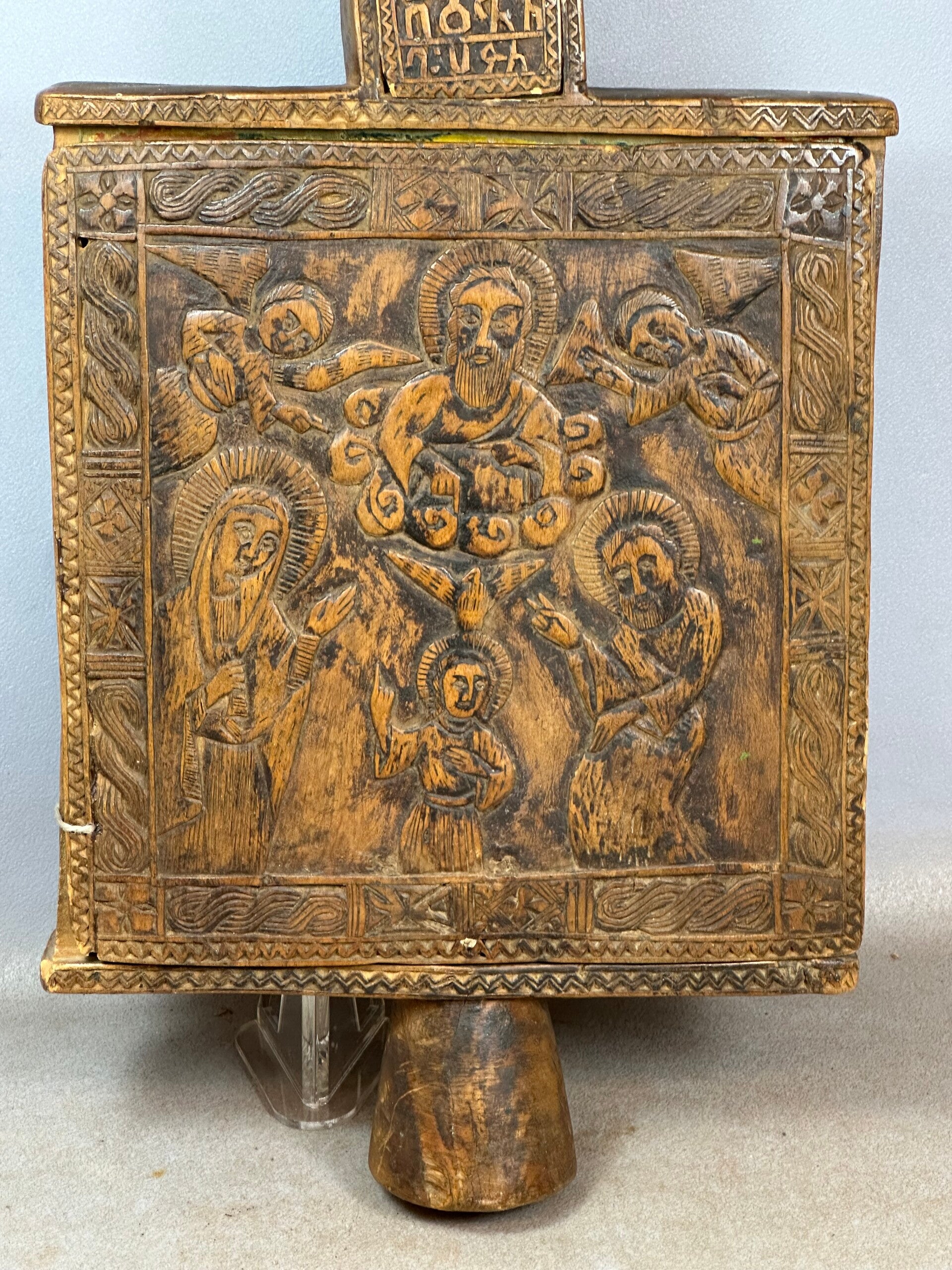
Closed Side; Carving and Function; When the panels are closed, you see a relief carving, not painted, but with the same theme as the interior: the upper and lower relief panels, connected by the inscription block in Ge'ez. The fact that both the interior and exterior sides are iconographically elaborate (painted inside, carved outside) seems quite remarkable. This points to a processional icon of high liturgical status, not a simple carrier icon.
Closed Side; Carving and Function; When the panels are closed, you see a relief carving, not painted, but with the same theme as the interior: the upper and lower relief panels, connected by the inscription block in Ge'ez. The fact that both the interior and exterior sides are iconographically elaborate (painted inside, carved outside) seems quite remarkable. This points to a processional icon of high liturgical status, not a simple carrier icon.
Style; The carving is executed in high relief with frames of geometric wickerwork and band motifs – typical patterns of the Gondärine wood carving tradition (18th–19th centuries). The figures have the same large eyes, stylized facial features, and symmetry as in the interior paintings. The cross-shaped openwork top has a fully carved ribbon pattern with a four-armed knot. This is typical of Ethiopian processional crosses from Begemder or Gondar region.
Inscription Block: The text in Ge'ez is visible here. The characters are carved into a columnar cartouche. This is a liturgical formula or blessing inscription, often something like: "Cross of the Father, the Son, and the Holy Spirit."
Closed Iconography (Provisional Interpretation): Upper panel (closed wings): two saintly figures (probably the Archangels Michael and Gabriel) flank Christ in majesty or Christ blessing. Lower panel: depiction of the Resurrection or the Appearance of Christ to the Apostles. The outer side likely served as the "public" side when the object was carried closed in processions. Thus, the relief served as a visible holy image, while the painted side inside remained protected.