251203 - Rare Antique African Songye Bishimba Power Orakel - 160 cm - Congo.




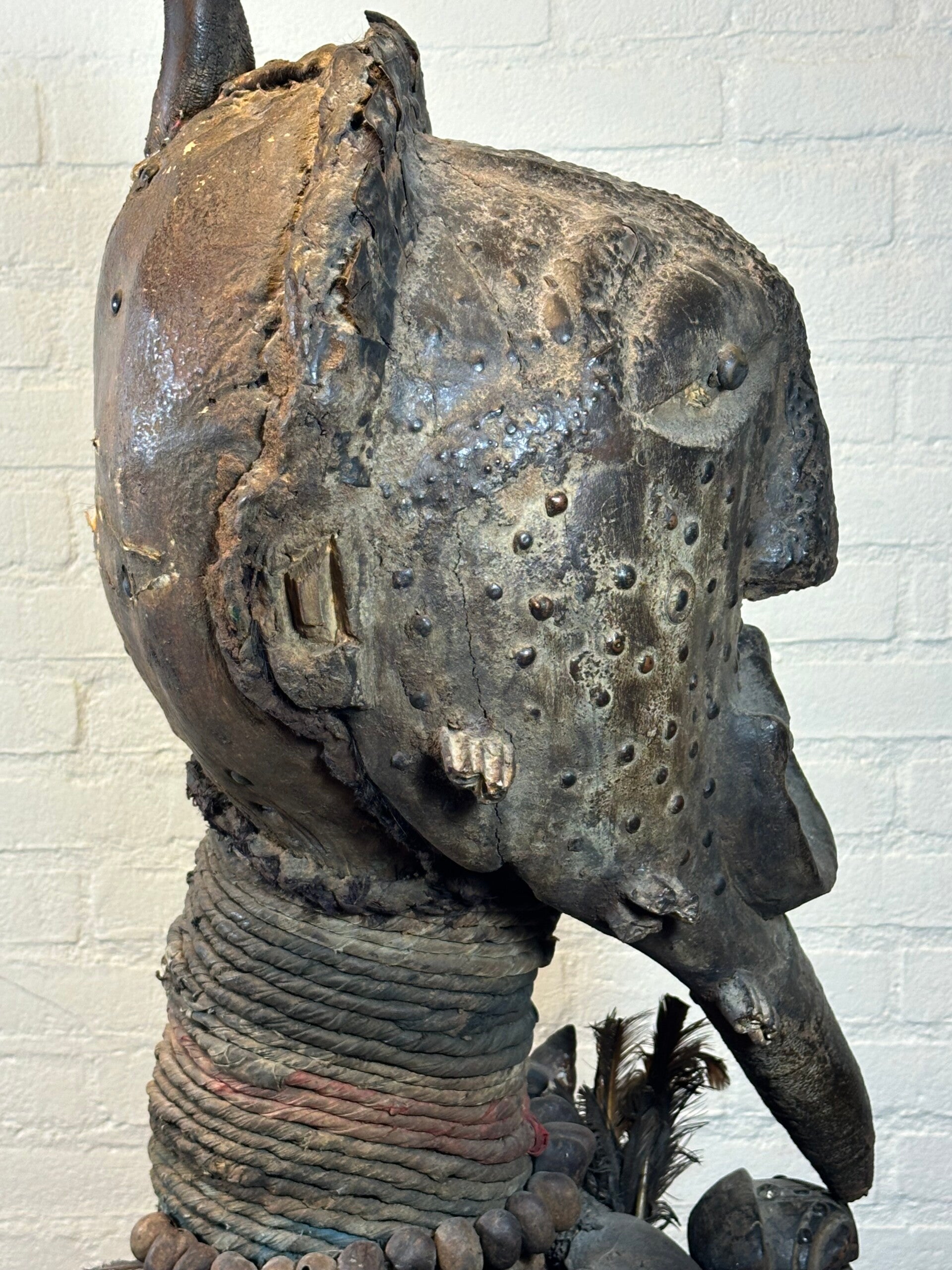


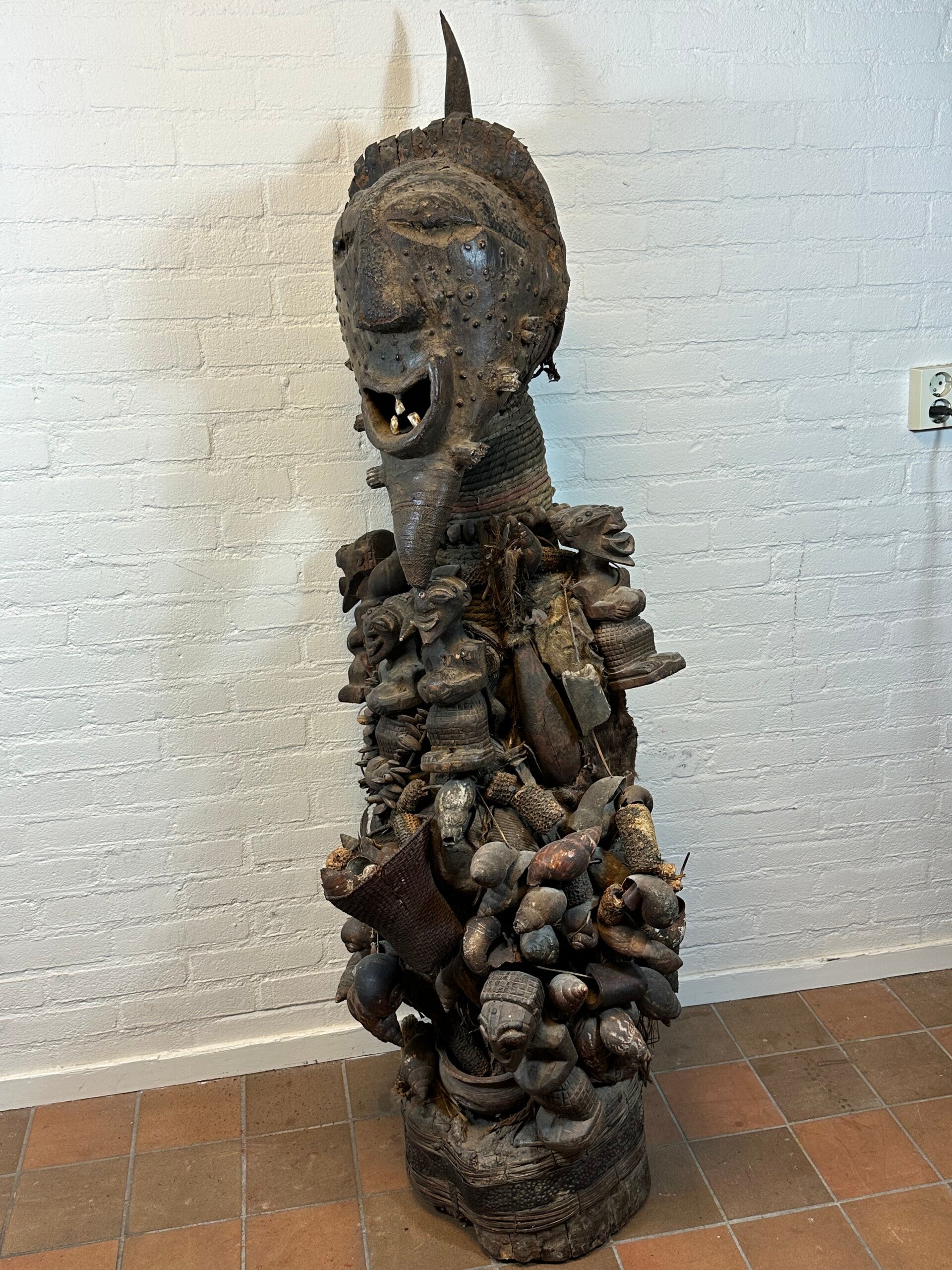


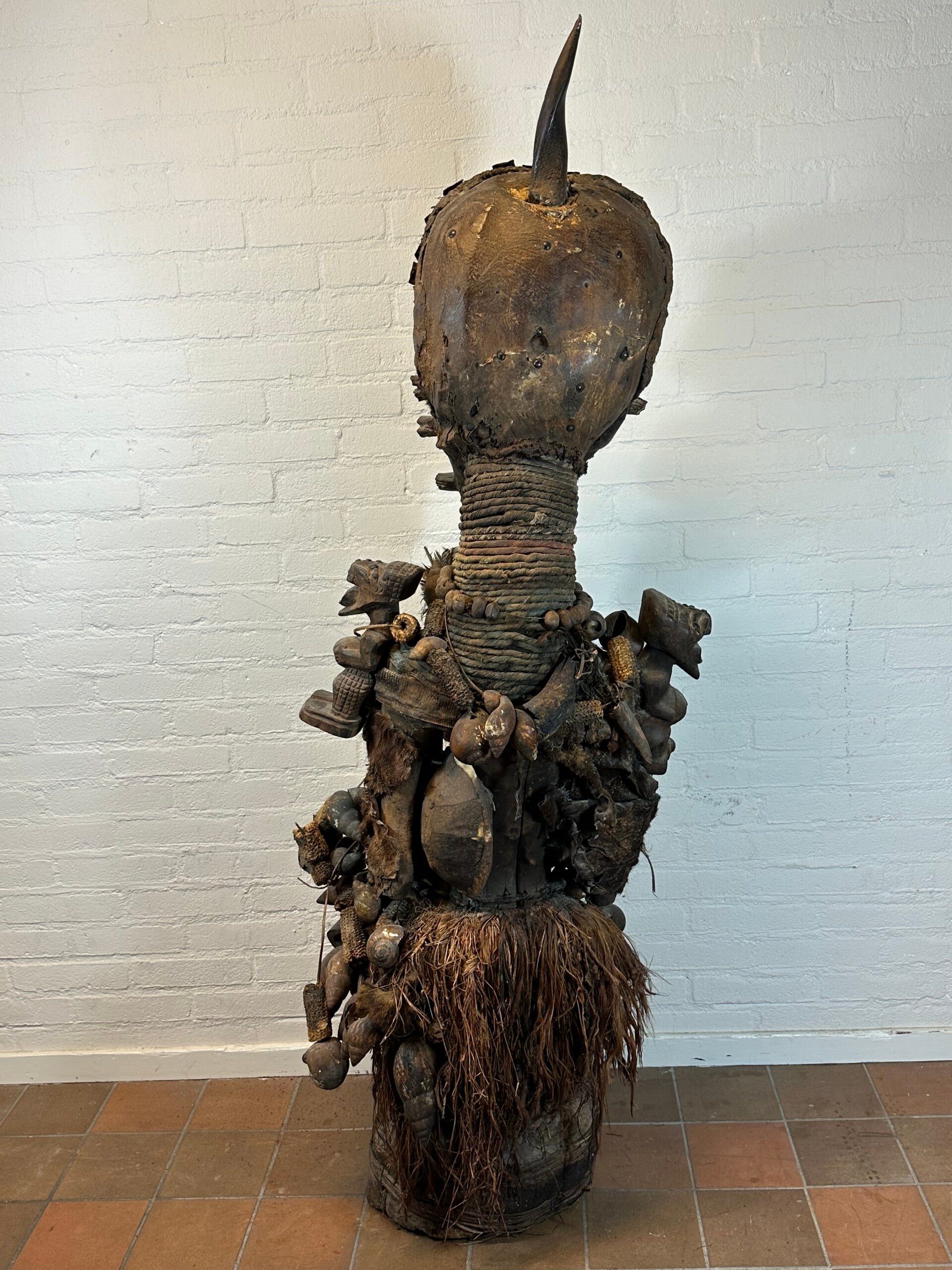


Extremely Rare Antique & Large Expressive African Bishimba Power Orakel from the Songye, Congo.
Size: 160 cm high and weigh more than 10 kilos.
This item was dated first half of the 20th century, with a certificate of authenticity.
The statue is still part of an exhibition and can be purchased upon request.
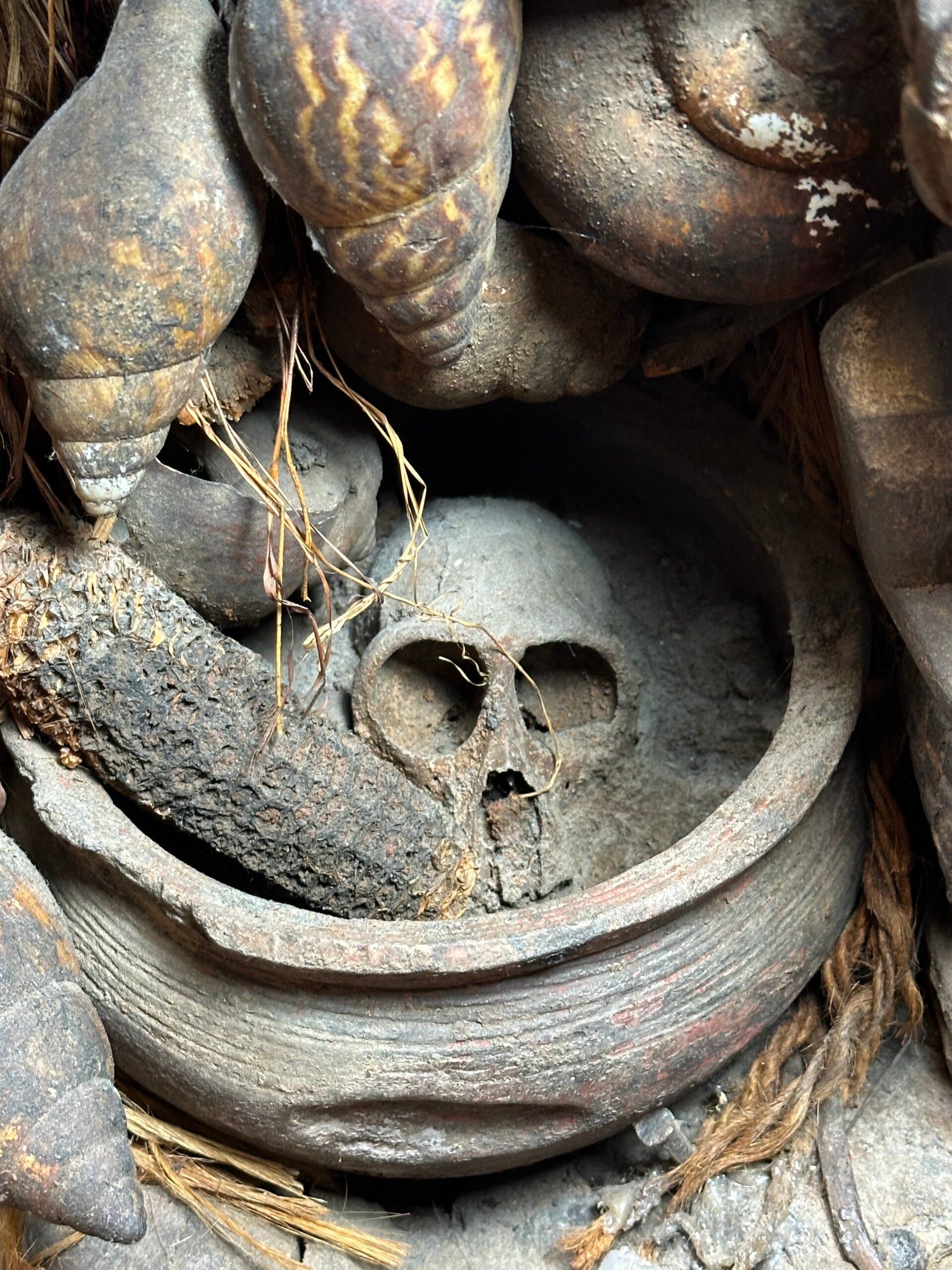
Rare complete oracle statue! A large statue, 160 cm high, with 6 smaller wooden statues. It also contains or hangs on a variety of items: Turtle shell, monkey hair, monkey skull, hippopotamus teeth., numerous shells, a kudu toe, snail skin, animal skin/hair, hooves, numerous seeds, a woven basket, corn cobs, a terracotta offering pot with a skull, copper fittings with hippopotamus teeth, and much more. A robust, tribally used object with many attributes, all with symbolic meaning. See the photos!
The statue can only be shipped by courier within the Netherlands and possibly Belgium and Germany.
Shipping to the rest of Europe and outside Europe is possible upon request.
This is a true museum piece that is extremely rare and not for sale in Europe.
During the 16th century, the Songye migrated from the Shaba area, which is now the southern part of the Democratic Republic of the Congo. Their history is closely linked to the Luba's, to whom the Songye are related through common ancestors. Having waged war against one another for a long time, the Songye and Luba later formed an alliance to fight the Arabs. They settled on the left bank of the Lualaba River, on a savanna and forest-covered plateau. Divided into many subgroups, the 150,000 Songye people are governed by a central chief assisted by innumerable secret societies.
The Songye traditionally relied mostly on farming and hunting for subsistence. Because the rivers were associated with the spirits of deceased chiefs who were often buried in them, fishing was not practiced except in times of great need. The artistic wares of the Songye, including pottery made by women and weaving and metalworking done by men, were traded extensively with their neighbors.