260616 - A wooden tablet, Allo Kafi Gida Hausa, Northern Nigeria.
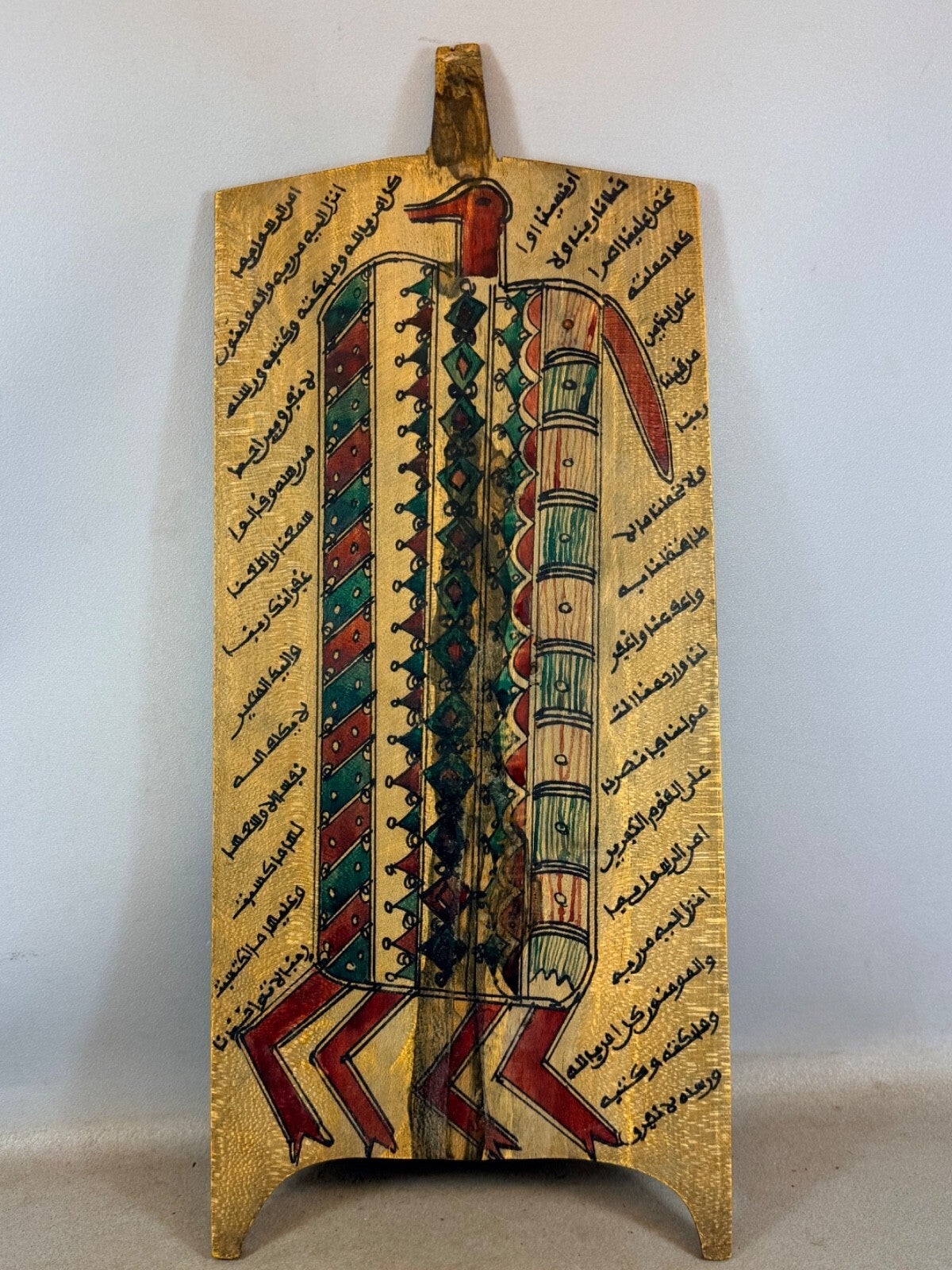
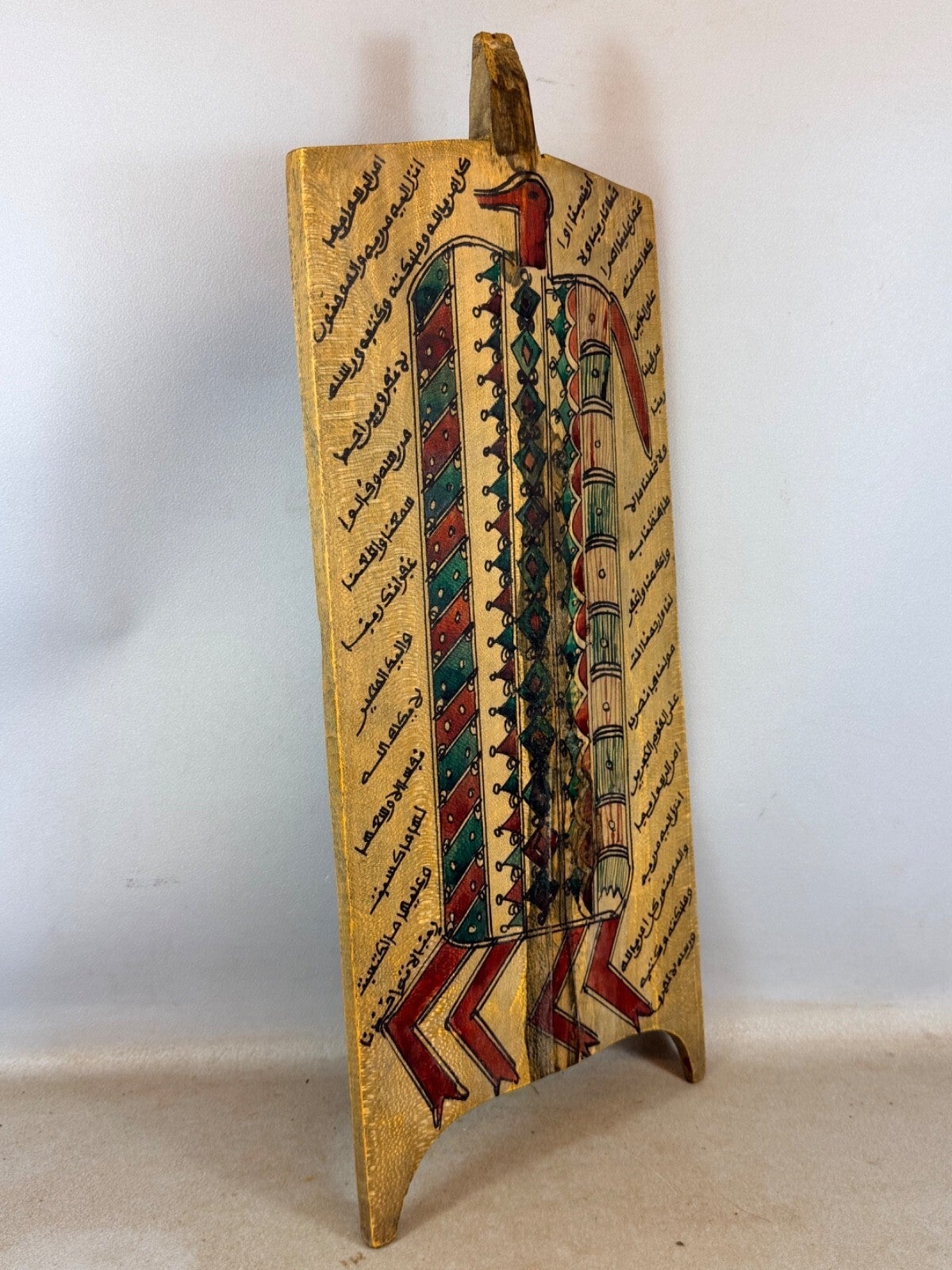
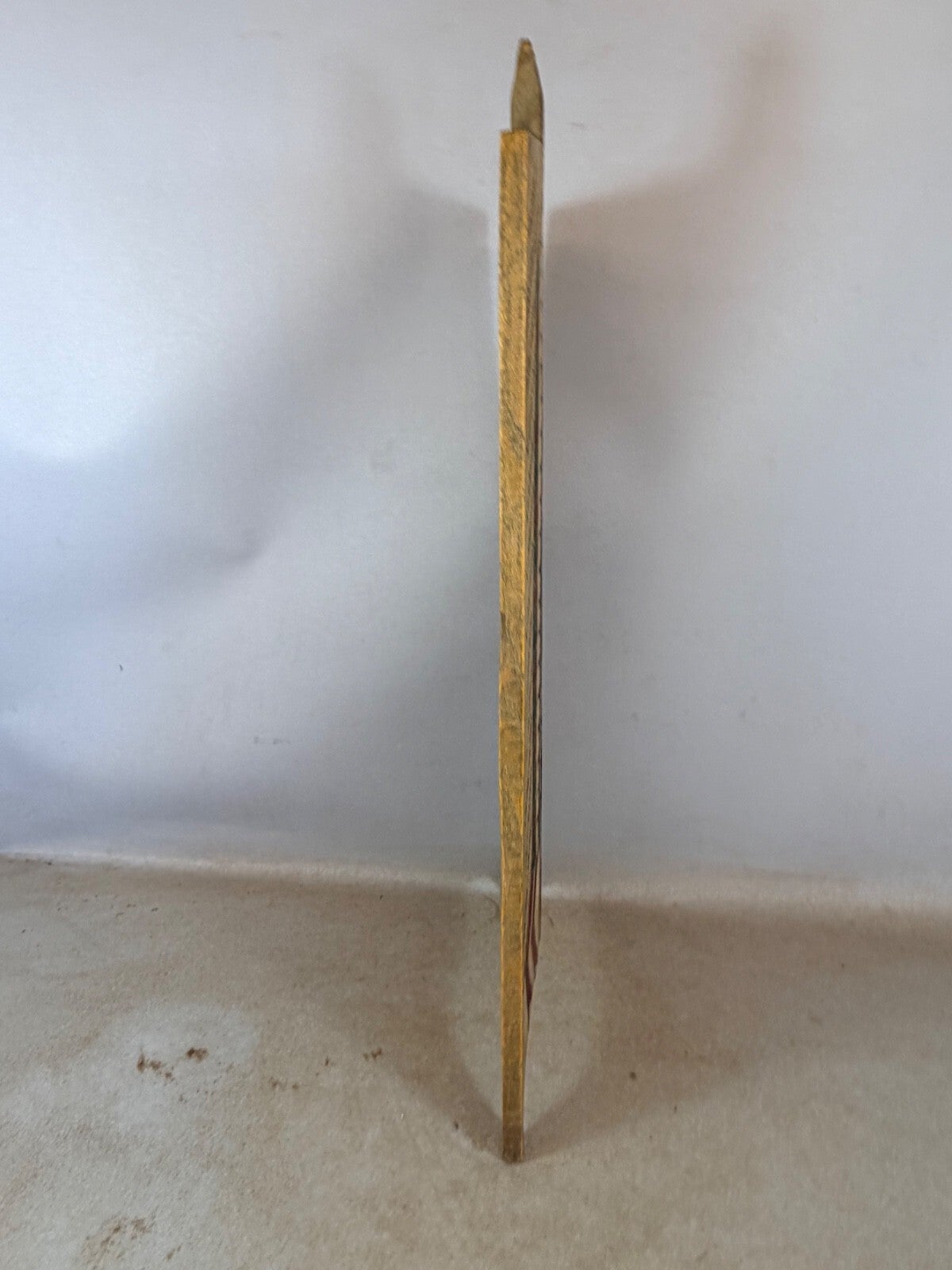
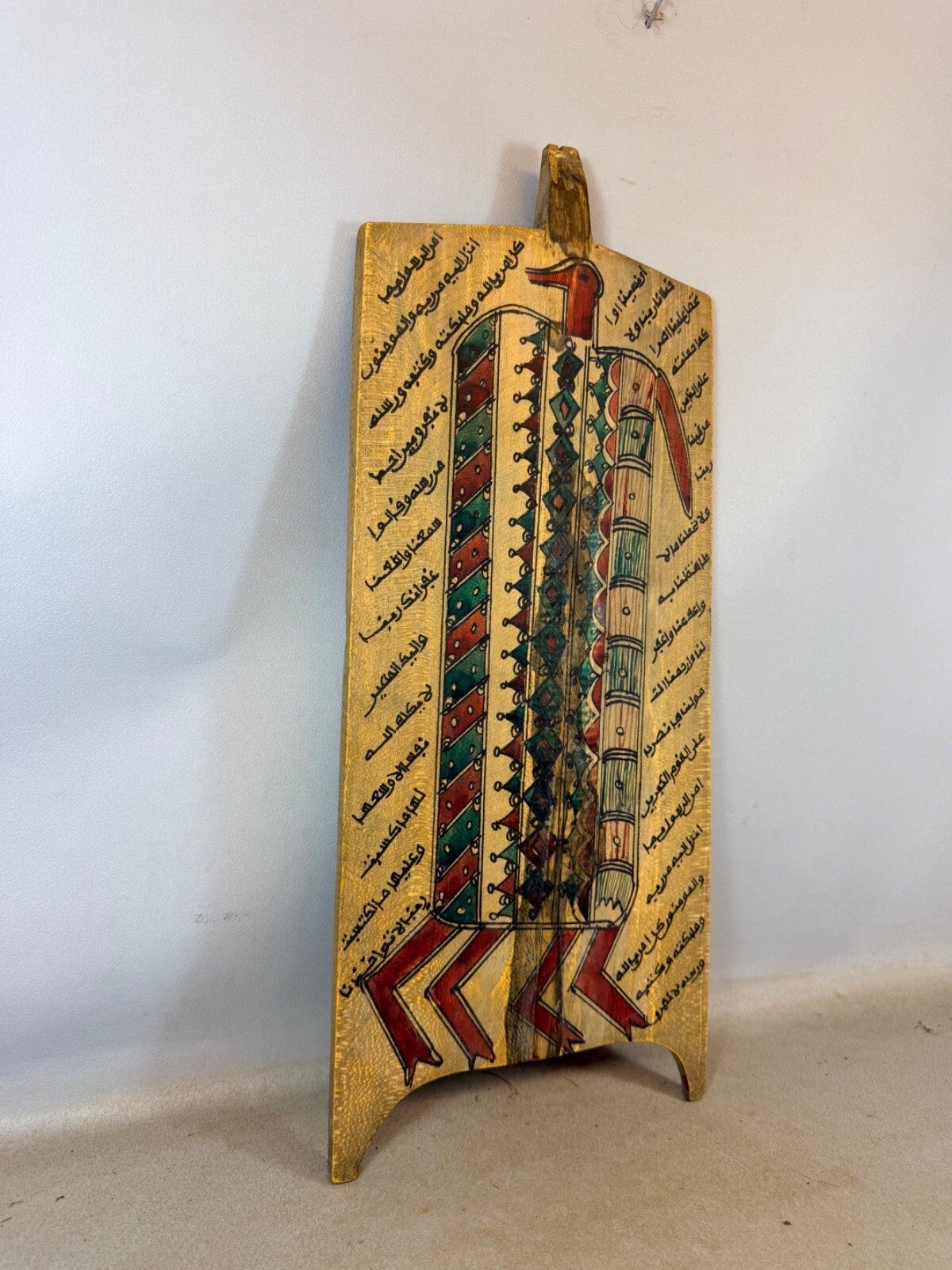
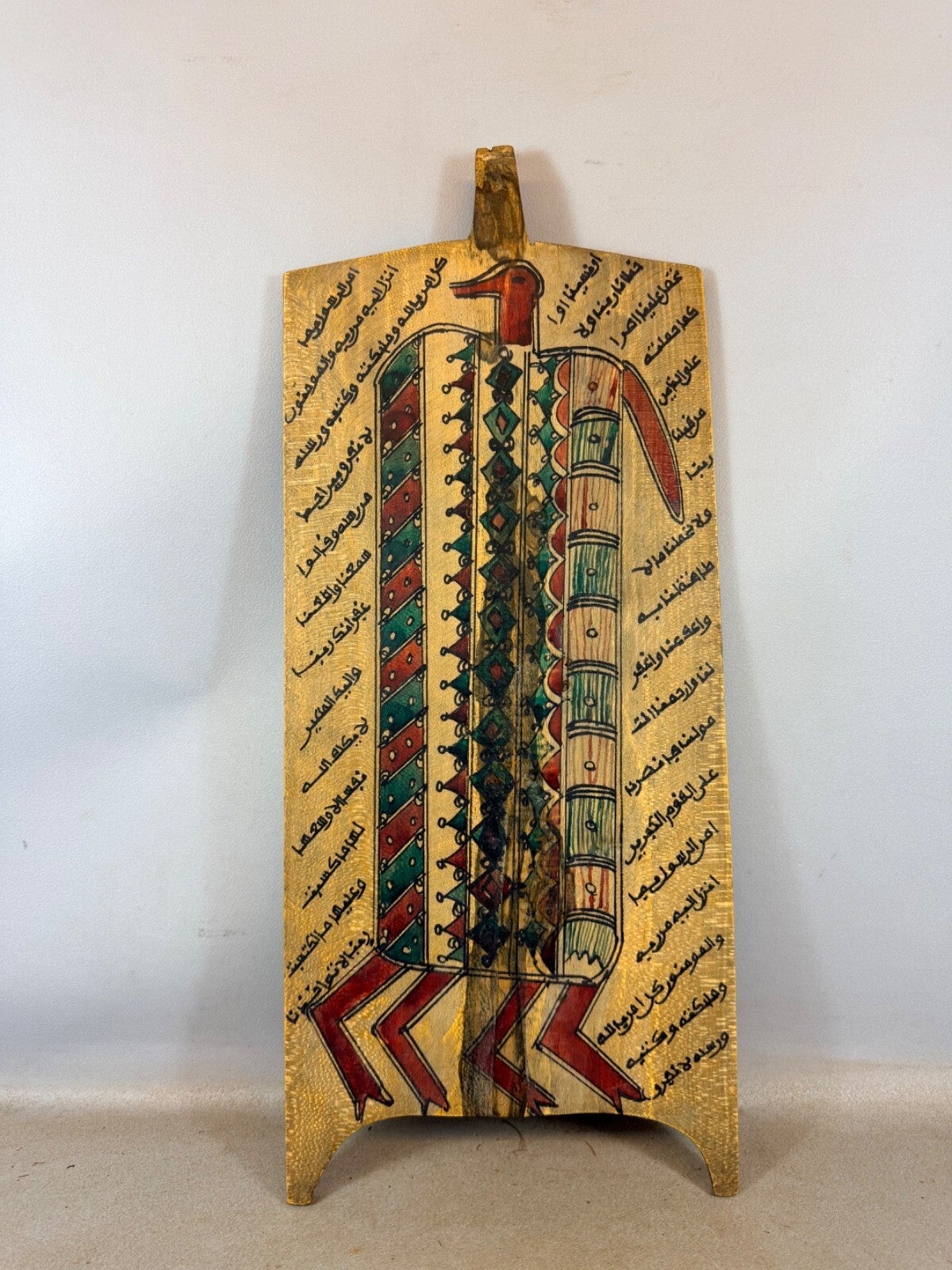
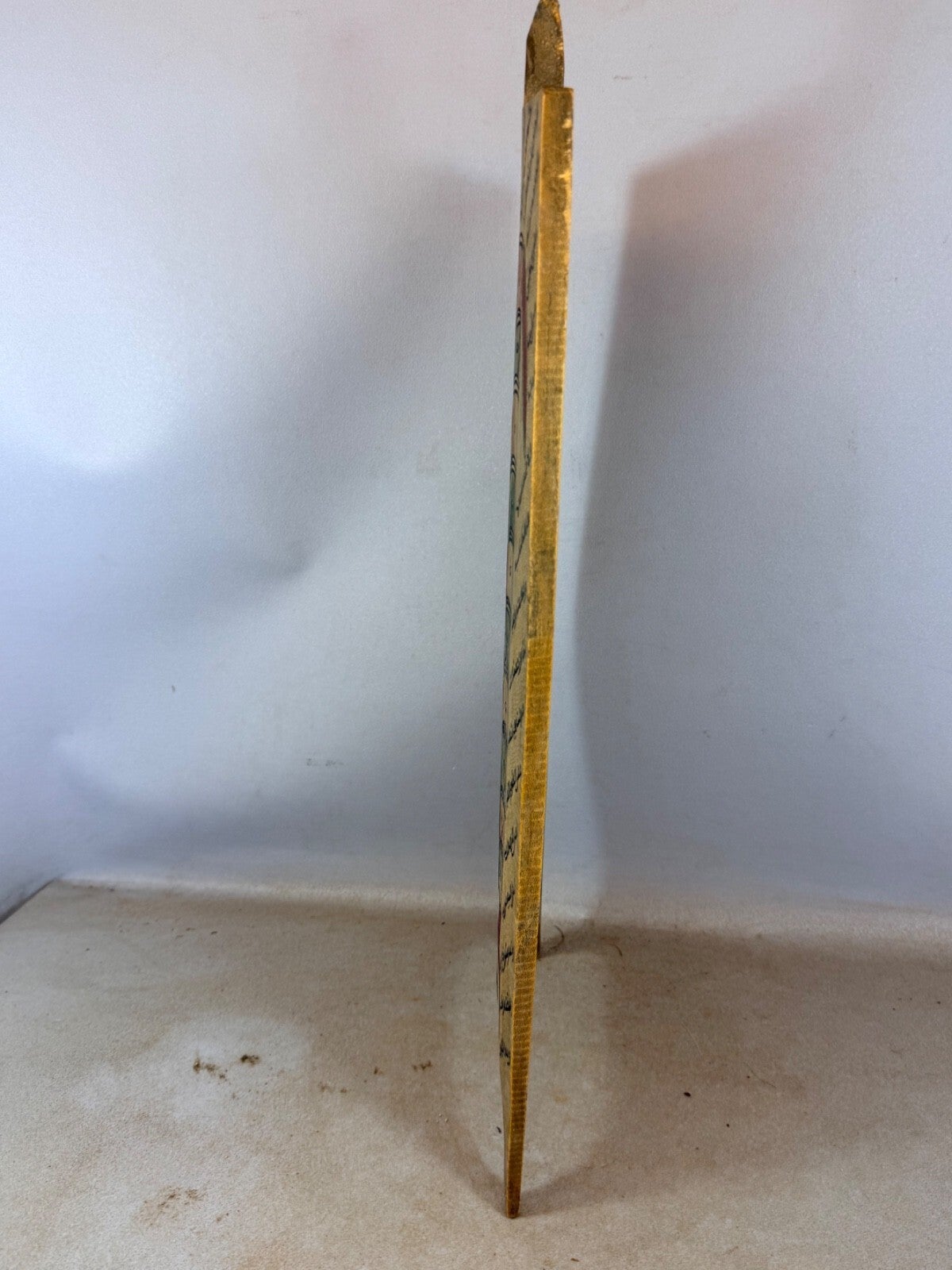
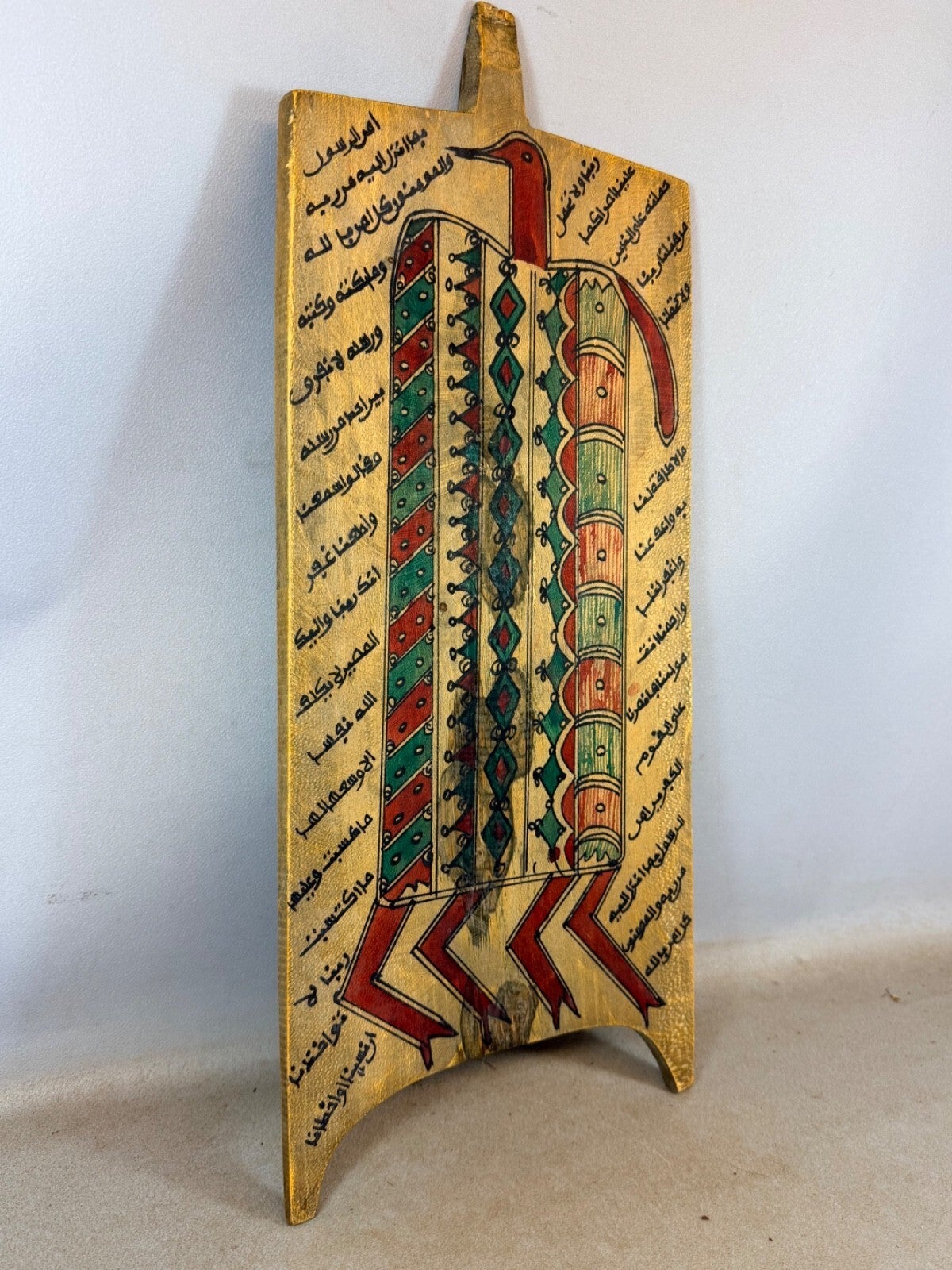
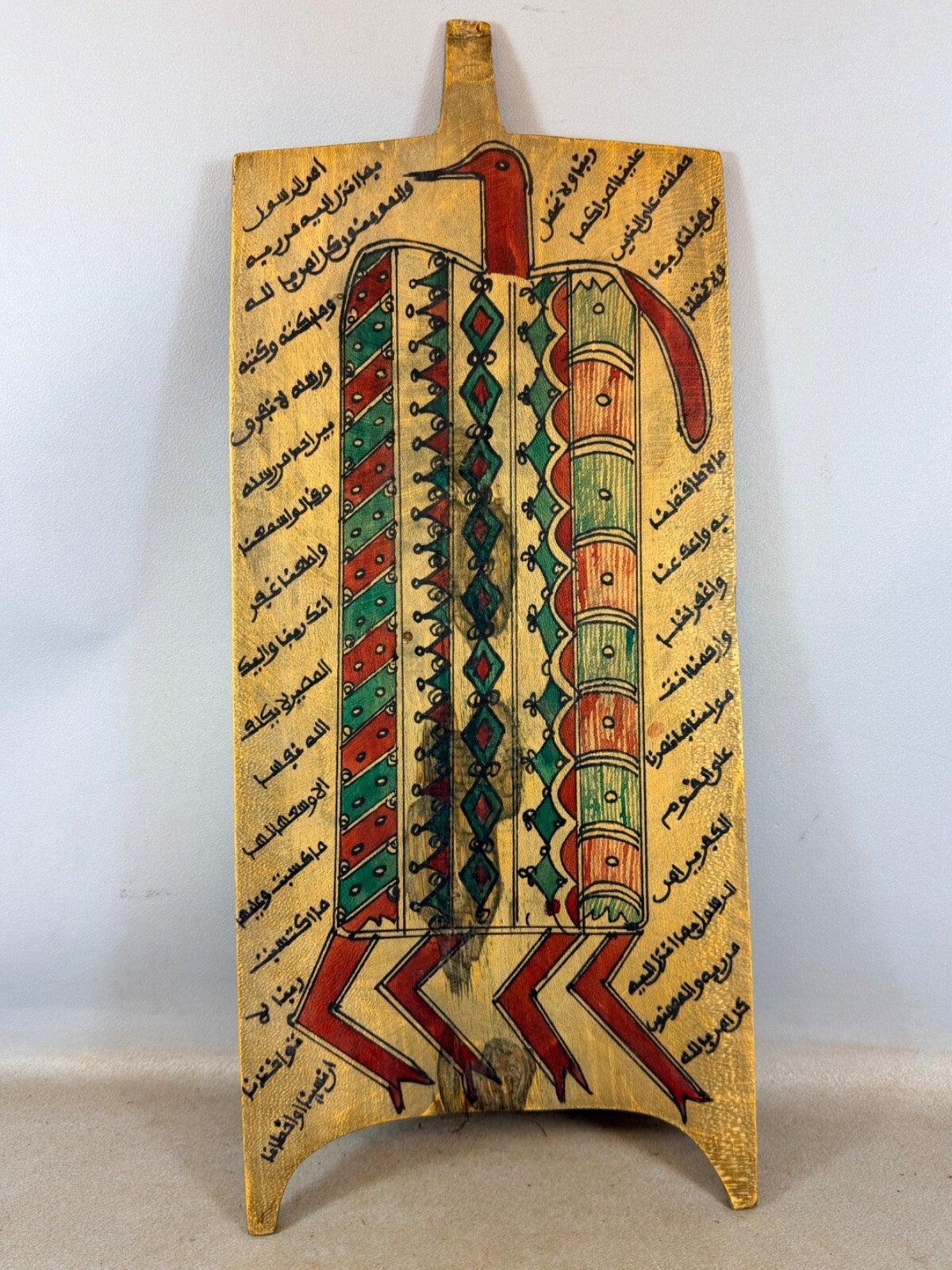
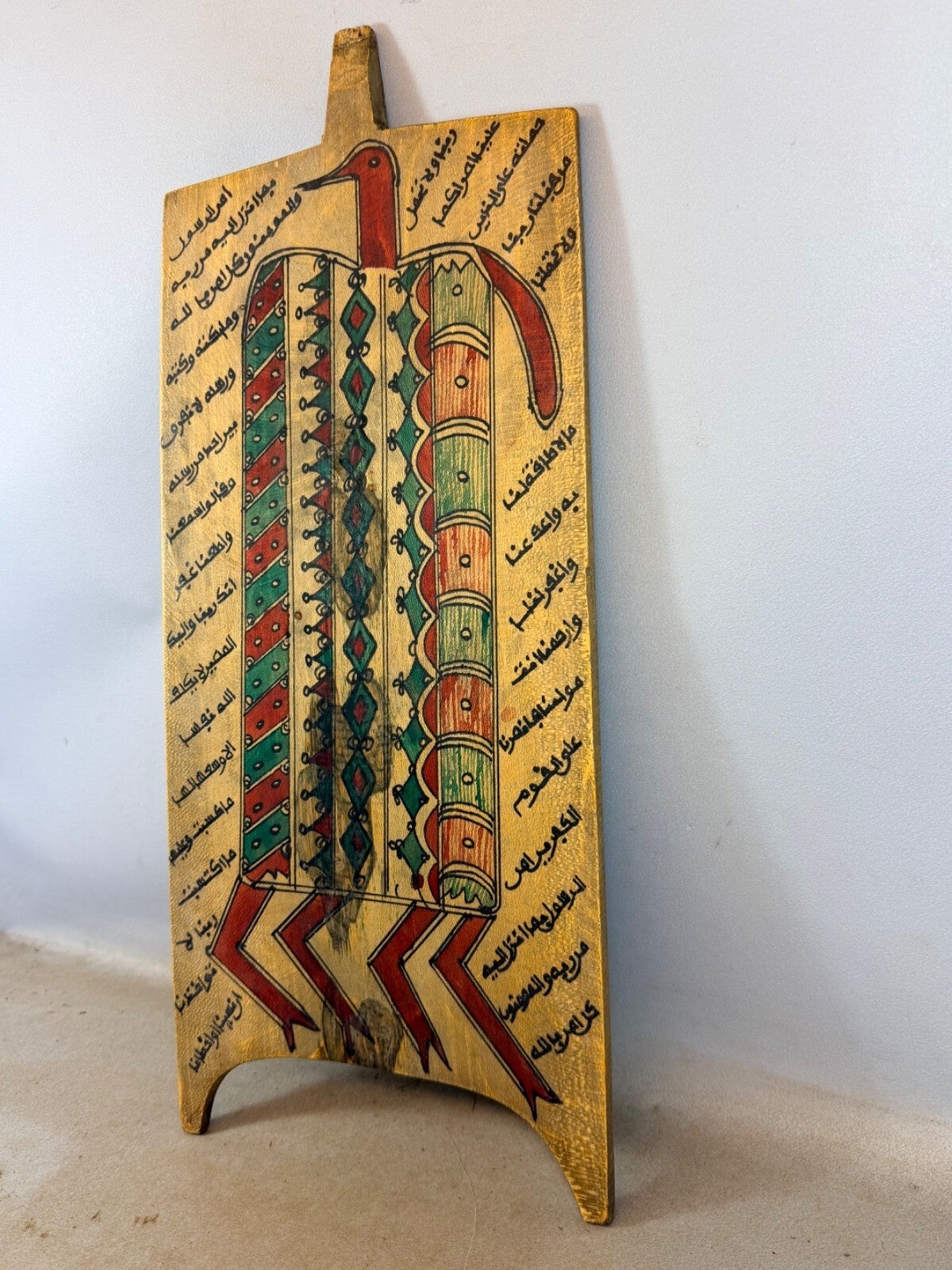
A wooden tablet, Allo Kafi Gida Hausa, Northern Nigeria.
Hand carved from a single piece of wood.
Height: 57 cm and 24 cm wide.
This painted wooden tablet belongs to the Hausa visual and material culture of Northern Nigeria, a region shaped by centuries of Islamic scholarship, trans-Saharan trade, and complex interactions between court, urban, and rural traditions. Objects described as “Allo Kafi Gida” in collections in European languages typically refer to Hausa writing or learning objects (allo) used in Qur’anic education, particularly within Qur’an schools (makaranta) where students practice the transcription, memorization, and recitation of verses from the Quran under the supervision of an Islamic teacher.
The tablet form is intended to be fundamentally pedagogical rather than purely artistic. The surface is designed for the repeated application of inscribed text, written with a reed pen in Arabic script. Once the verses are memorized, the surface is washed clean, allowing for continued cycles of writing and erasing. This process reflects a central characteristic of Islamic education in West Africa, where knowledge is anchored through repetition, recitation, and physical engagement with written form rather than permanent registration.
A Fundamental Book on the Allo Kai Gida Bros, by Antoine Lema, Five Continents Edition, Milano (final photo sequence).
The presence of red and black picturesque decorations indicates a secondary layer of visual culture that exists alongside the educational function of the tablet. Black is typically associated with ink and writing itself, reinforcing the role of the tablet as a location for textual transmission. Red, on the other hand, can carry protective, aesthetic, or mnemonic associations, and is often used in Hausa contexts to mark, frame, or activate objects used in learning or ritualistic practice. The combination of red and black creates a visual hierarchy that emphasizes both structure and emphasis, potentially facilitating memorization or marking the object as belonging to a specific school, teacher, or school of learning. Although primarily functional, such tablets are often carefully shaped and decorated, reflecting the integration of Islamic teaching into broader Hausa aesthetic traditions. Calligraphic practice is considered a sacred act in itself, and writing tools—including tablets, pens, and inkwells—are typically treated with respect and care. The surface of the tablet thus becomes a transitional space between object and sacred text, between everyday learning and spiritual formation.
The Hausa intellectual tradition has long been one of the most influential in West Africa, particularly through centers such as Kano, Katsina, and Zaria, where Islamic scholarship flourished from at least the fourteenth century. Quranic education remains a fundamental institution in many communities, and the use of wooden tablets continues to structure early learning and religious formation.
The painted decoration of this example reflects how functional objects are often integrated into broader visual and symbolic systems, whereby even pedagogical tools participate in aesthetic and cultural expression. In this sense, the tablet is not merely an educational instrument but also a material expression of Islamic knowledge practices in Northern Nigeria, where writing, memory, and spiritual discipline are closely intertwined. The red and black surfaces, layered on a utilitarian form, emphasize the convergence of instruction, identity, and visual culture within Hausa Islamic society.
References
Adamu, Mahdi. The Hausa Factor in West African History. Zaria: Ahmadu Bello University Press, 1978.
Last, Murray. The Sokoto Caliphate. London: Longman, 1967.
Lovejoy, Paul E. Slavery, Commerce and Production in the Sokoto Caliphate. Trenton: Africa World Press, 2005.
Paden, John N. Religion and Political Culture in Kano. Berkeley: University of California Press, 1973.
Smith, Abdullahi. Islam in West Africa. Oxford: Clarendon Press, 1989.
Yahaya, Ibrahim. Hausa Cultural Studies. Kano: Bayero University Press, 2002.
Bird, Susan Mullin. Islamic Arts of West Africa. New York: Center for African Art, 1985.