260659 - Antique mid 20th cent. Ethiopian silver Coptic Neck Cross - Ethiopia.
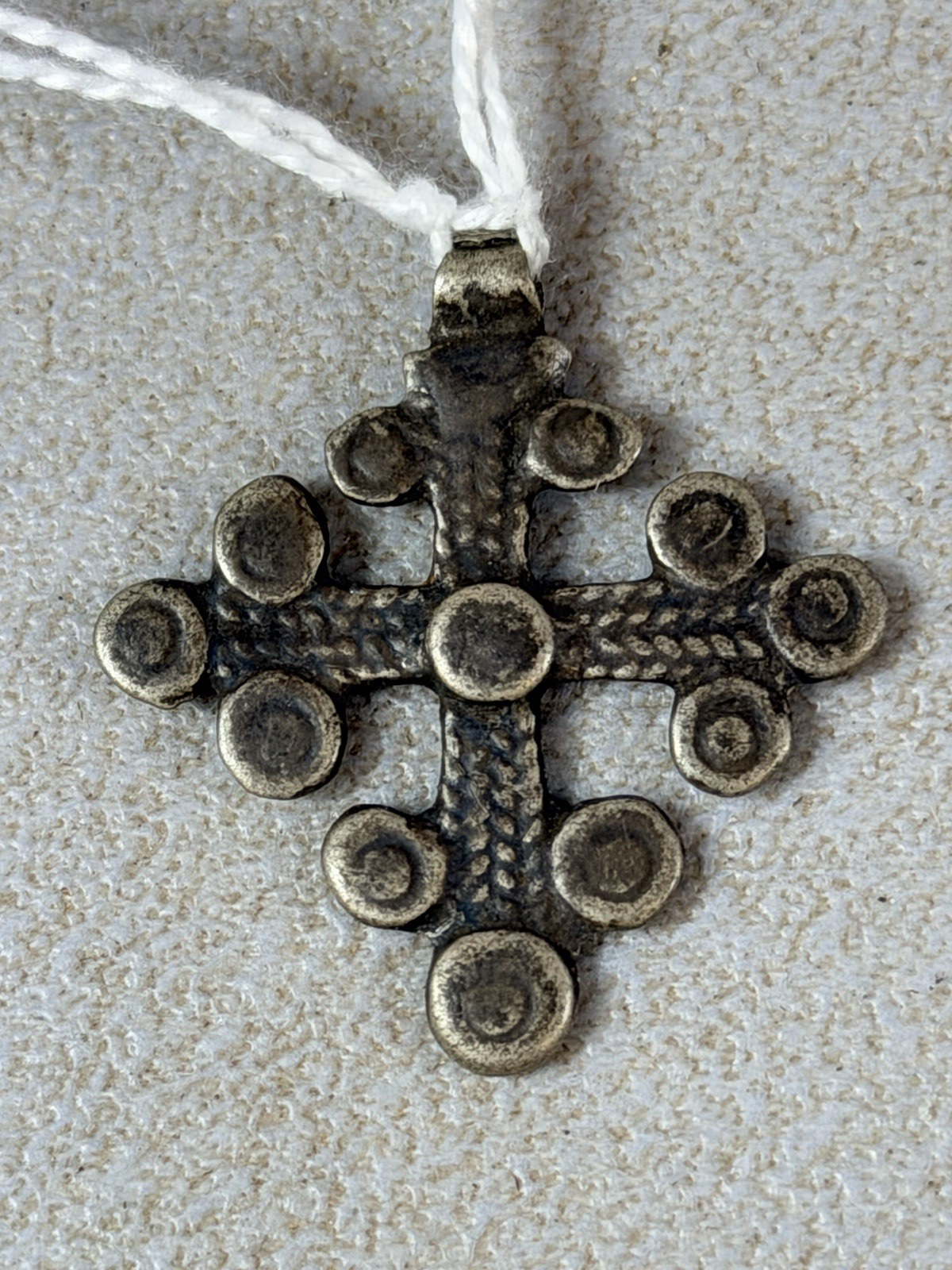
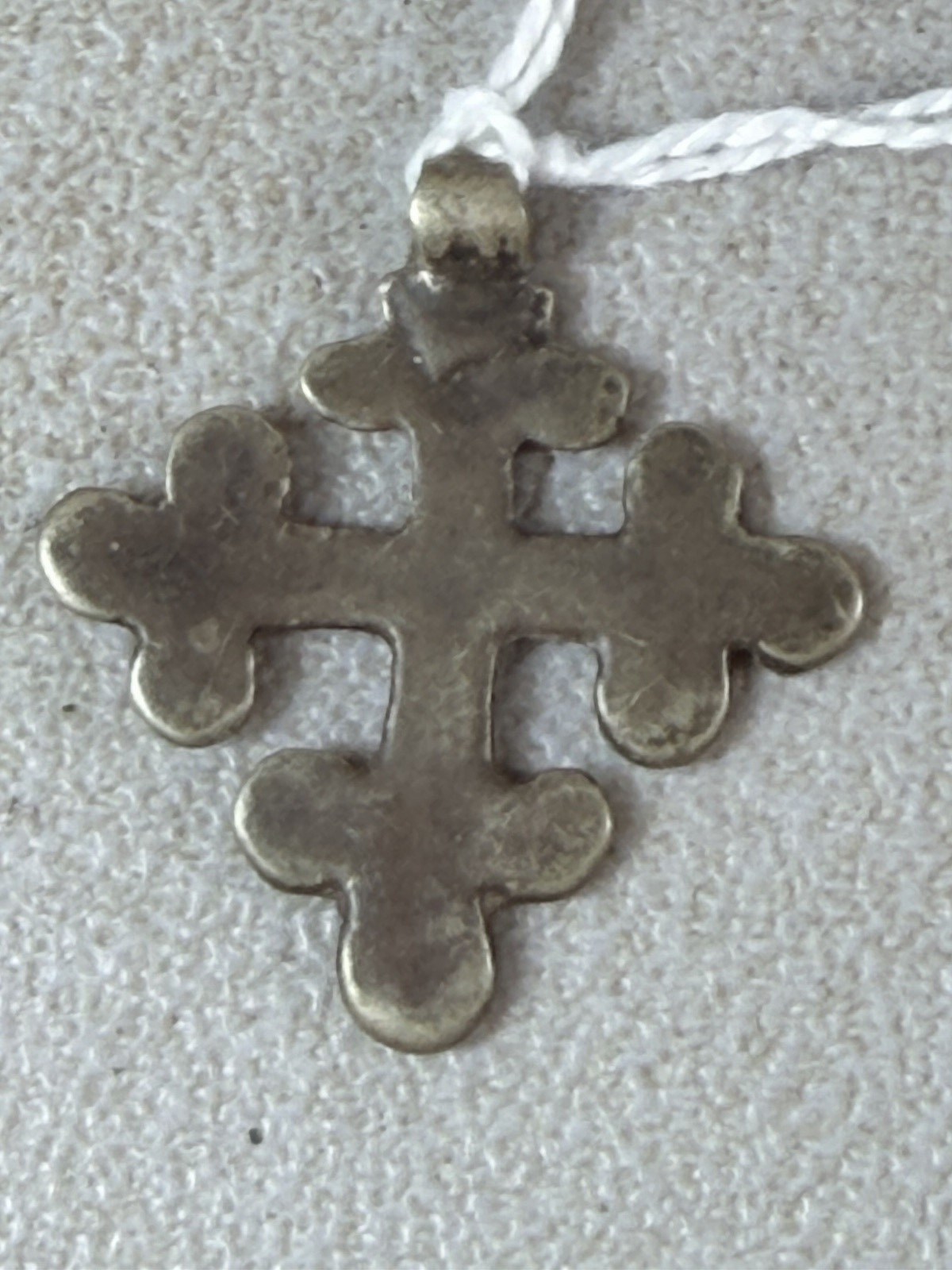
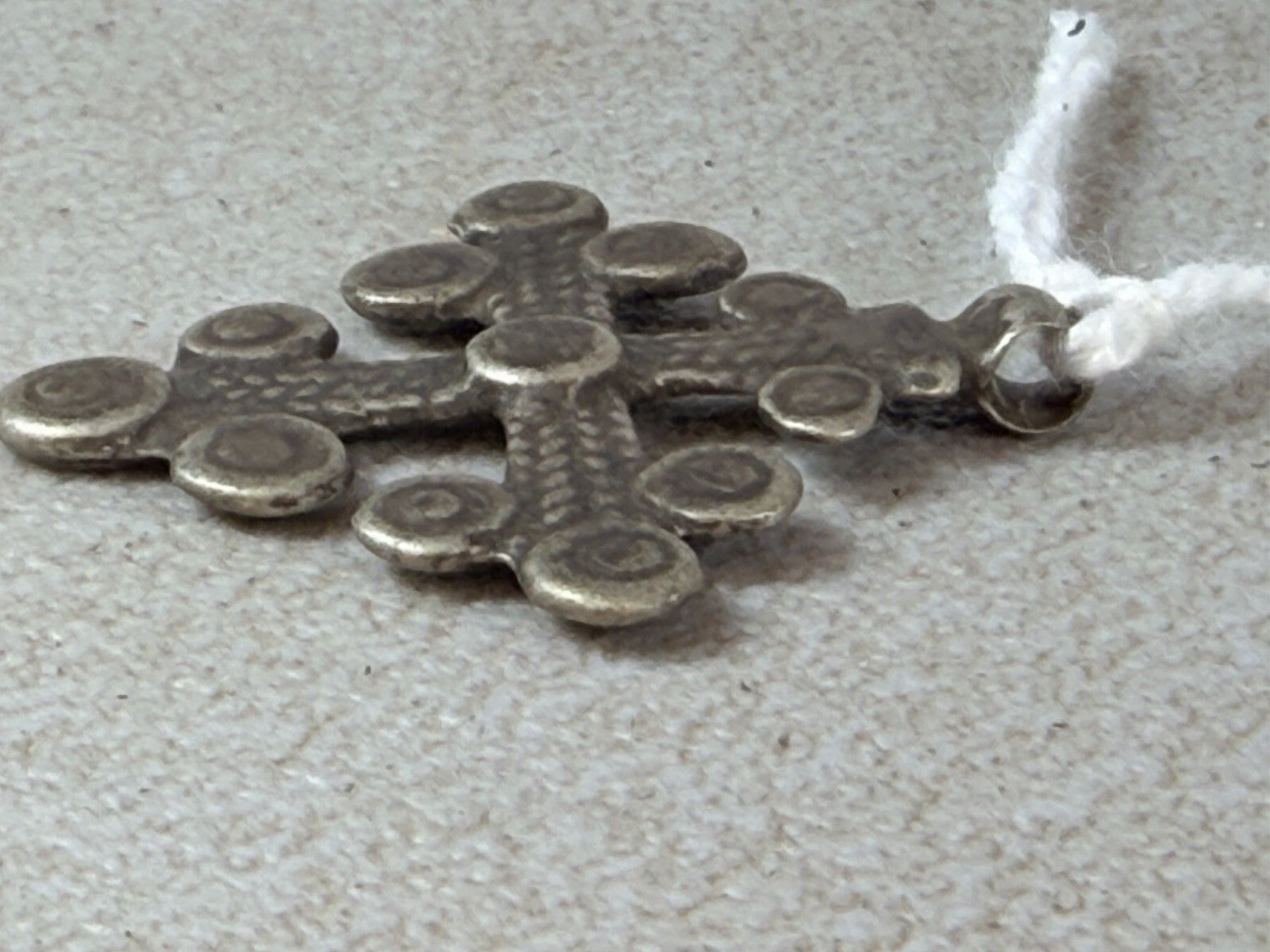
Ethiopia: Antique mid 20th century Ethiopian silver Coptic Handmade Neck Cross.
Size : 3.3 cm long and 3 cm wide.
This is a very beautiful old handmade Ethiopian cross pendant made of Ethiopian silver done by highly skilled silversmith
collector's Coptic cross in Ethiopian silver is a display of good craftsmanship. In Ethiopia particularly among Orthodox Church followers, to wear a cross implied to be protected by the lord himself as well as to show that they are a devoted Christian.
Neck or pictorial crosses are tied round their owner’s neck with a piece of blue thread or cord, which was sometimes given to the wearer at baptism.
This particular cross pendant is old and has been used.
The Christian faith was initially adopted in the fourth century AD by King Ezana, in the ancient Kingdom of Askum (located today in Eritrea and the Tigray region of Northern Ethiopia). From that time, the Ethiopian Christians have worn their neck crosses as a statement of their faith. The Ethiopian cross varies regionally in design and they are either cast using the lost wax method or cut directly from their base metal. The crosses have a rich and varied array of influences which Angela Fisher describes in her wonderful book Africa Adorned:
“The oldest are simple Greek or Latin design. Those with flared arms show the influence of Coptic crosses from upper and lower Egypt; others, probably under Celtic influence, developed trefoils or decorative projections. With the ready supply of silver in the nineteenth century, the crosses became more elaborate; complicated openwork designs, or patterns of endless interwoven lines symbolising eternity became popular. Additional hinges and crowns show the influence of nineteenth century European medals. The star of David is worn by the Falasha, a small group of Jewish settlers living near Gonder. The four birds represent the doves of peace.”
The Ethiopian people wear the crosses not only as a religious emblem, but also as a sign of wealth. Invariably they are also sold during times of hardship.