260826 - Rare Large Old African Songye protective sculpture - Congo.
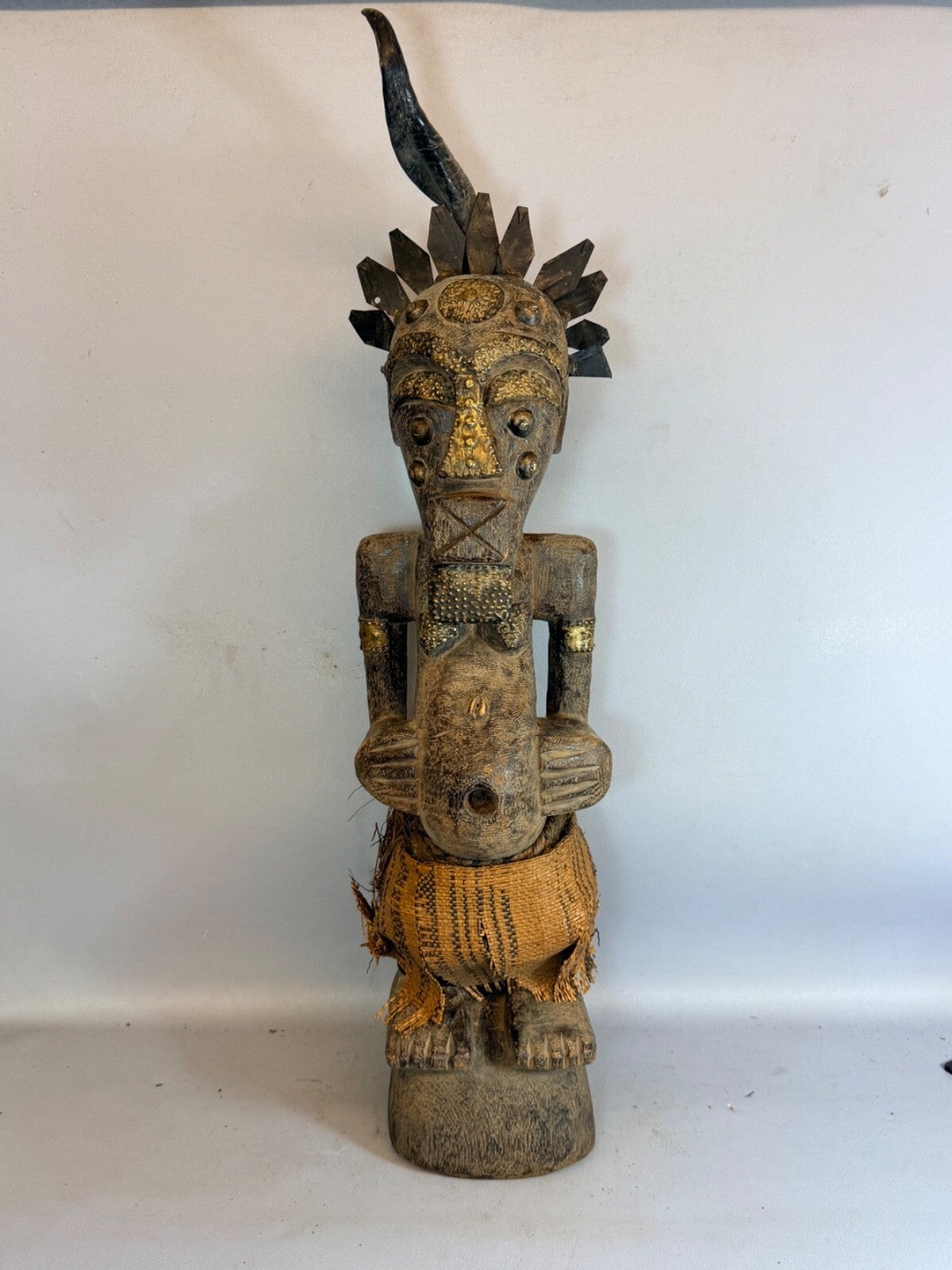
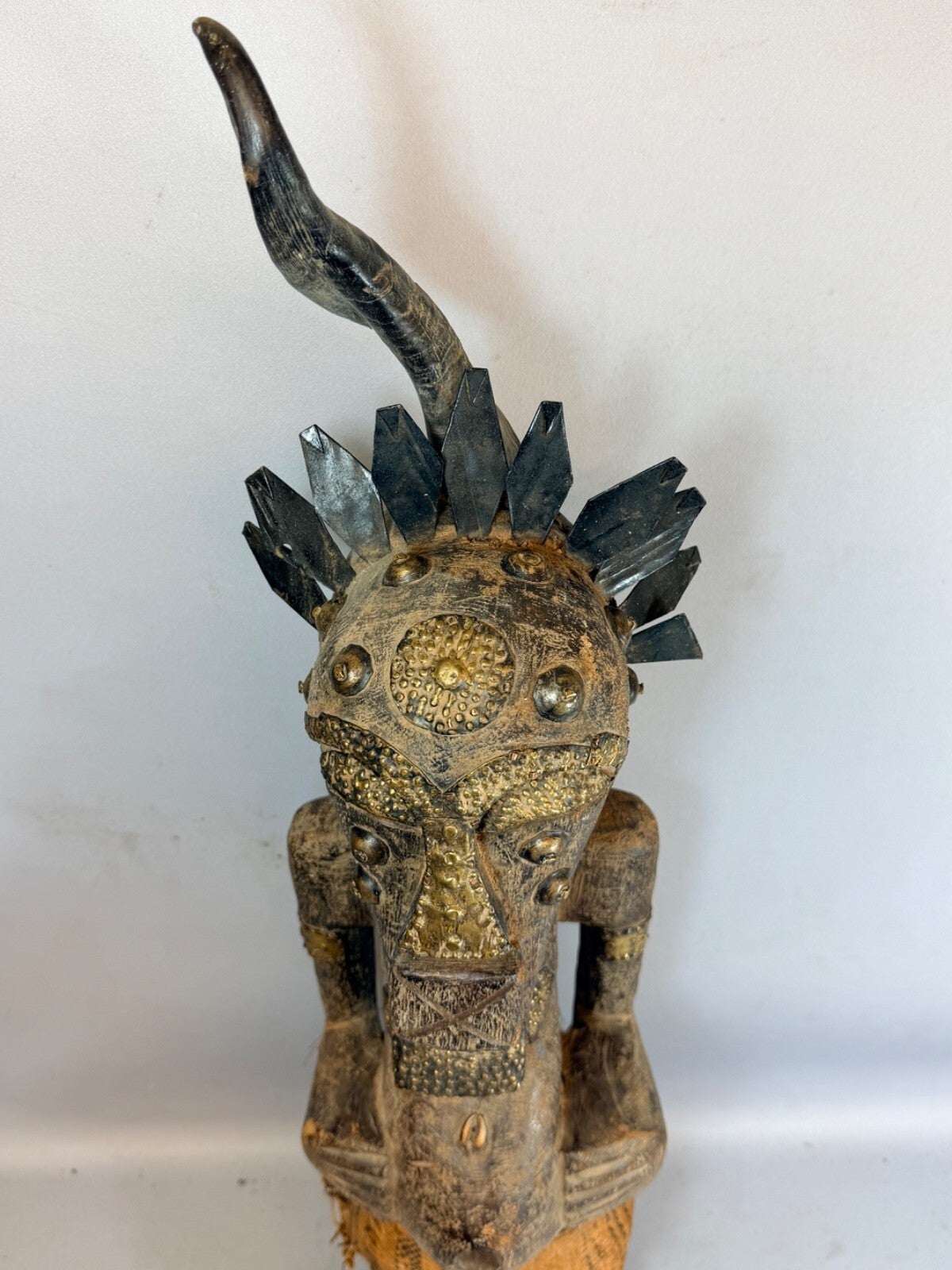
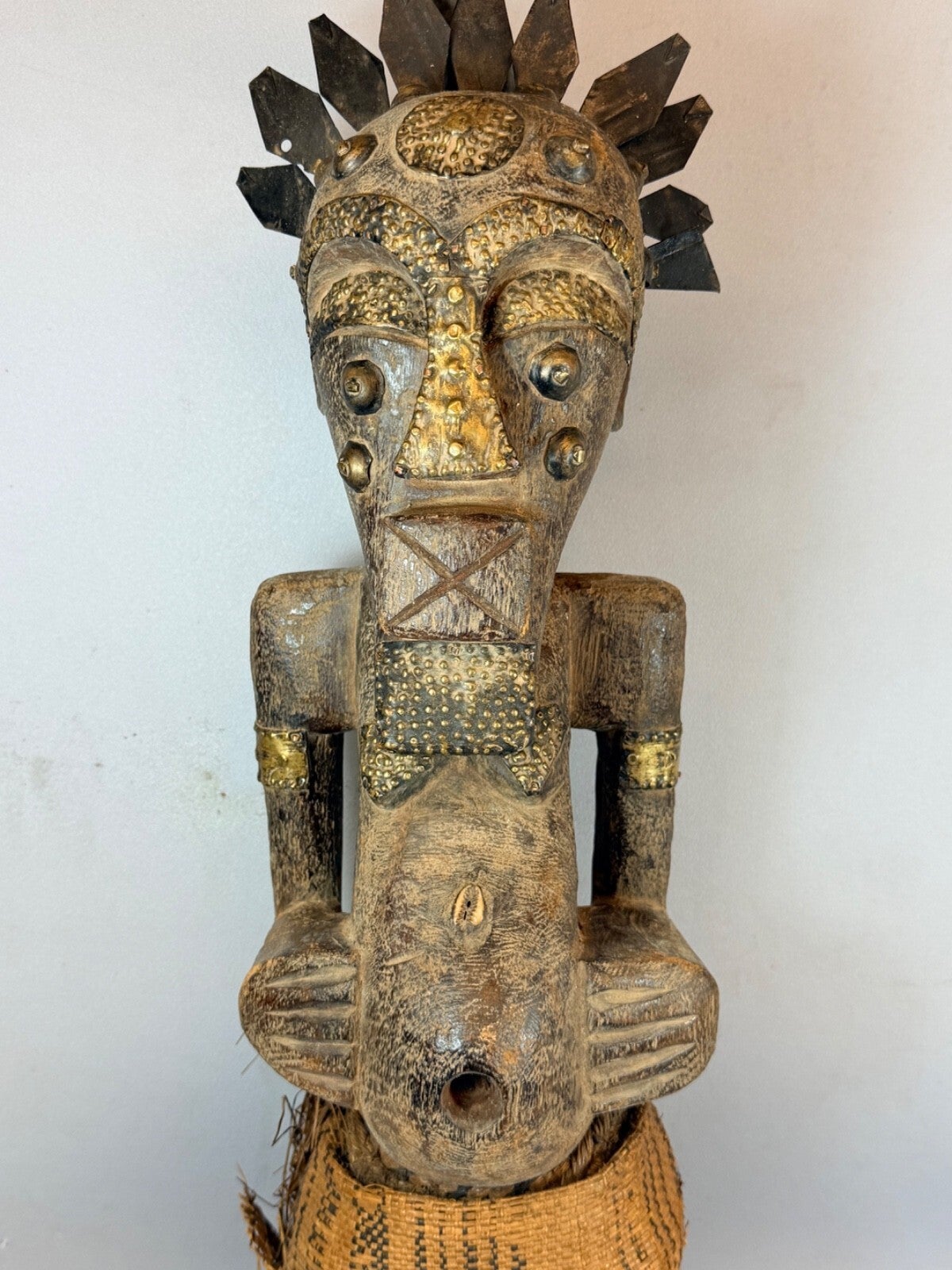
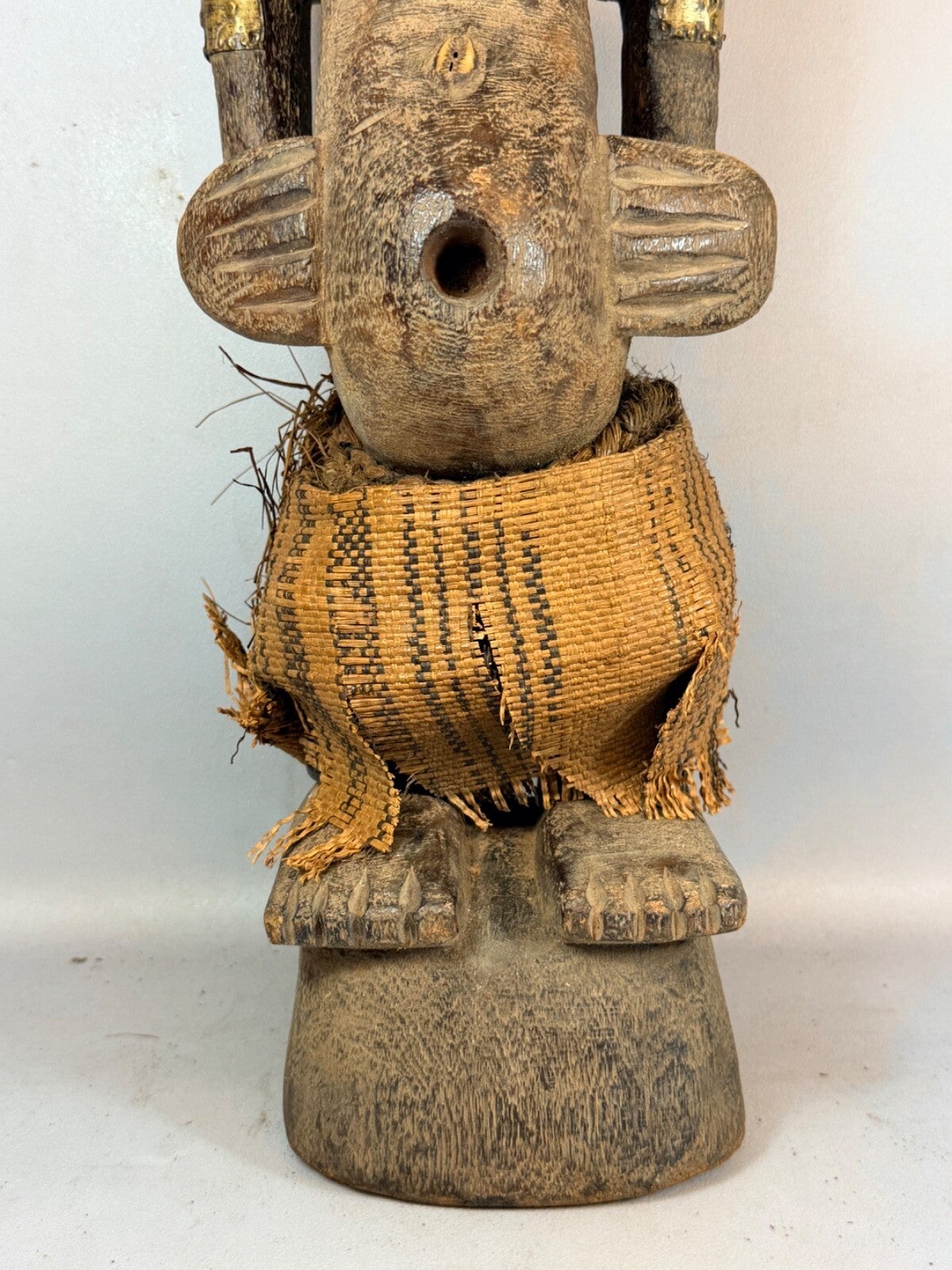
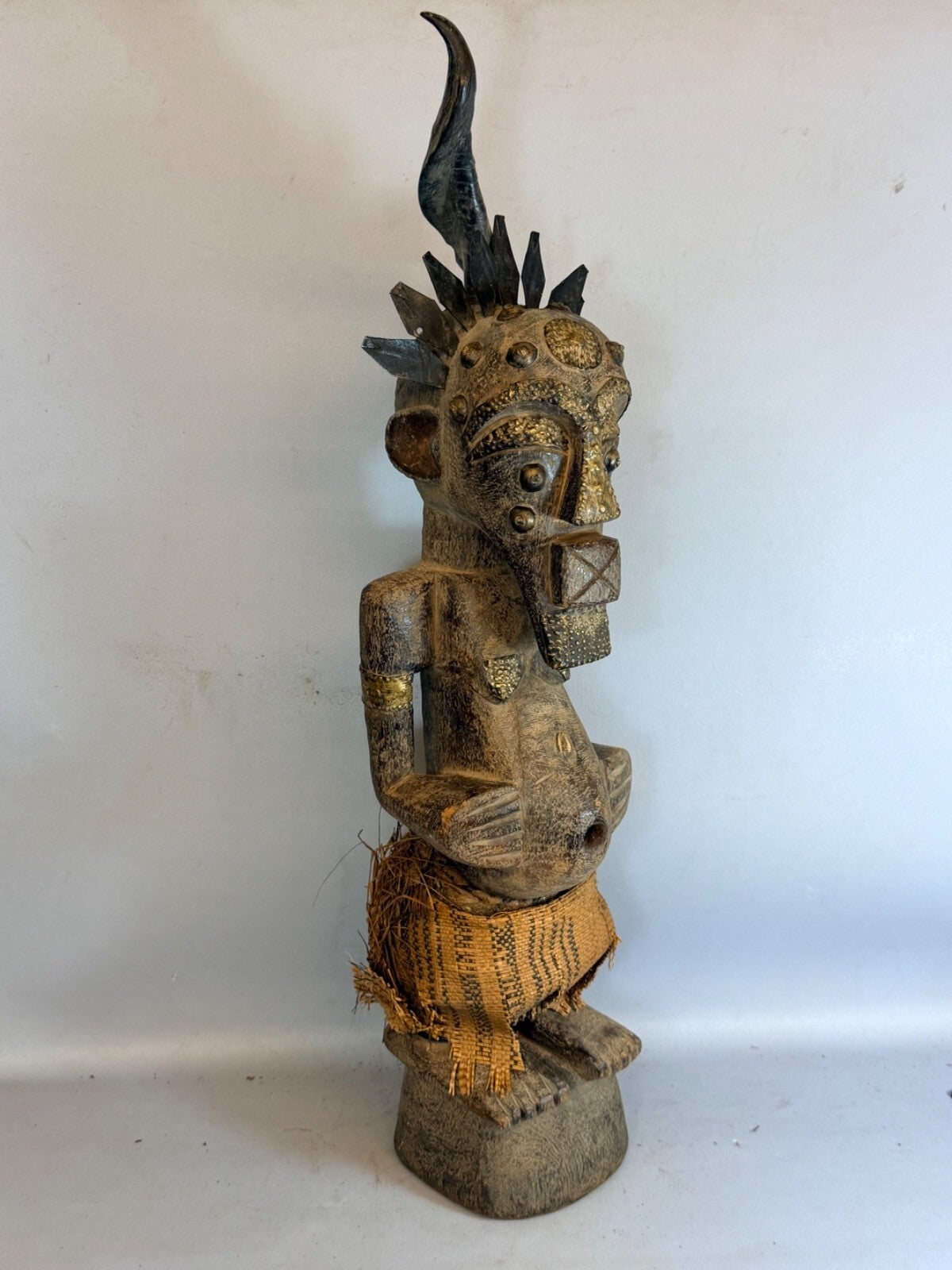
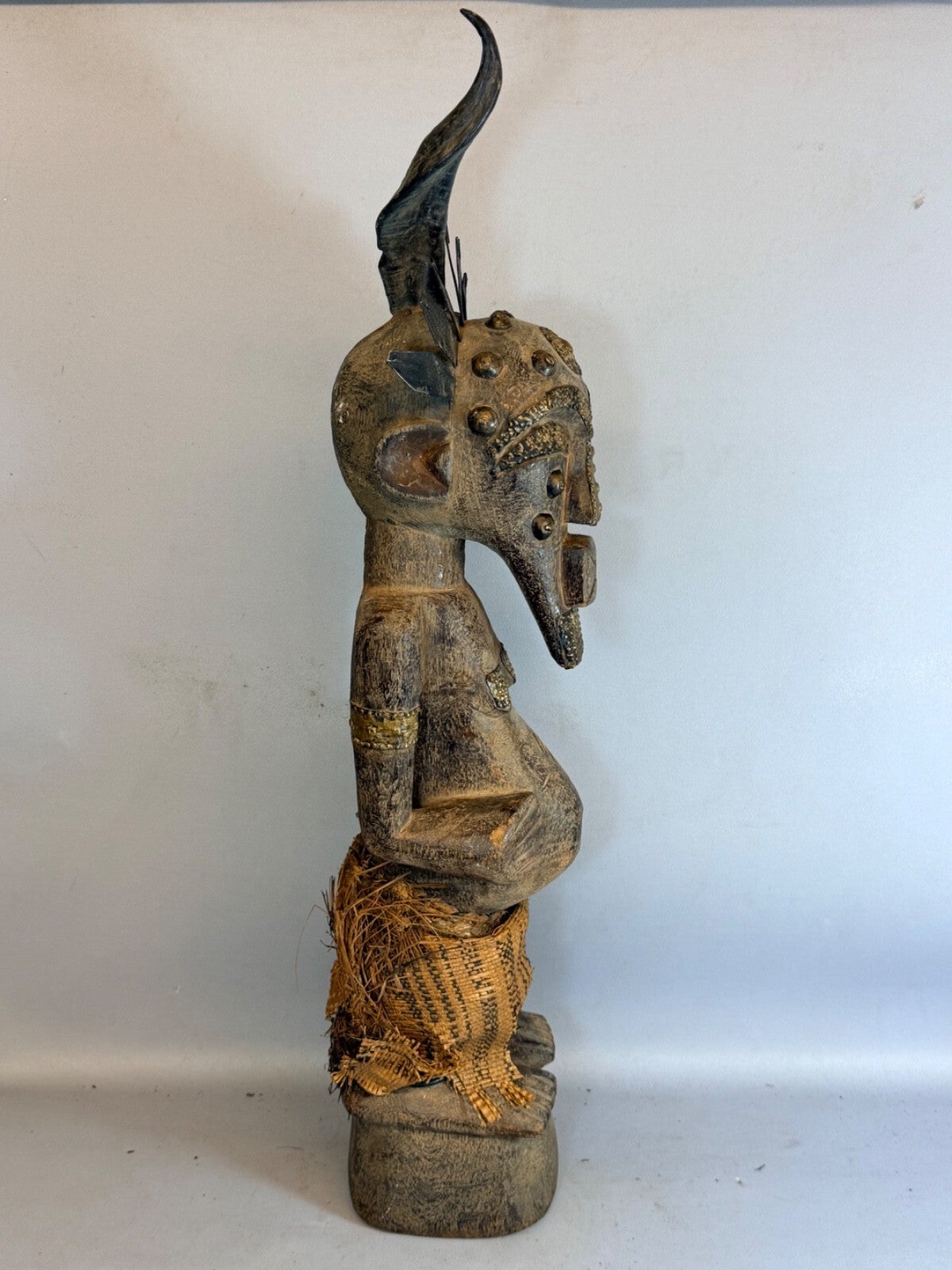
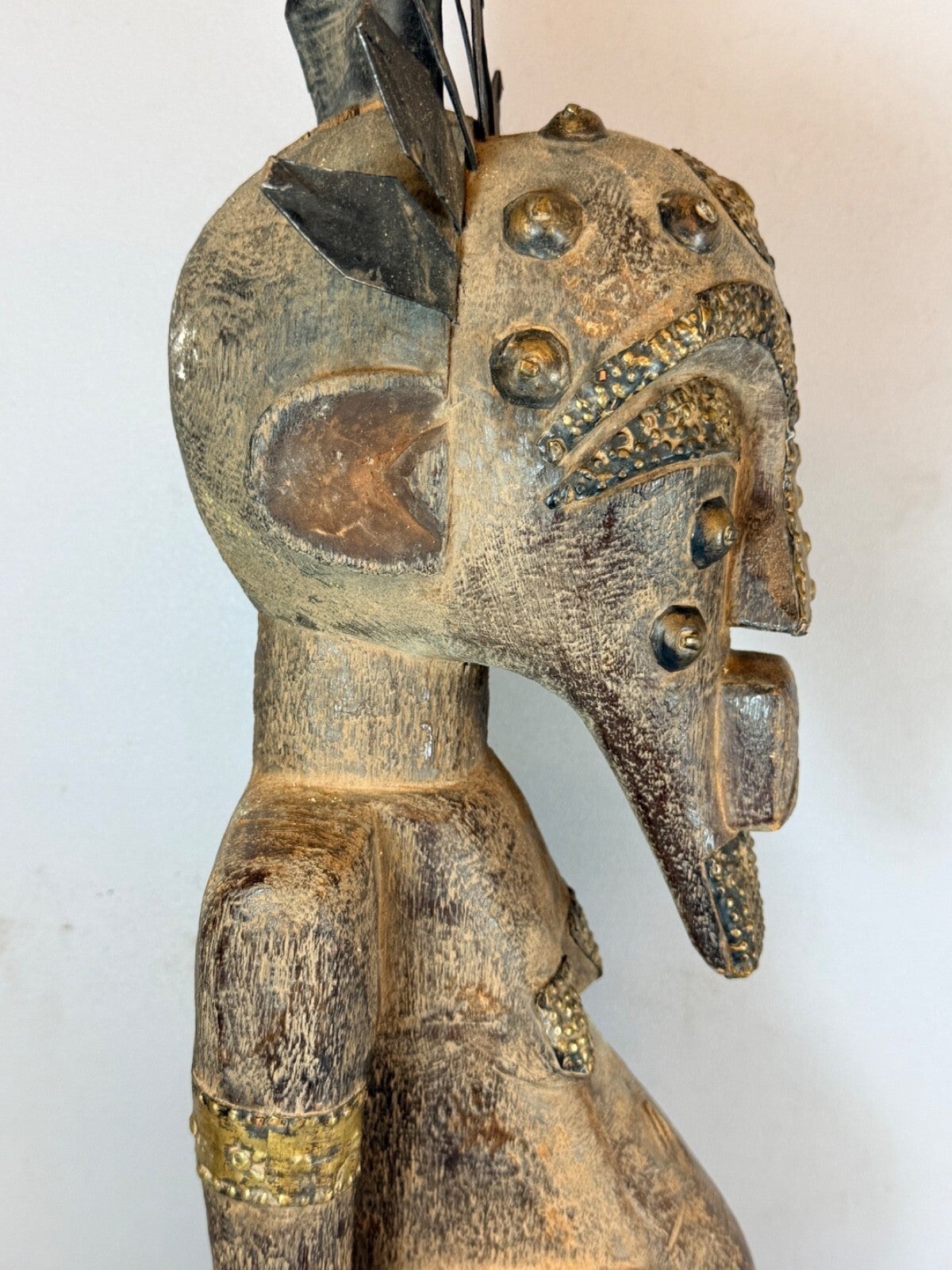
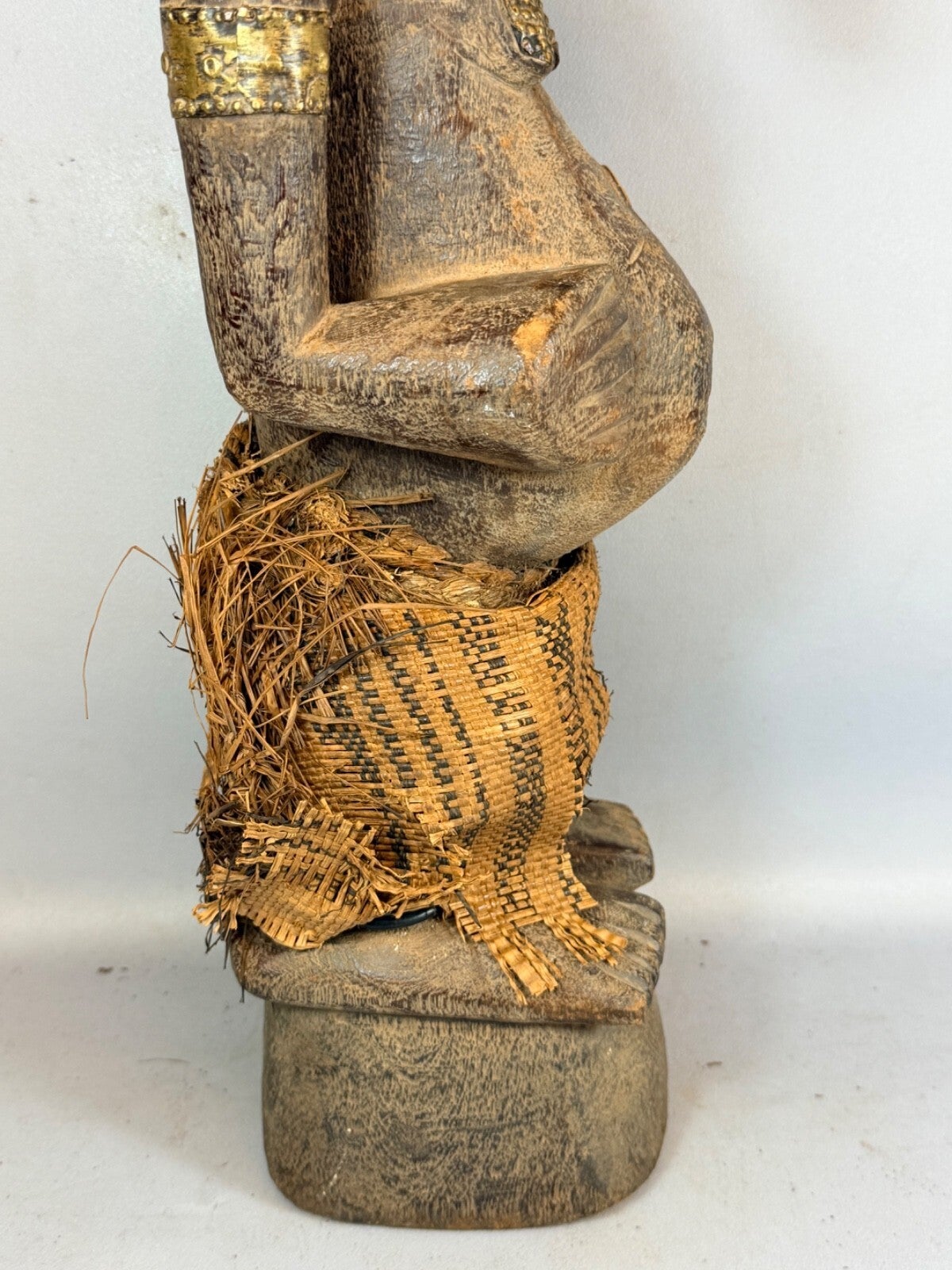
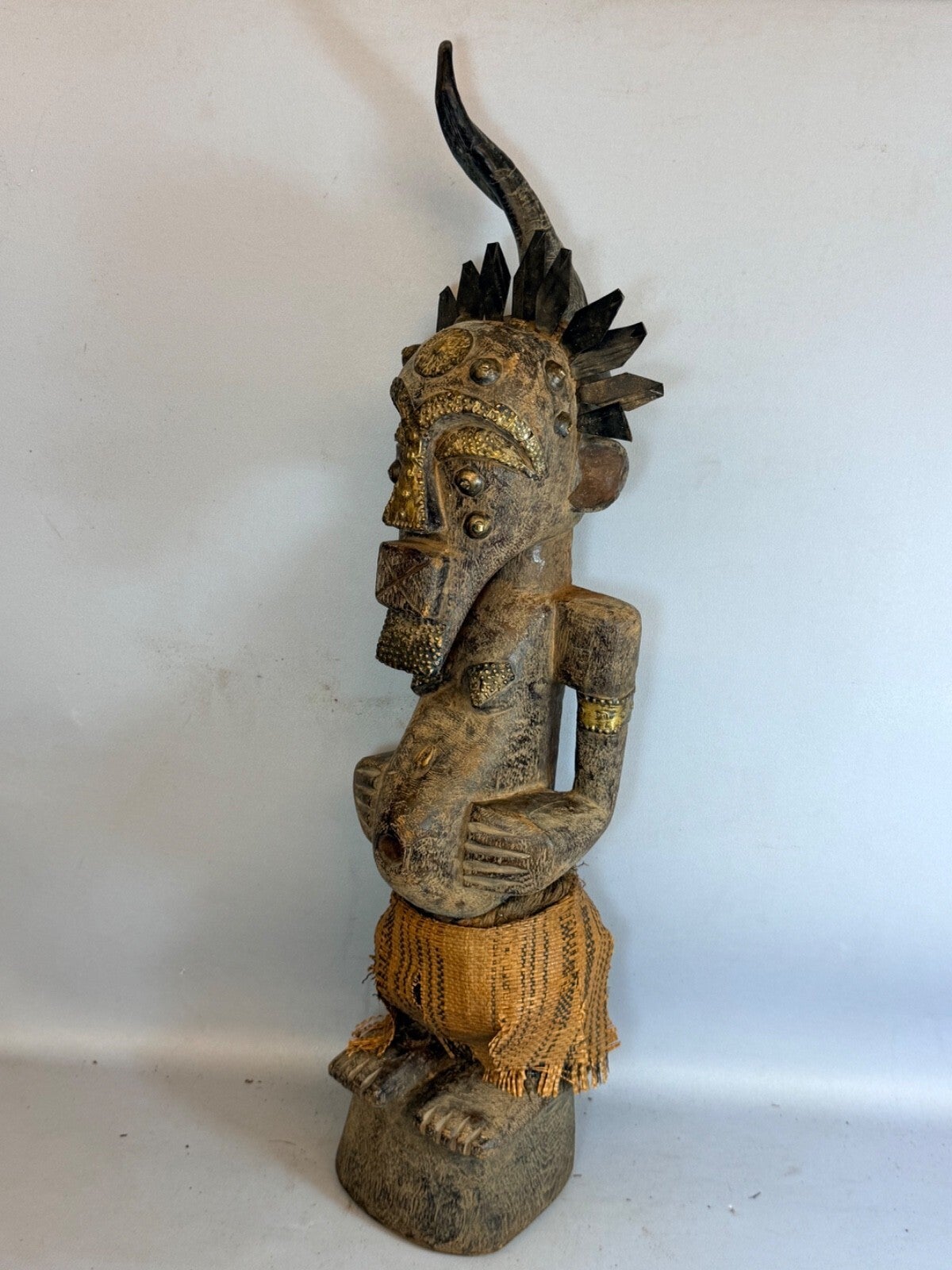
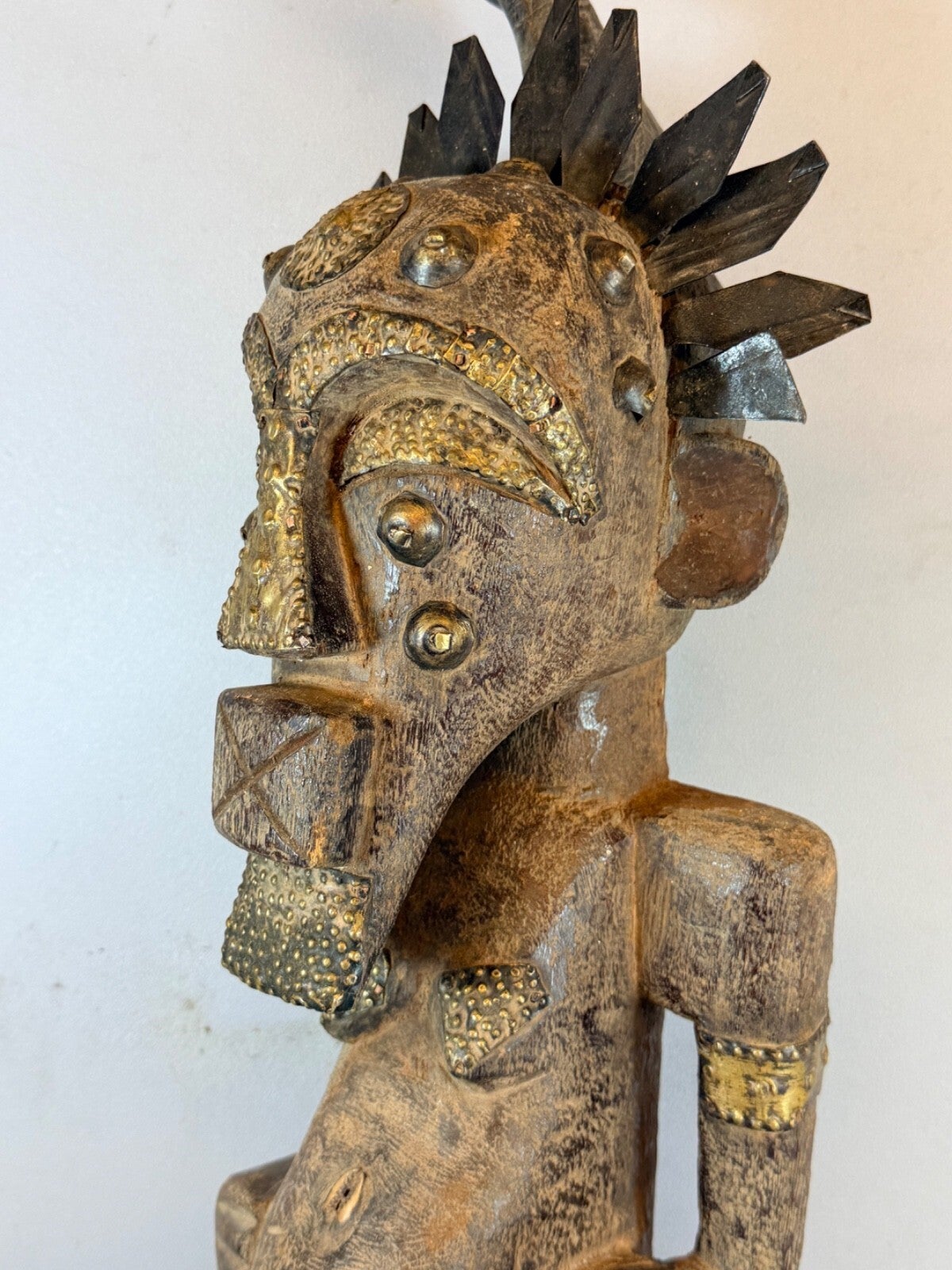
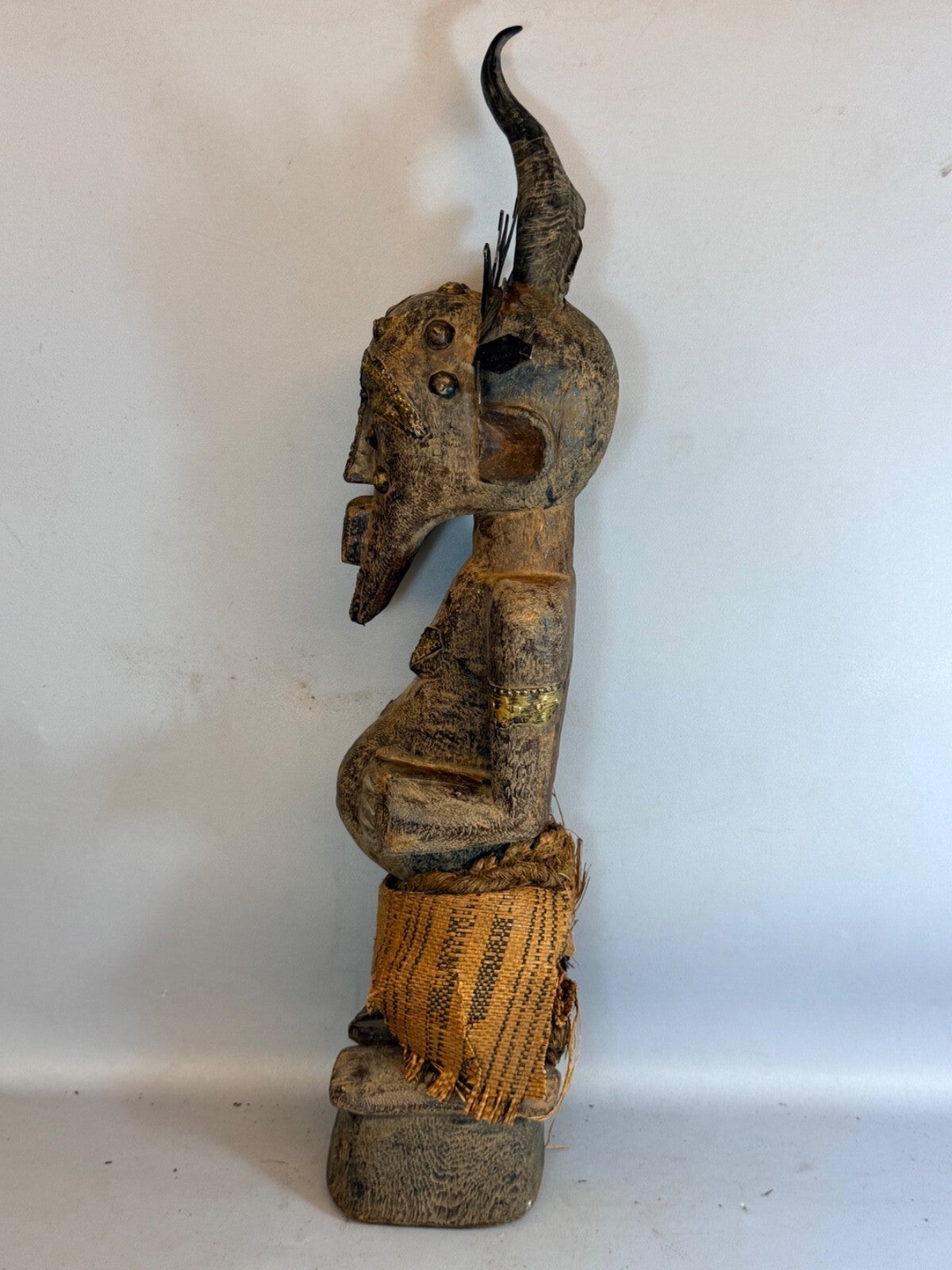
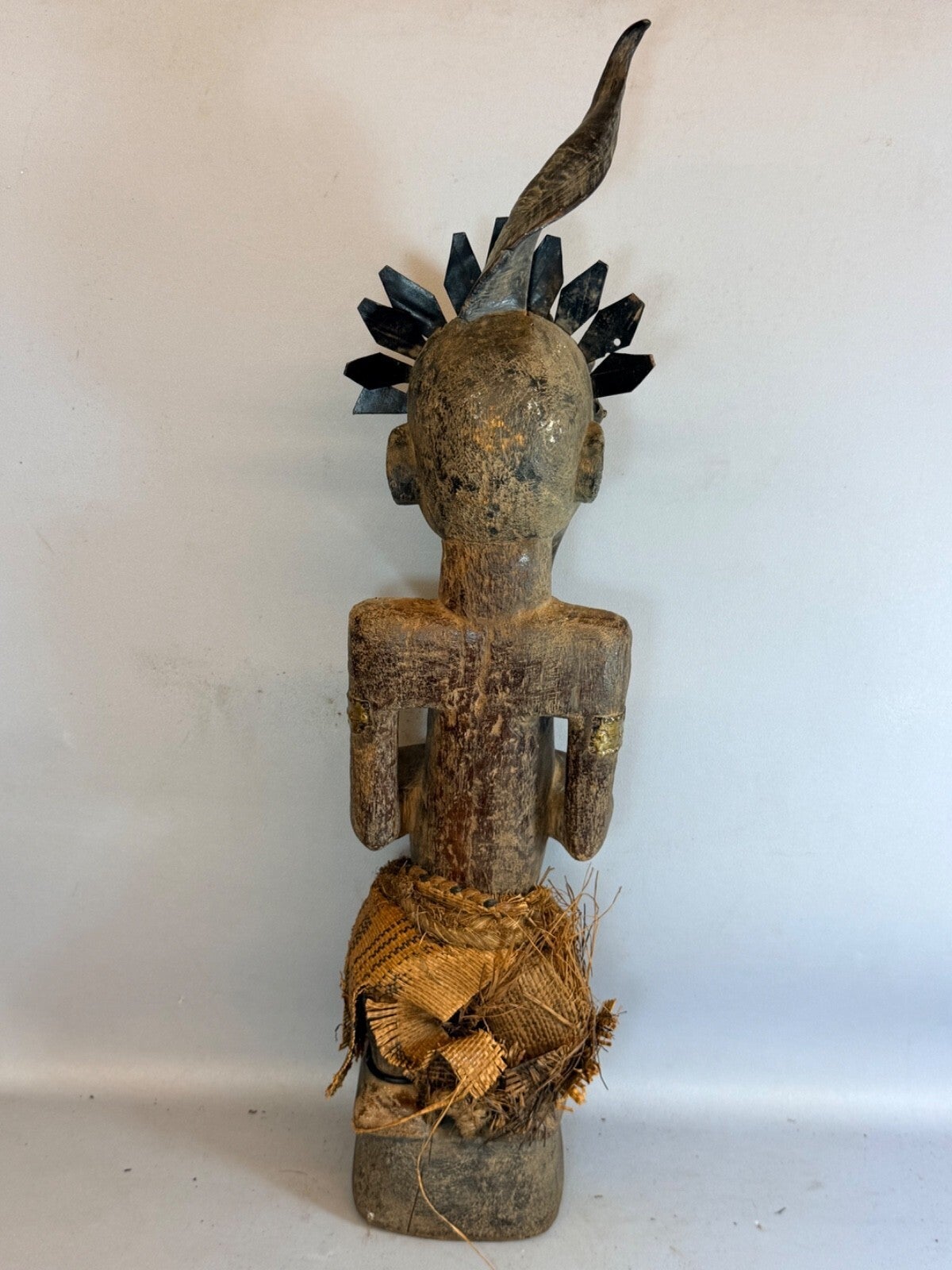
Rare & Large Expressive African protective sculpture from the Songye, Congo.
This type of statues serves the Kifwebe secret society and embodies a protecting spirit.
Hand carved from a single piece of wood with metal elements.
Size: 76 cm high.
This sculpture is from the second half of the 20th century and comes with a certificate of authenticity.
These protective fetishes for homes are among the most sought-after in Africa. The Nkisi acts as an intermediary between gods and humans. The large specimens are owned by the entire village, while the smaller figures belong to an individual or a family. In the 16th century, the Songyes migrated from the Shaba region to settle on the left bank of the Lualaba. Their society is organized patriarchally. Their history is inextricably linked to that of the Luba, with whom they are related through common ancestors.
The Songyes have created impressive statues with powerful features that are often used during secret ceremonies, covered with accessories such as skin, iron, and bronze, as well as talismans full of magical power.
Very prevalent in their society, divination made it possible to locate sorcerers and gain insight into the causes of the misfortunes that befell individuals.
During the 16th century, the Songye migrated from the Shaba area, which is now the southern part of the Democratic Republic of the Congo. Their history is closely linked to the Luba's, to whom the Songye are related through common ancestors. Having waged war against one another for a long time, the Songye and Luba later formed an alliance to fight the Arabs. They settled on the left bank of the Lualaba River, on a savanna and forest-covered plateau. Divided into many subgroups, the 150,000 Songye people are governed by a central chief assisted by innumerable secret societies.
The Songye traditionally relied mostly on farming and hunting for subsistence. Because the rivers were associated with the spirits of deceased chiefs who were often buried in them, fishing was not practiced except in times of great need. The artistic wares of the Songye, including pottery made by women and weaving and metalworking done by men, were traded extensively with their neighbors.