260867 - Antique African Yoruba head from the Yoruba region Esie - Nigeria.
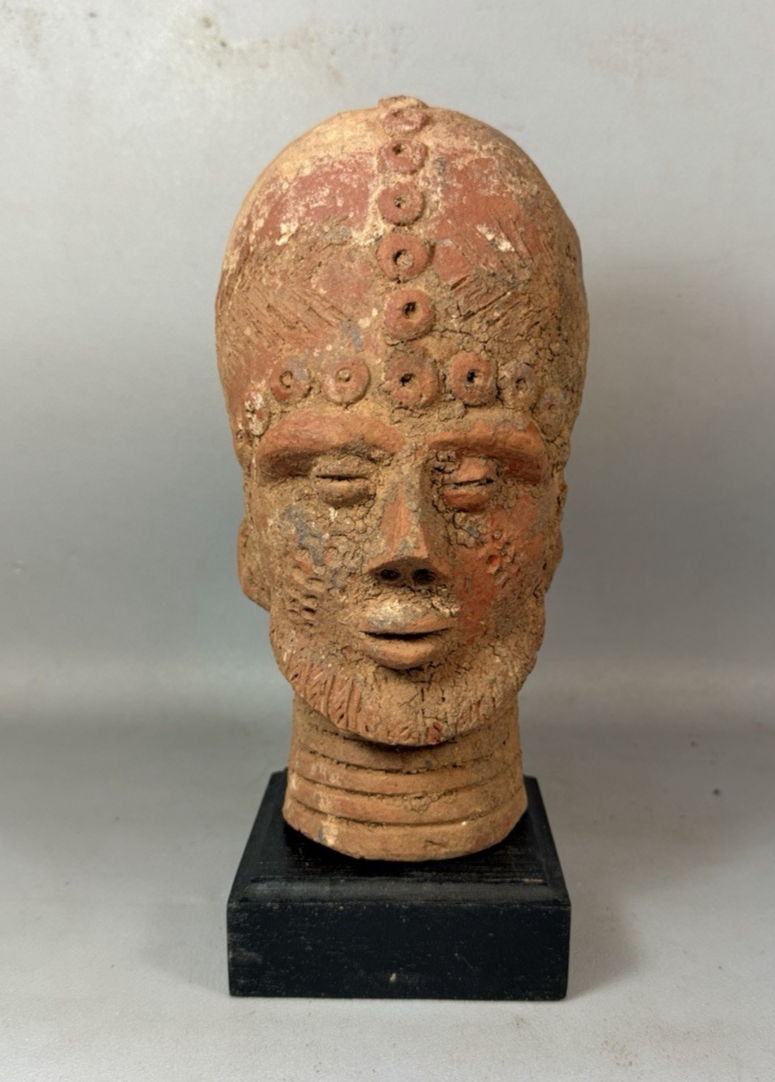
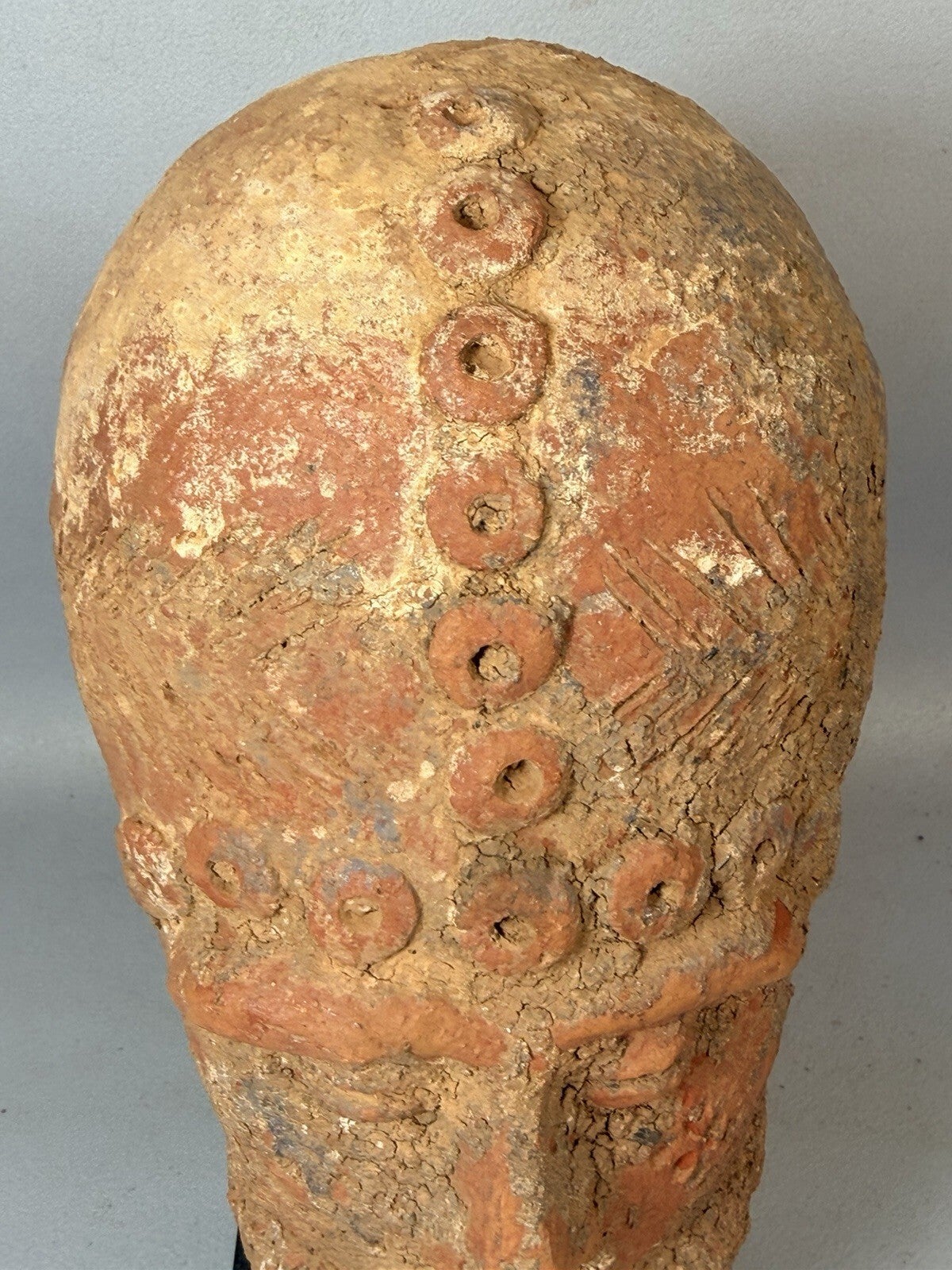
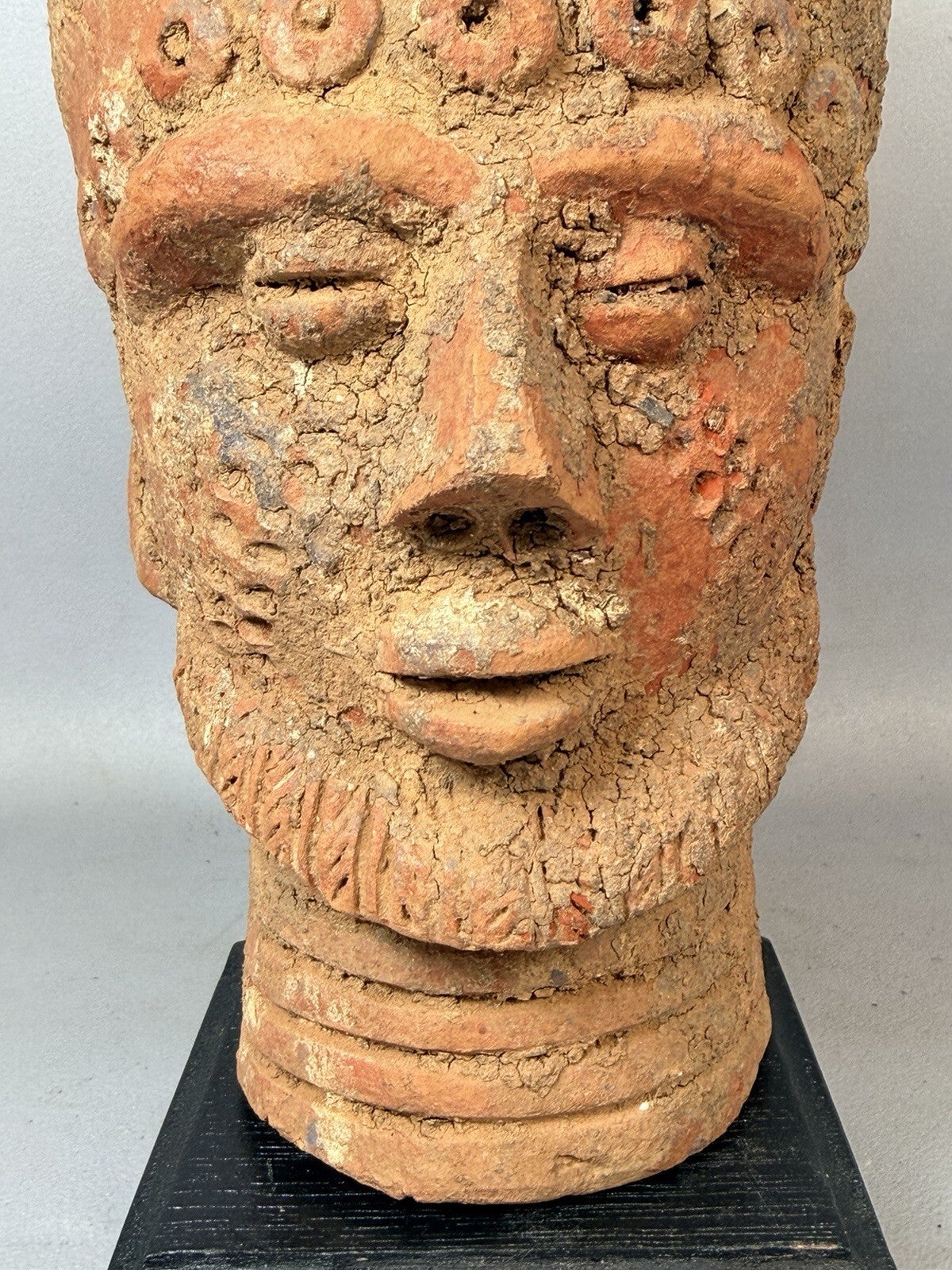
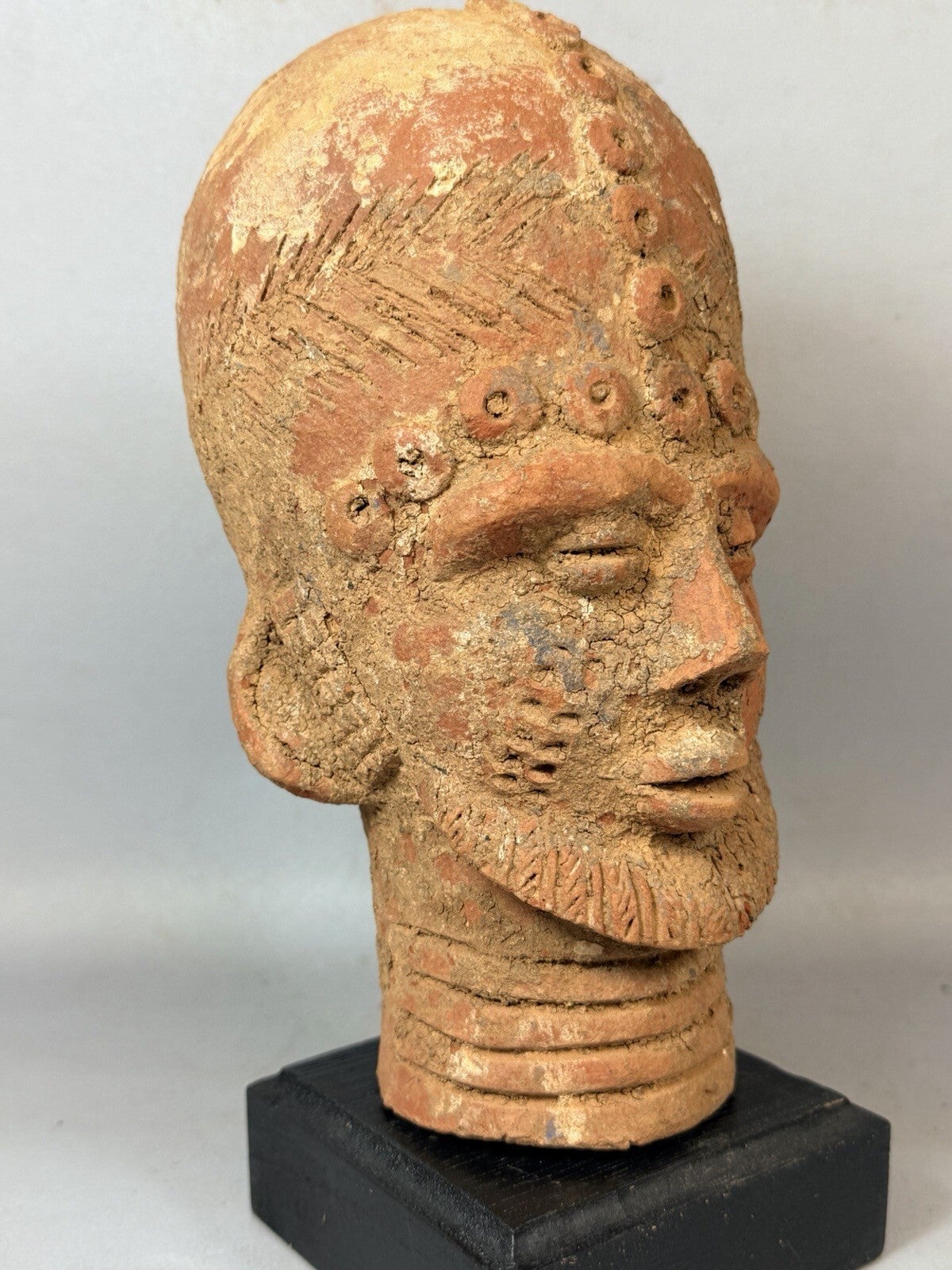
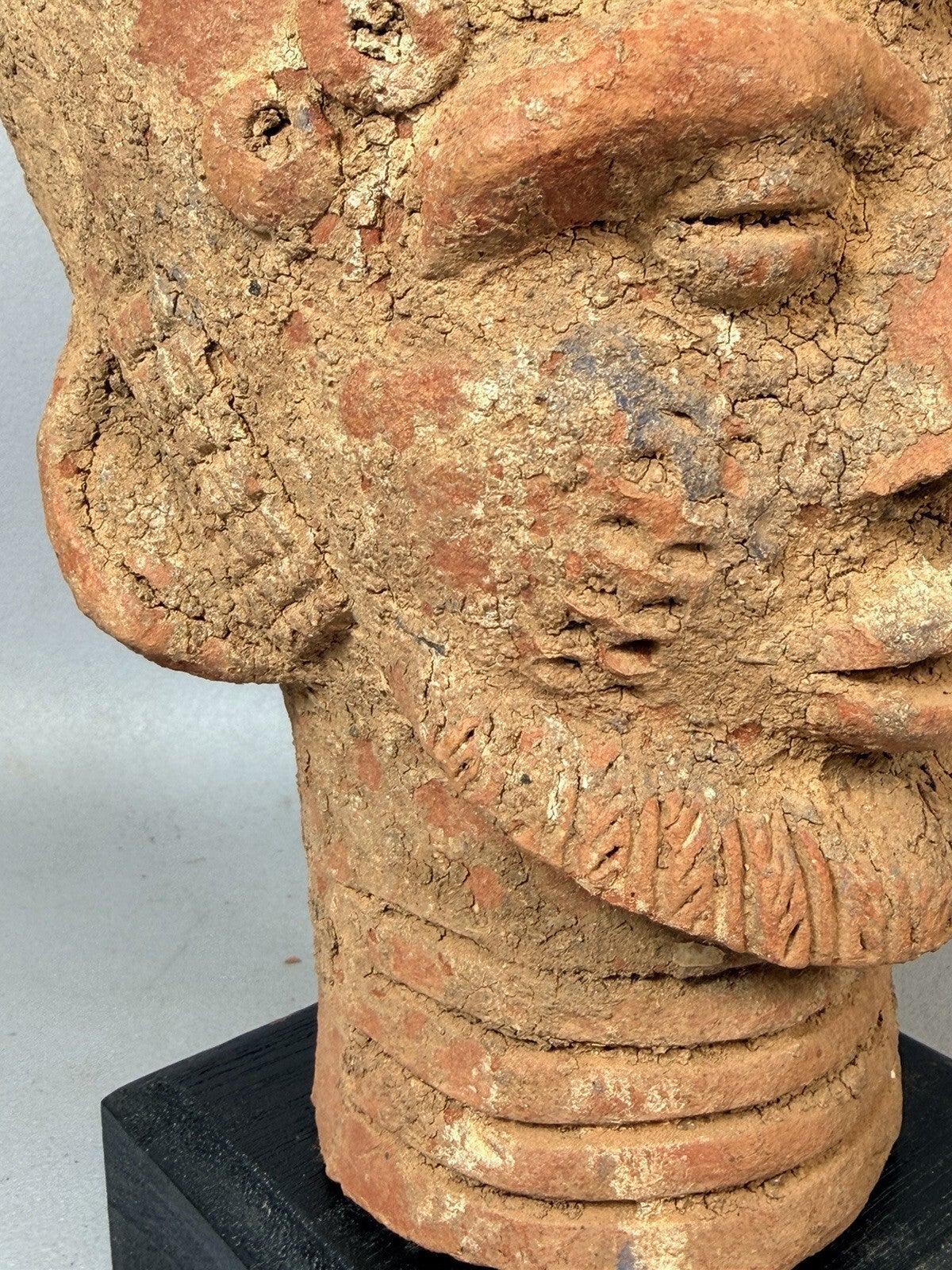
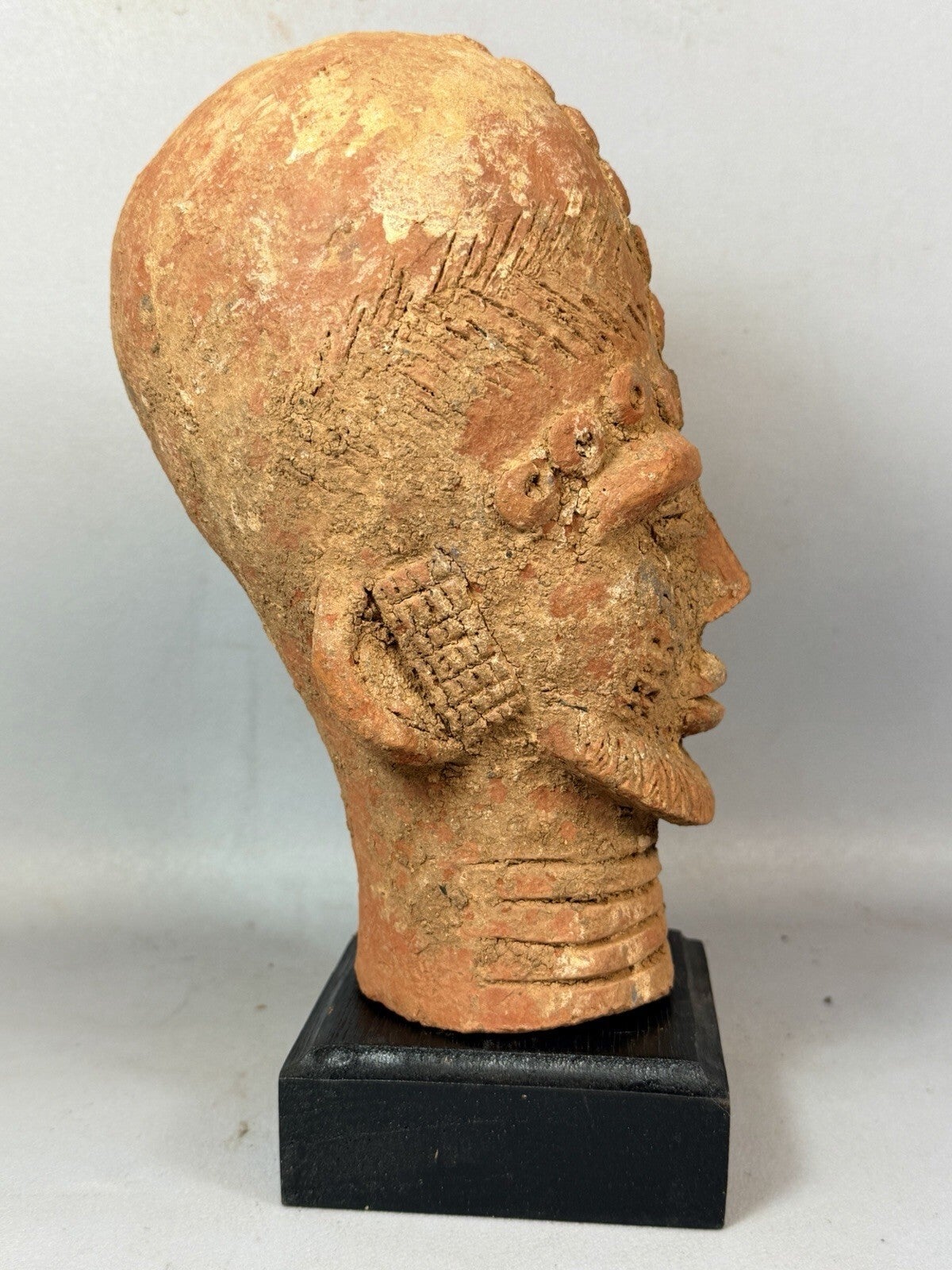
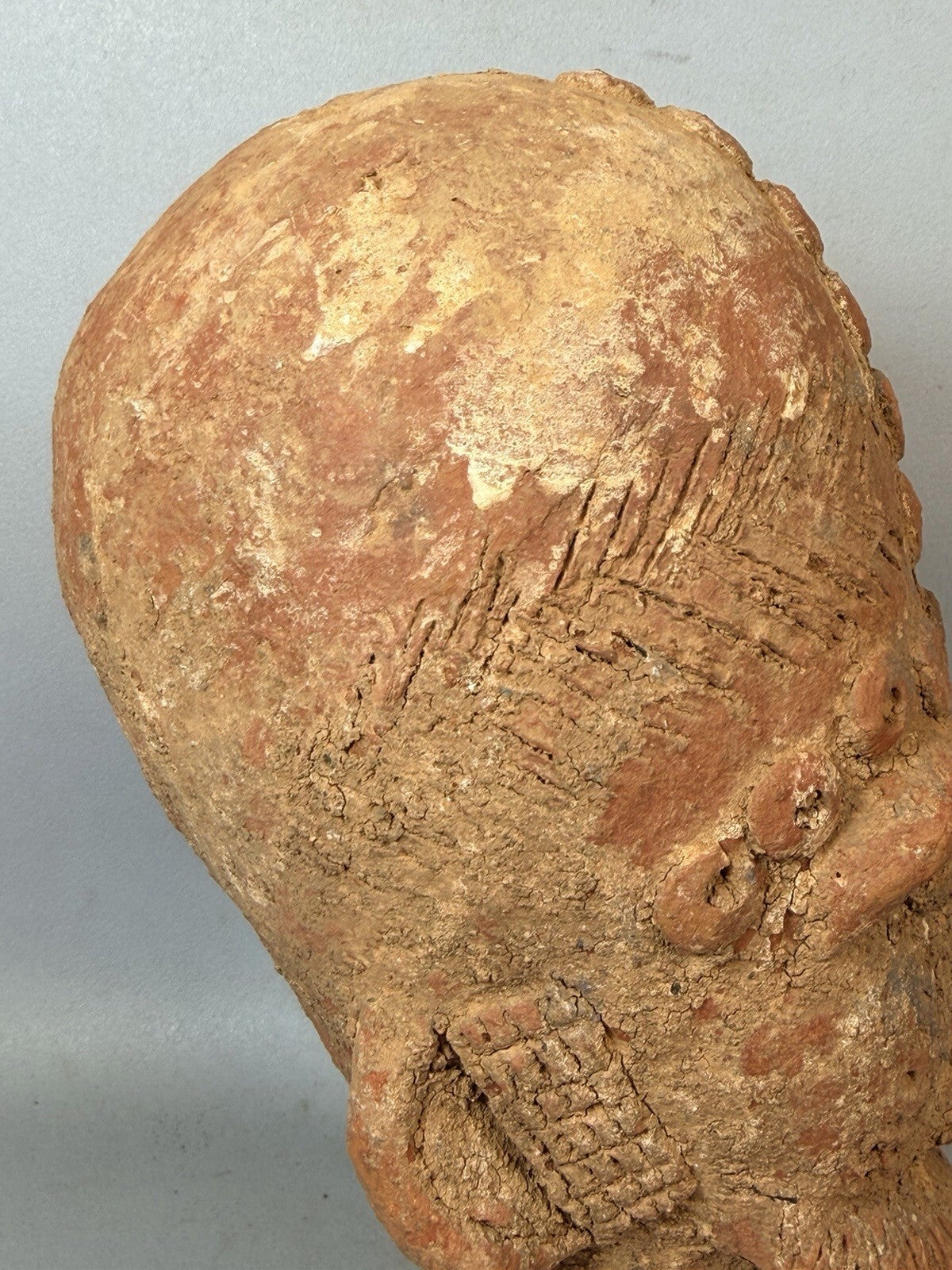
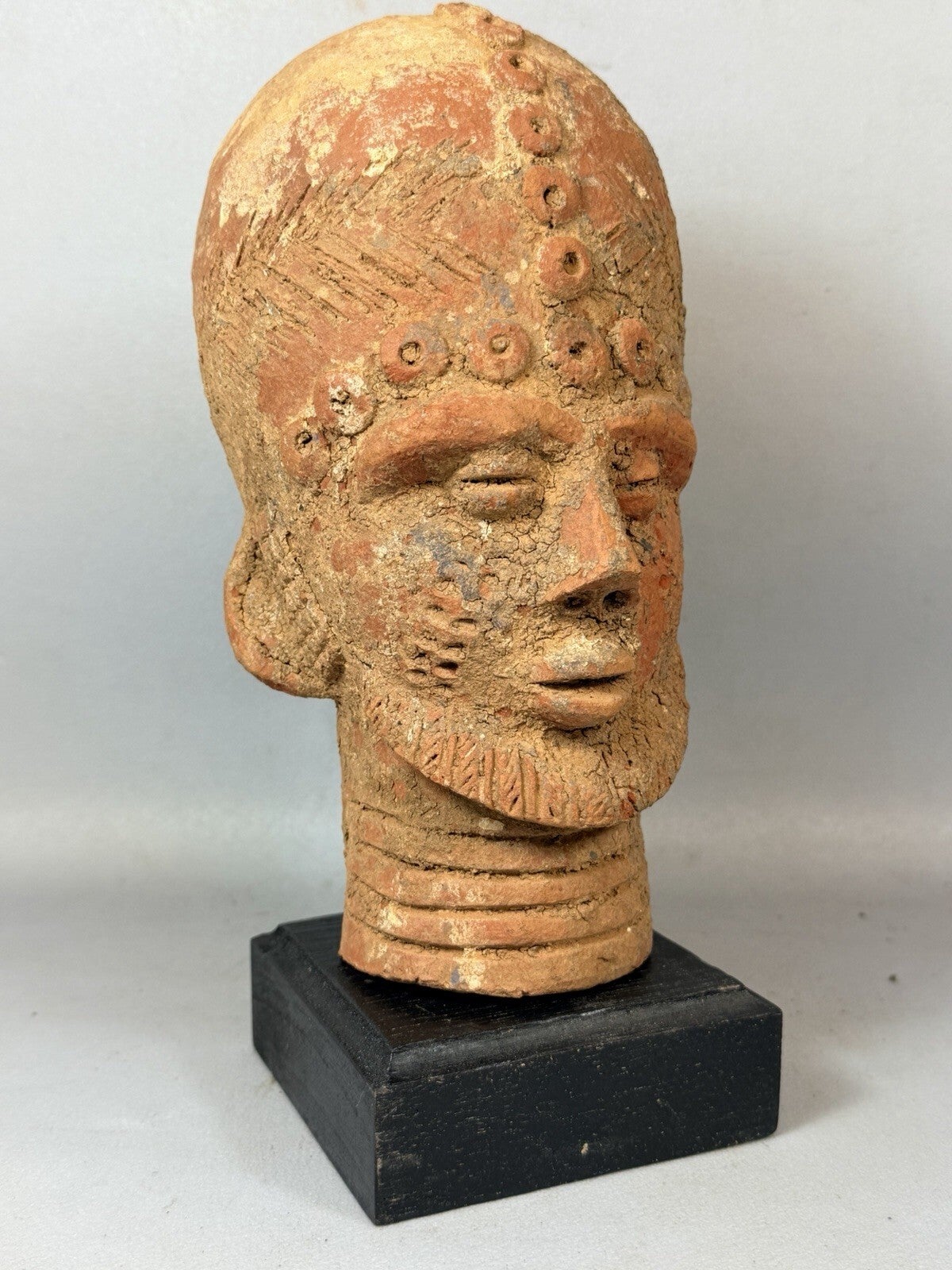
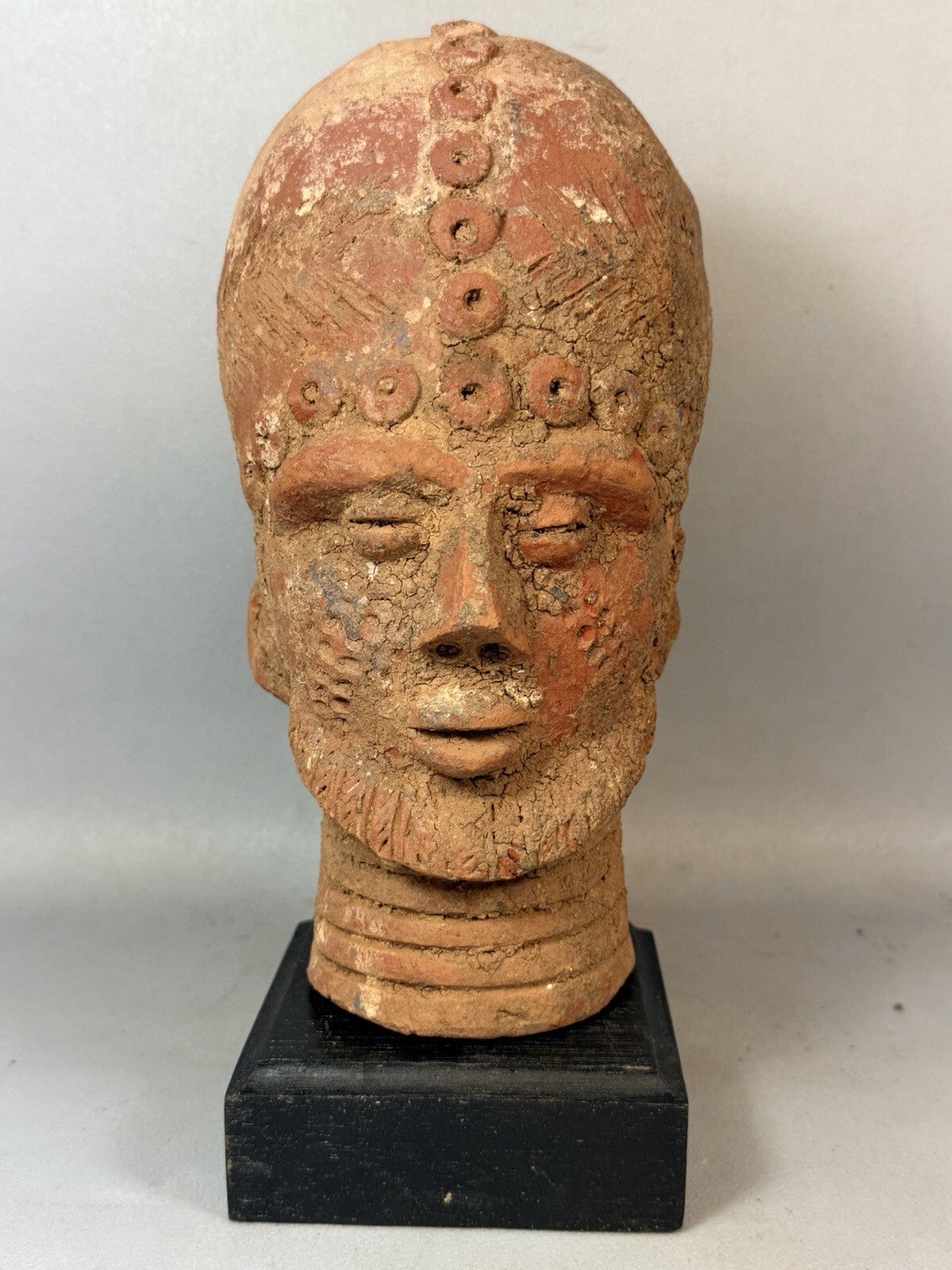
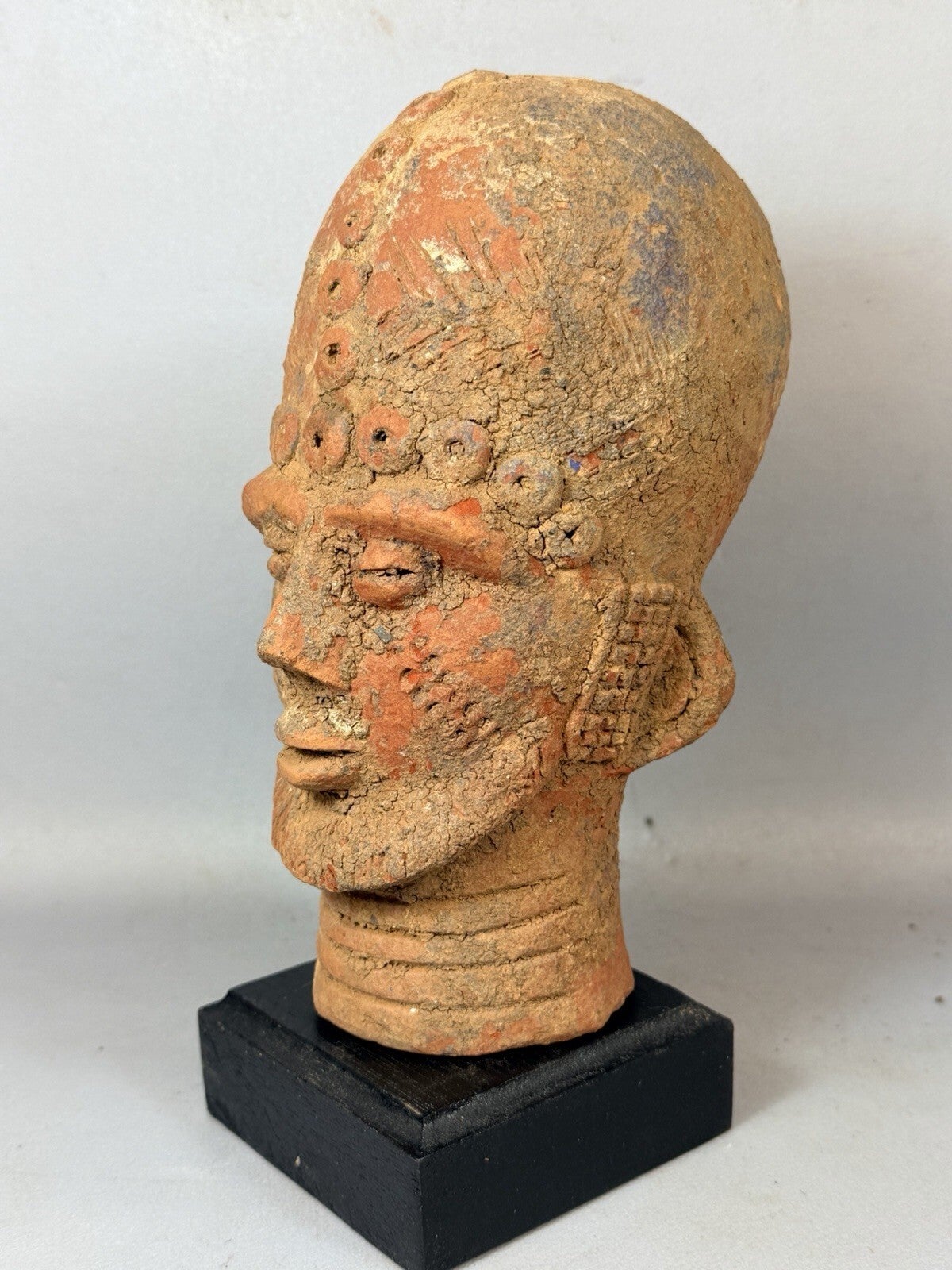
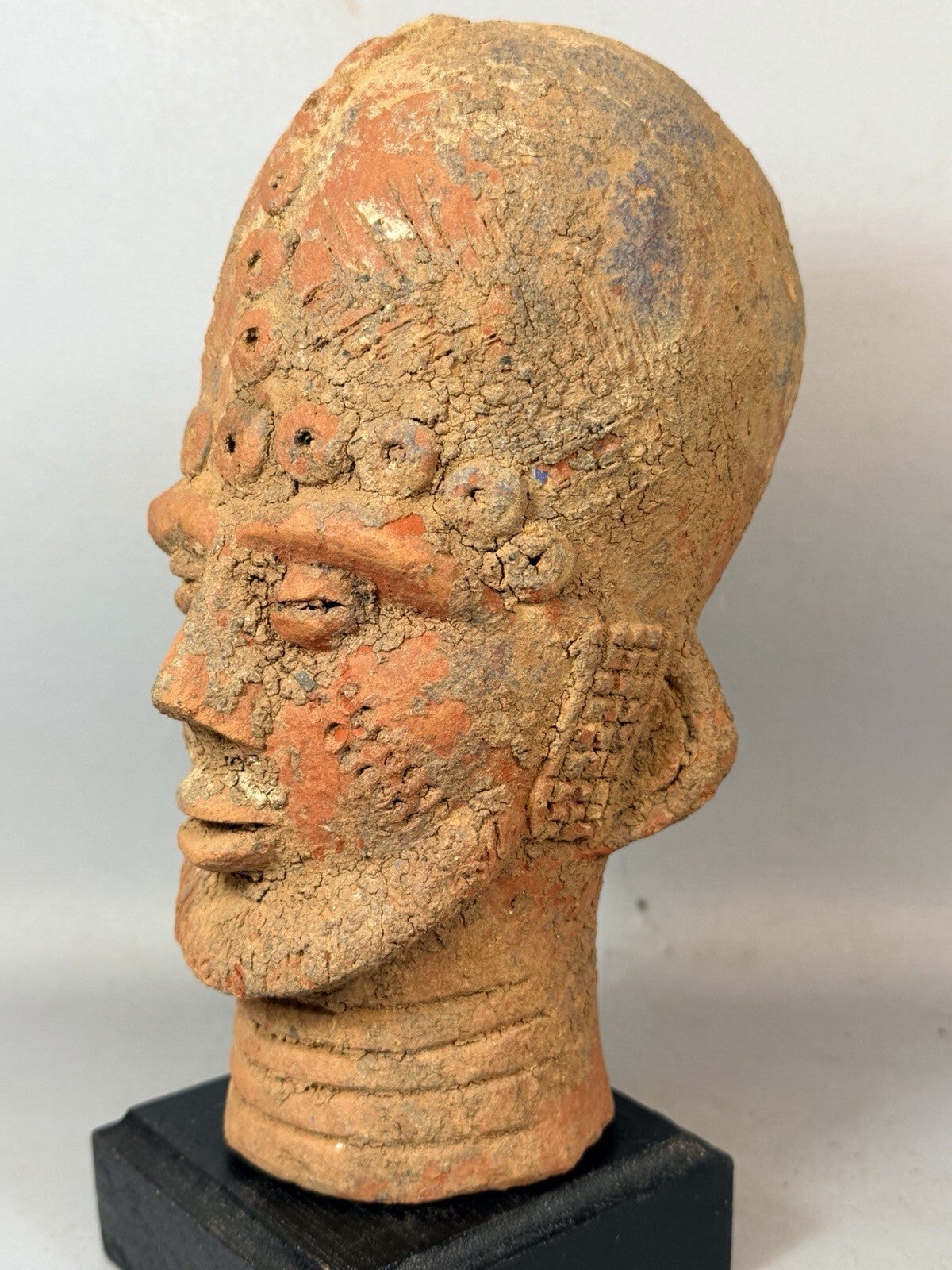
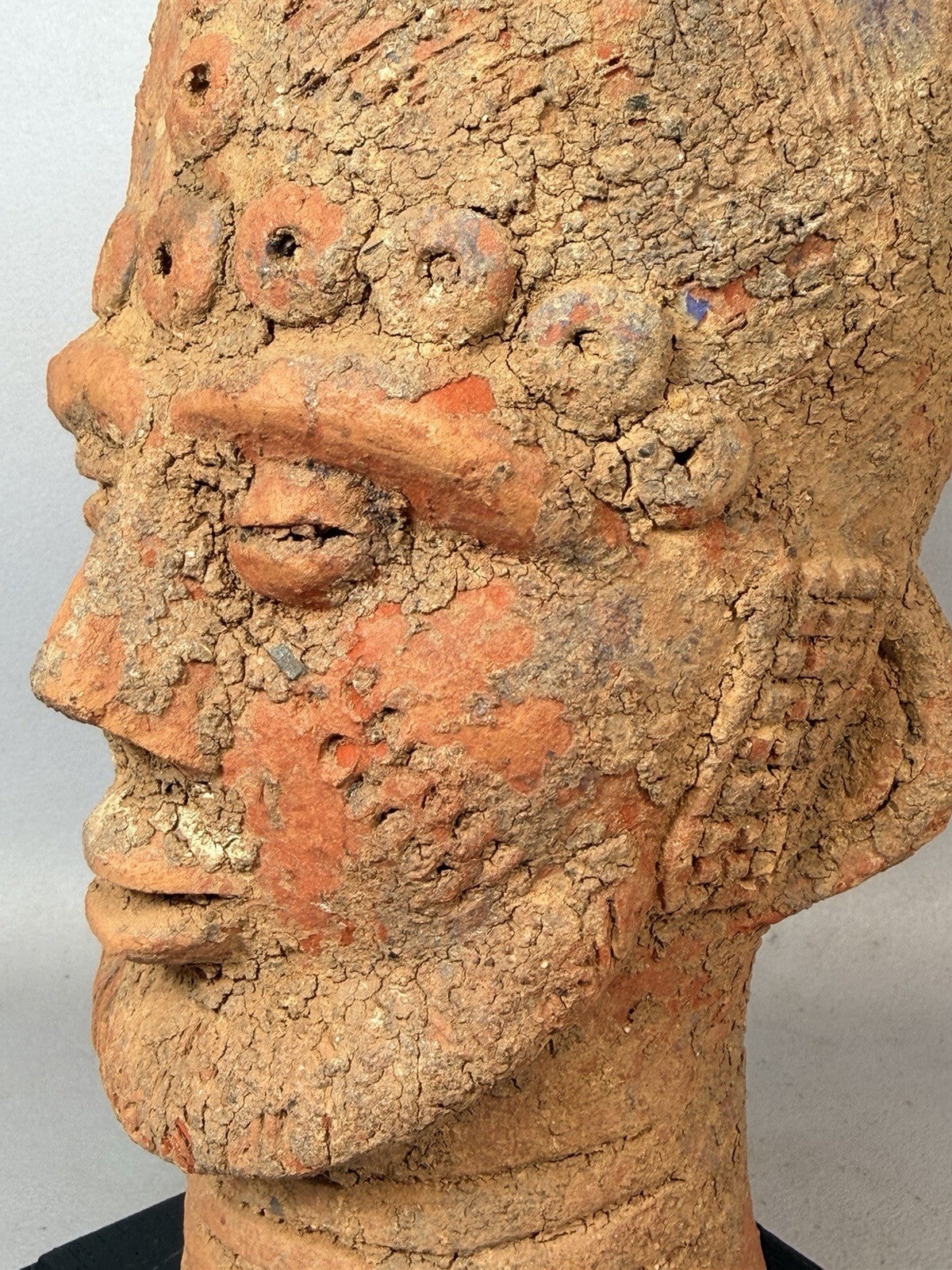
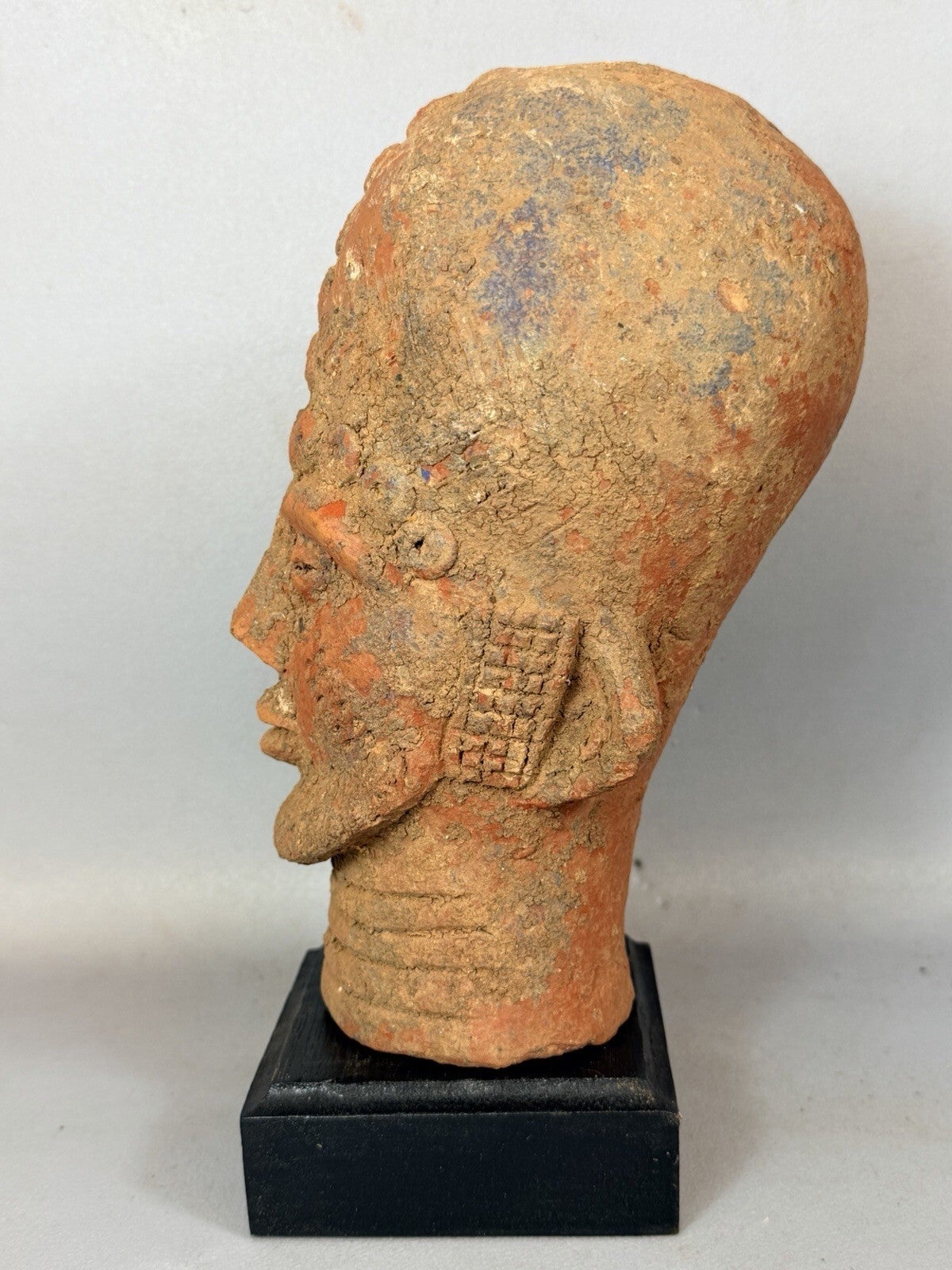
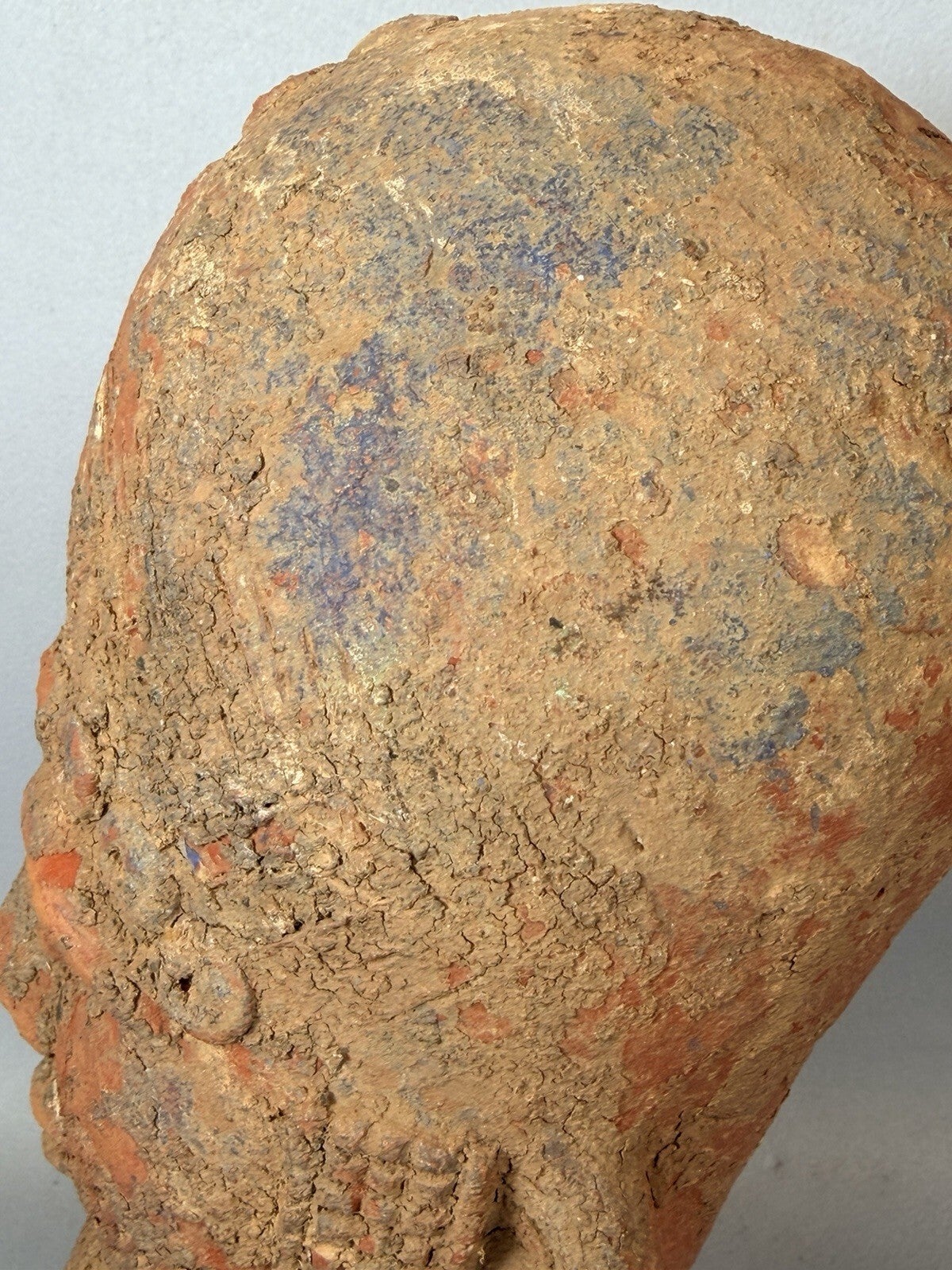
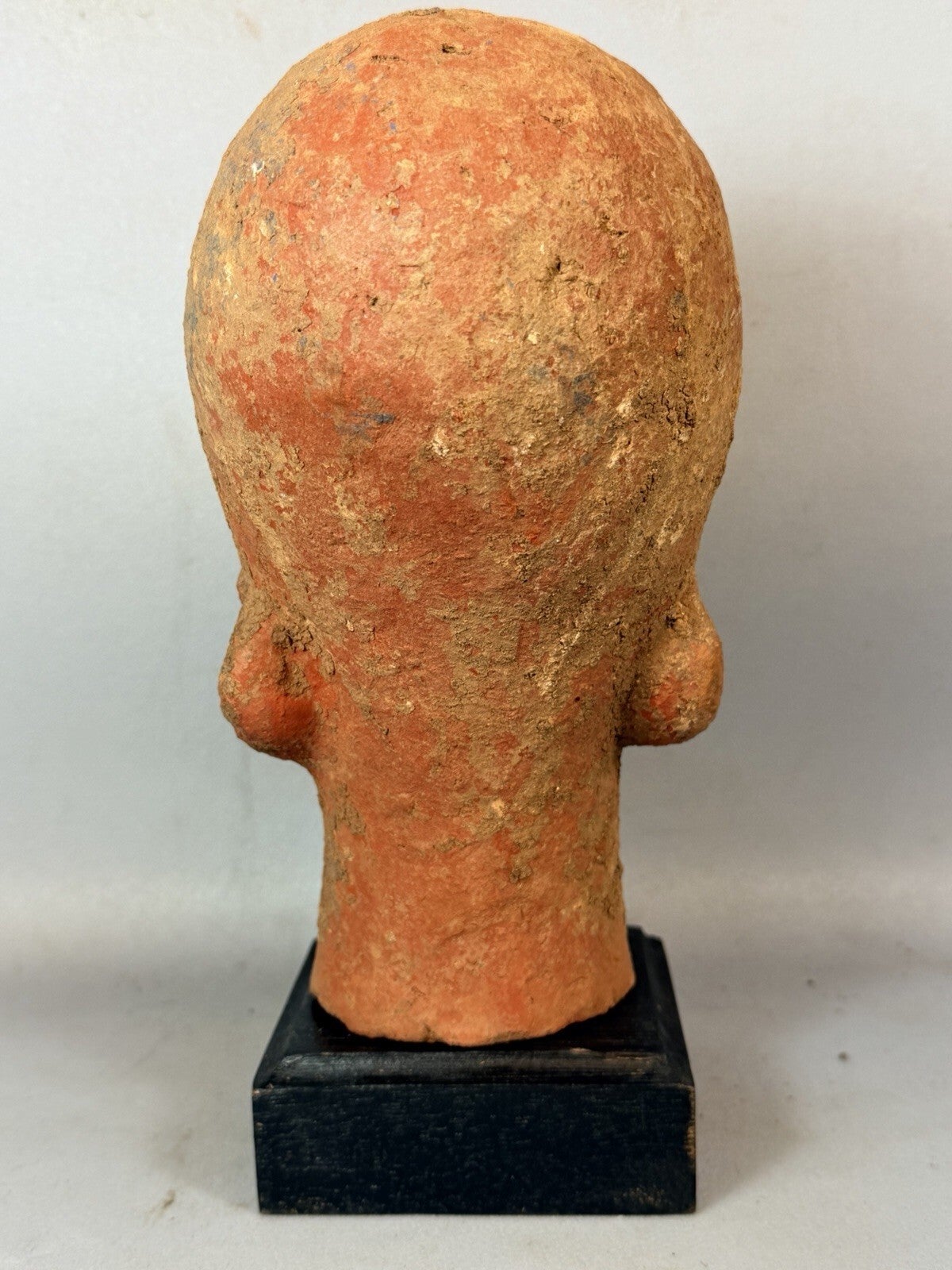
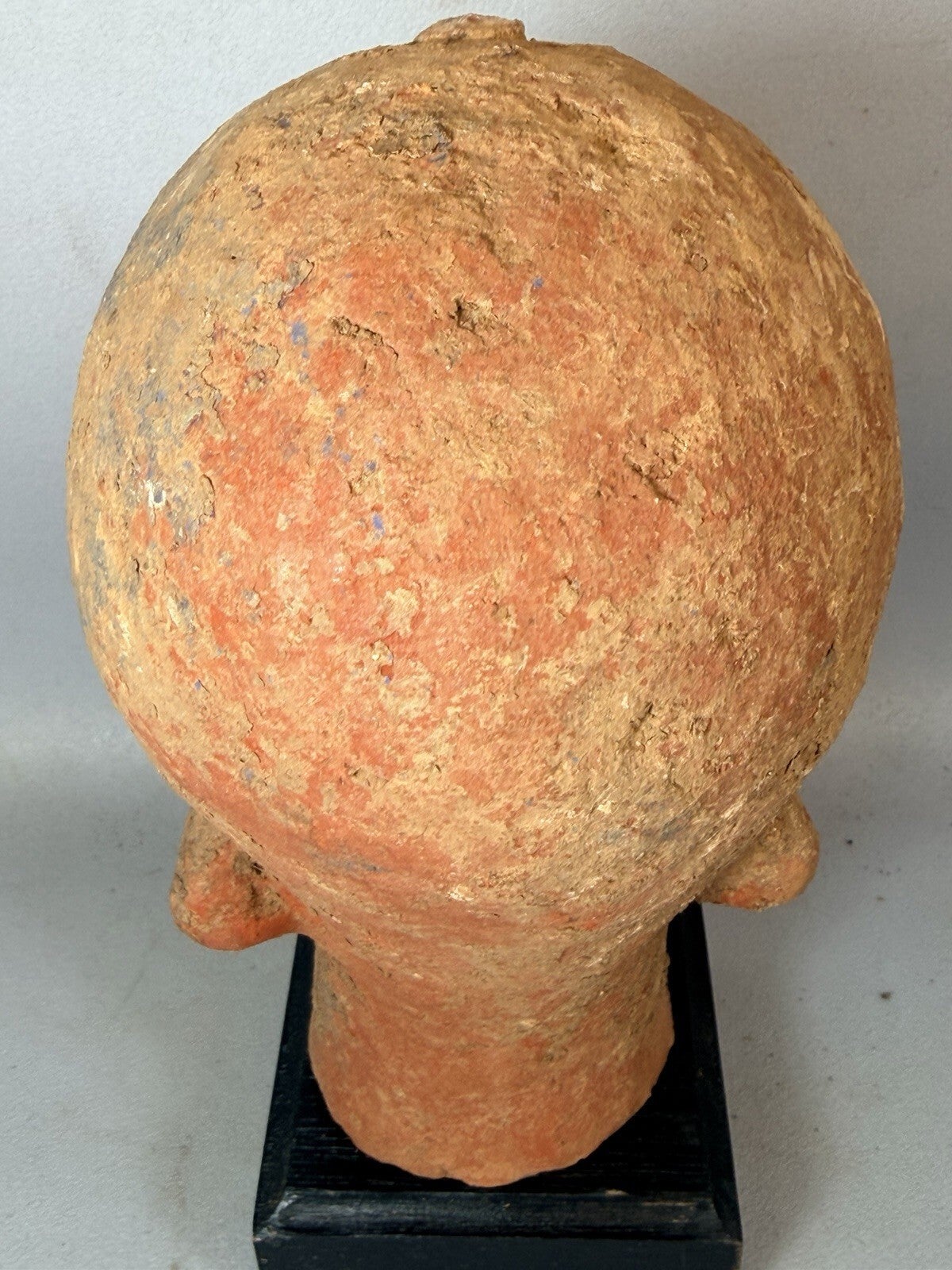
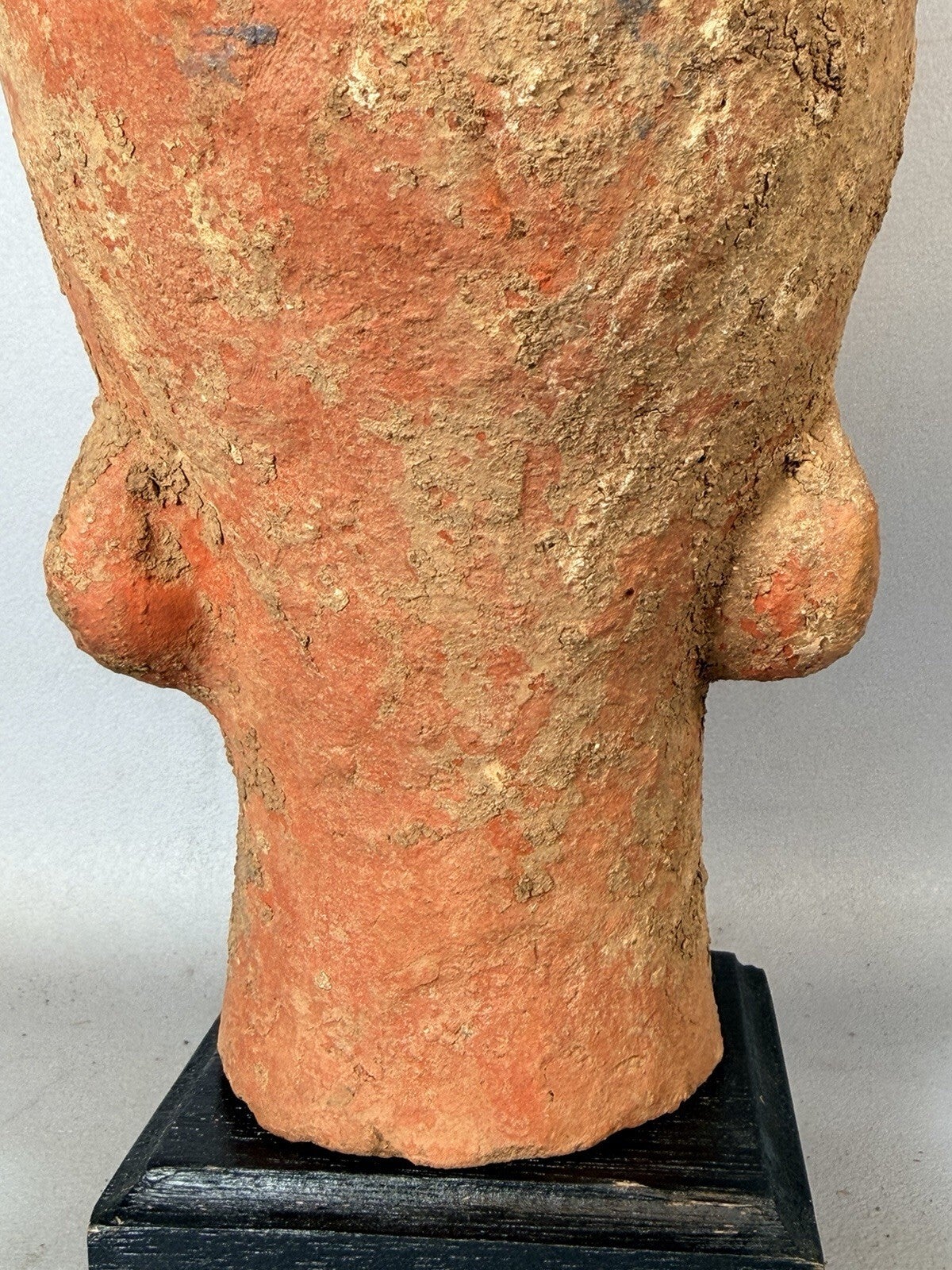
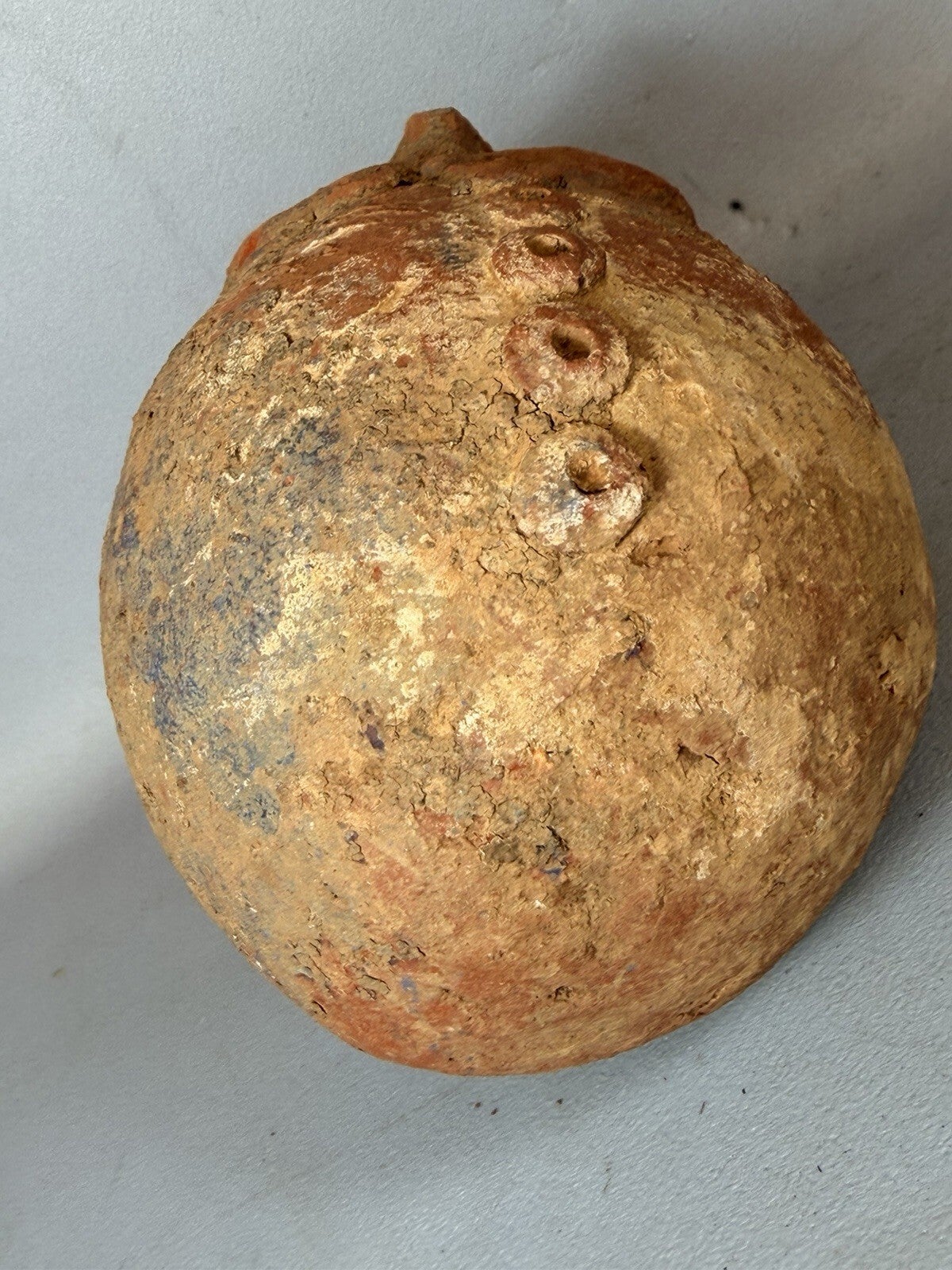
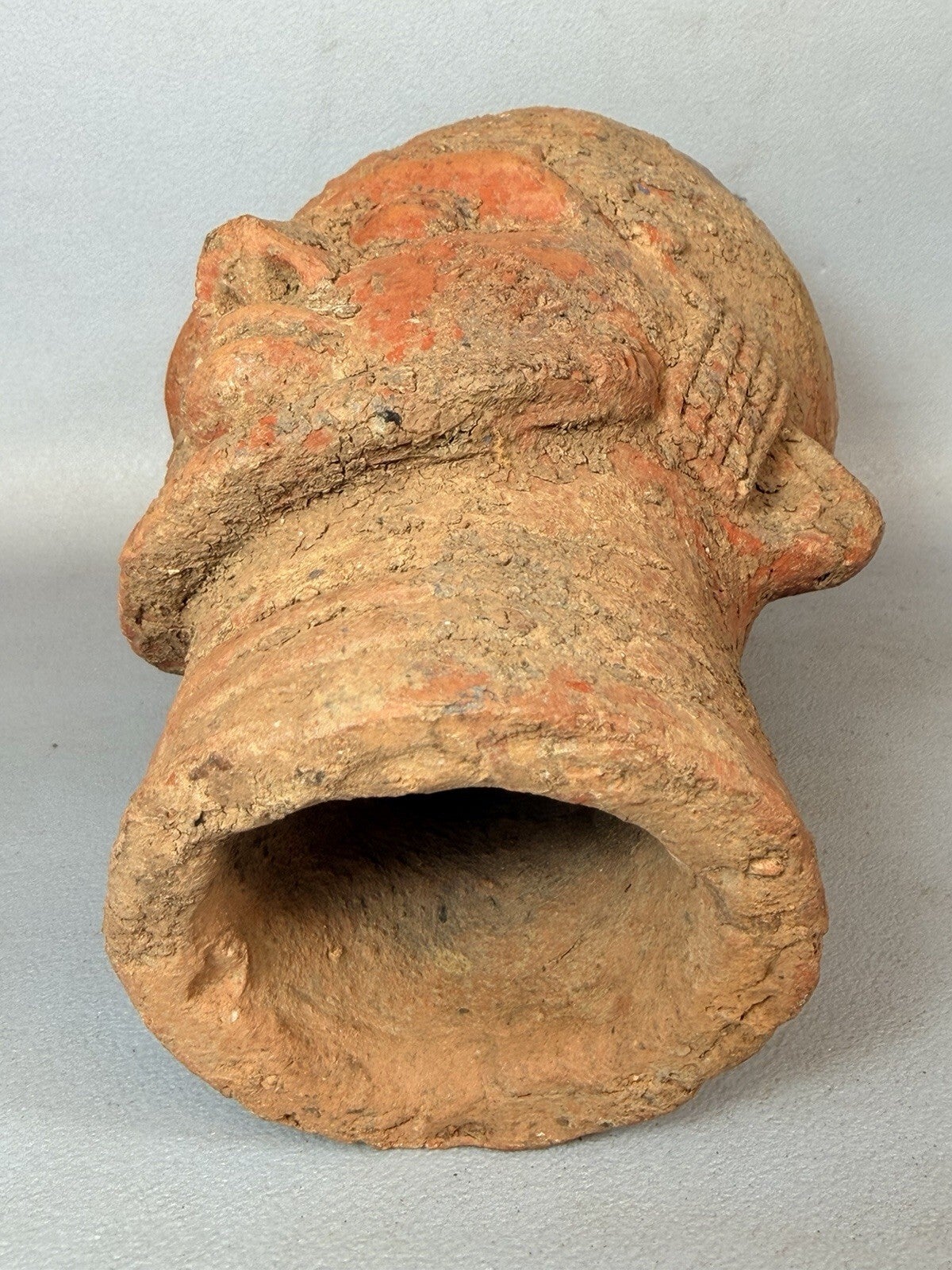
African Yoruba head from the Yoruba region Esie - Nigeria.
Size are 22 cm high without the base.
The serene appearance and introspective gaze of this female terracotta head express what the Yoruba consider to be a person's inner virtue. It is a commemorative portrait originating from the Esie region in Western Nigeria.
This terracotta head of a woman is part of a group of more than a thousand sculptures identified with a site in the Yoruba city of Esie in northern Central Nigeria.
There, a collection of terracotta figures—heads of women, men, and animals—was found during excavations for house building, most of which showed signs of (intentional) damage caused by an apparent act of organized destruction or looting. It is not known when the objects were made or destroyed, although it is estimated that they were sculpted between the twelfth and fifteenth centuries.
The disorder at the site has hampered attempts to establish the dating and cultural origin of these works, leaving even the best estimates based on speculation. This sculpted head displays many features typical of Esie figures, including sharply defined almond-shaped eyes with heavily accentuated eyebrows. The ears are positioned far back on the head, and the mouth is pursed. Although some Esie sculptures are described as solemn in expression, the mouth here appears to display a slight but gentle smile.
The sculptor paid particular attention to the woman's elaborate hairstyle, which is almost as large as her head and forms a vivid contrast with horizontal circles on the forehead, featuring line circles running upwards in the center. This fragmentary head was originally part of a large figurative sculpture.
The heads of all Esie figures are large in proportion to their bodies, a visual emphasis also common in Ife sculpture, with which they are sometimes compared. As in the art of many African peoples, this visual accentuation of the head was undoubtedly intended to emphasize the importance the culture attached to it.