260950 - Old African Punu Maiden Spirit Mask Nyanga-regio - with stand - Gabon.
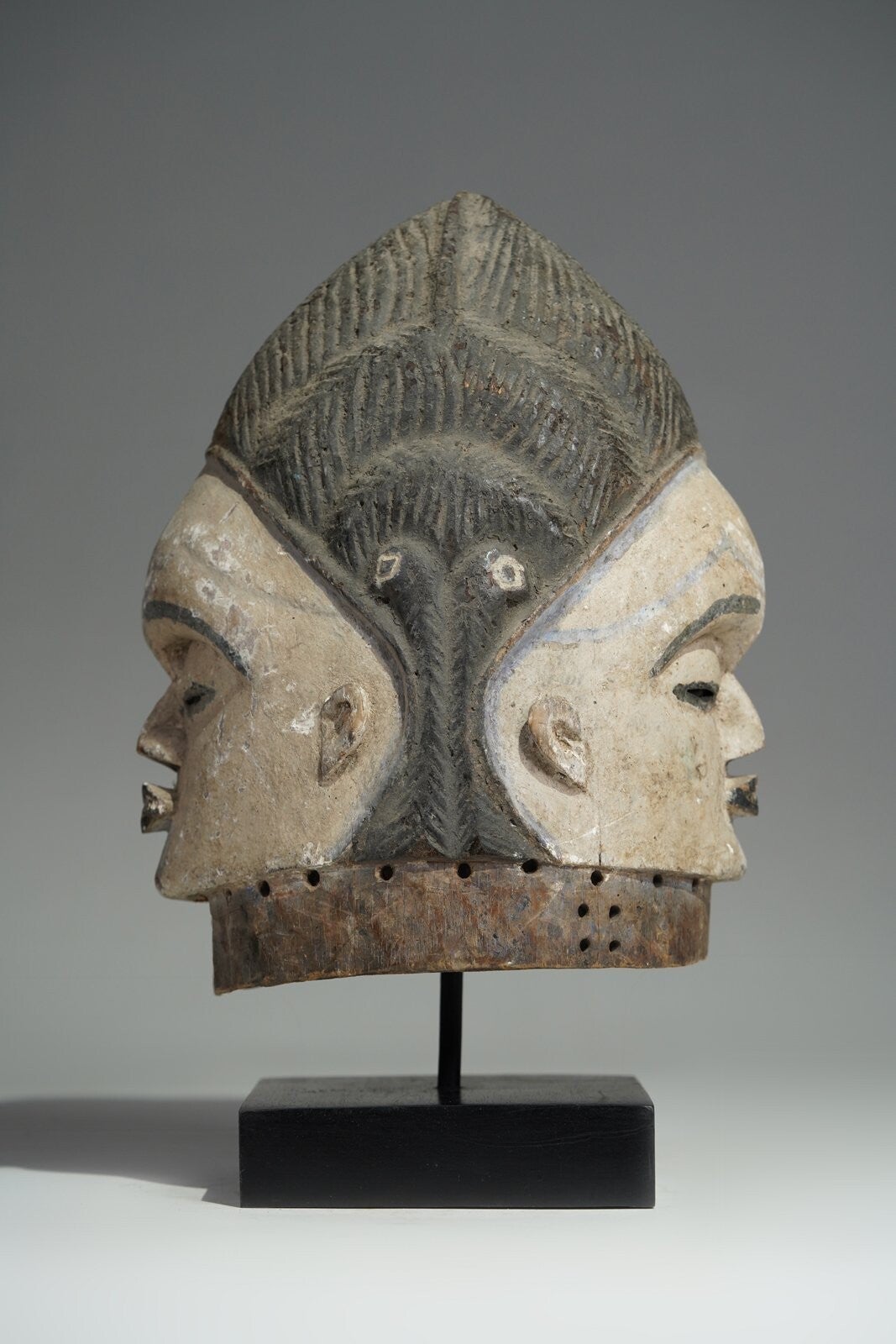
Old African Punu Maiden Spirit Mask Nyanga-regio - with stand - Gabon.
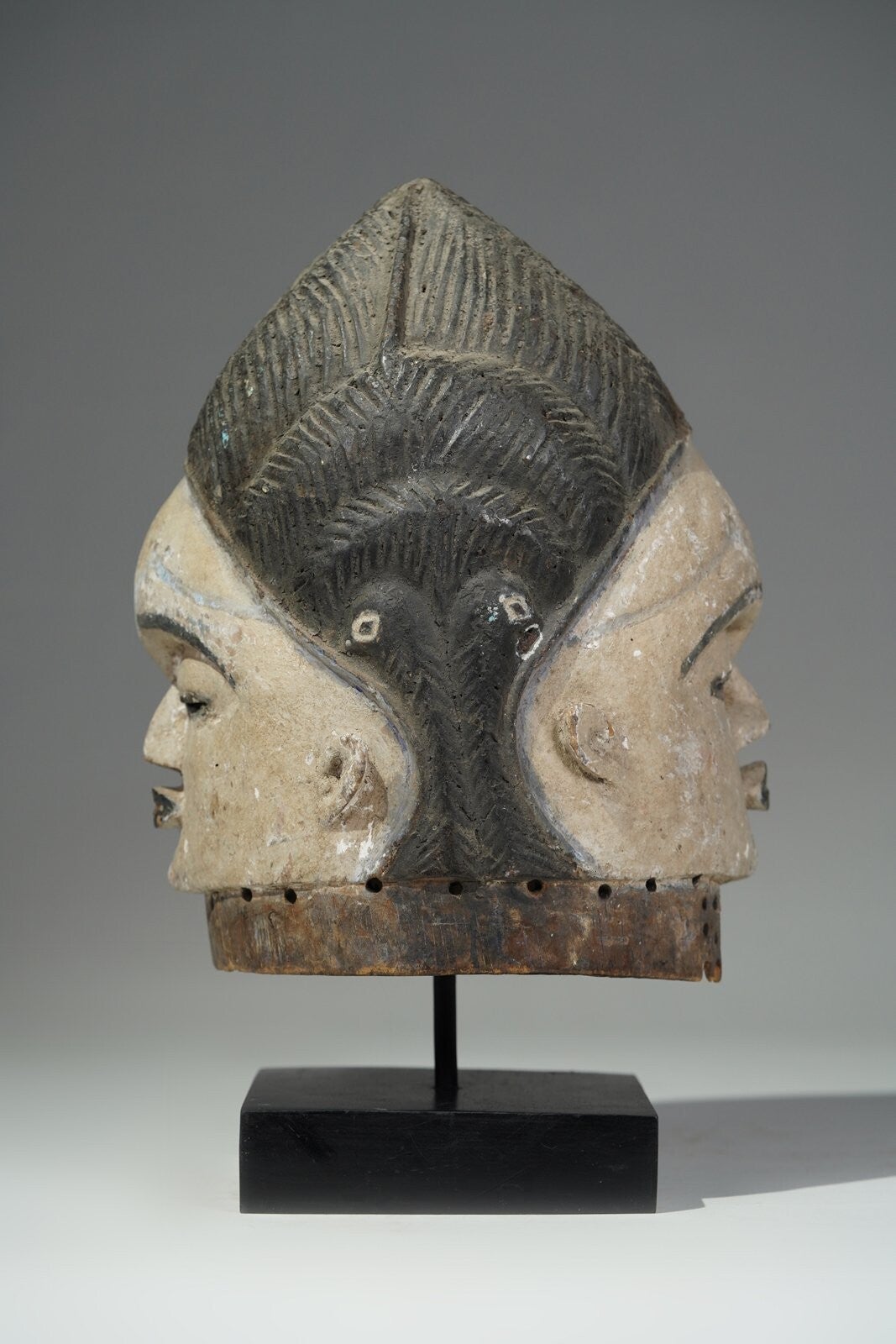
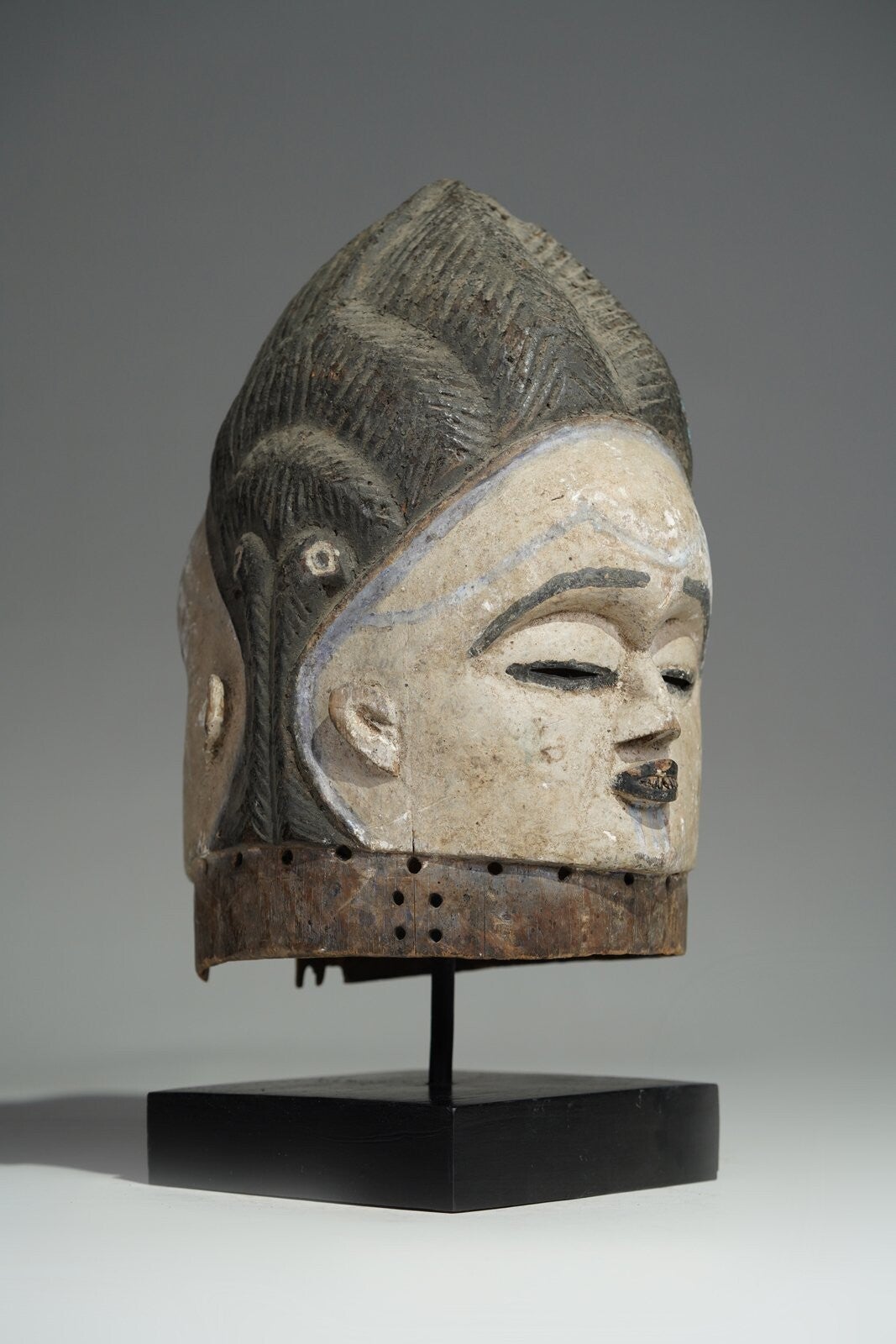
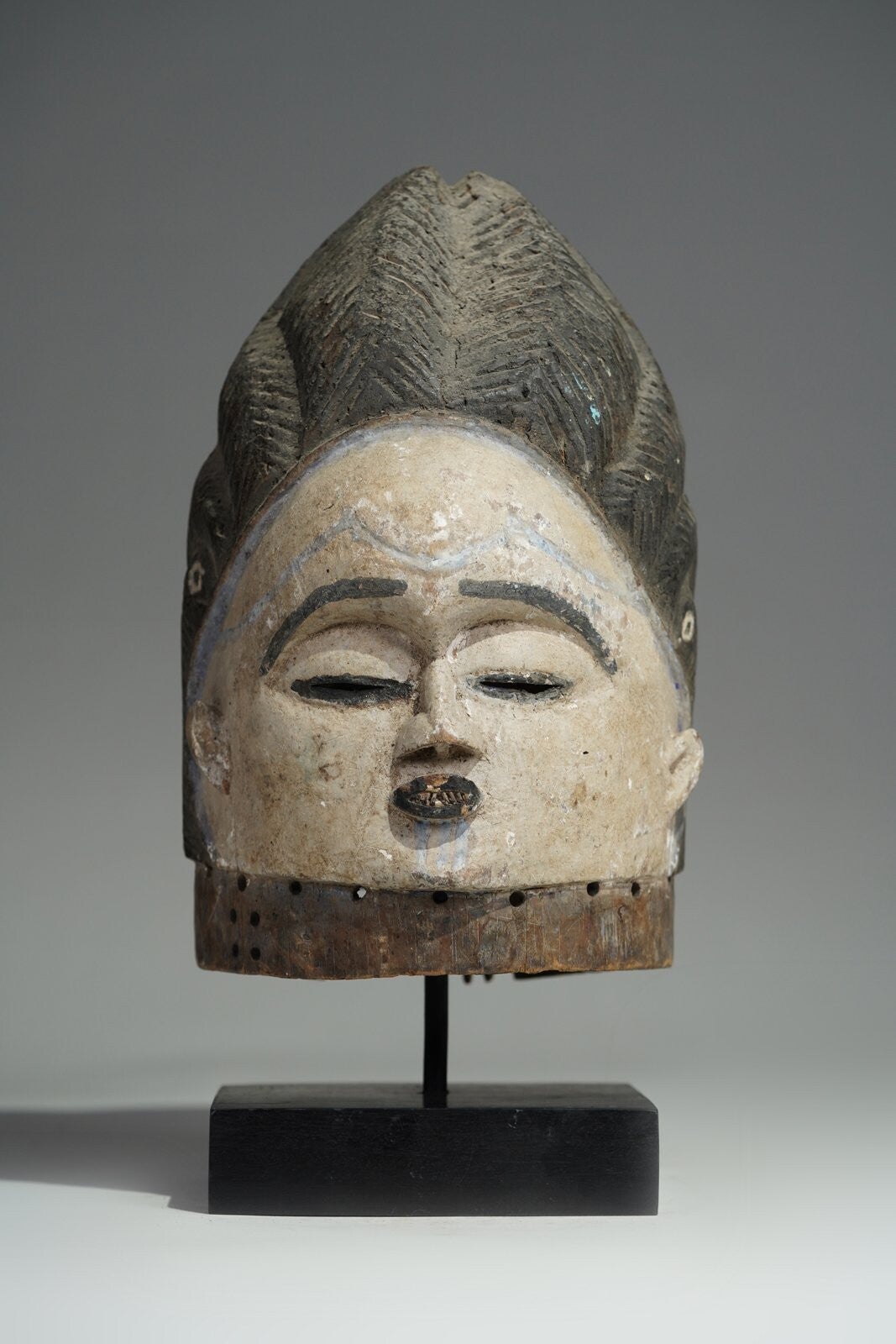
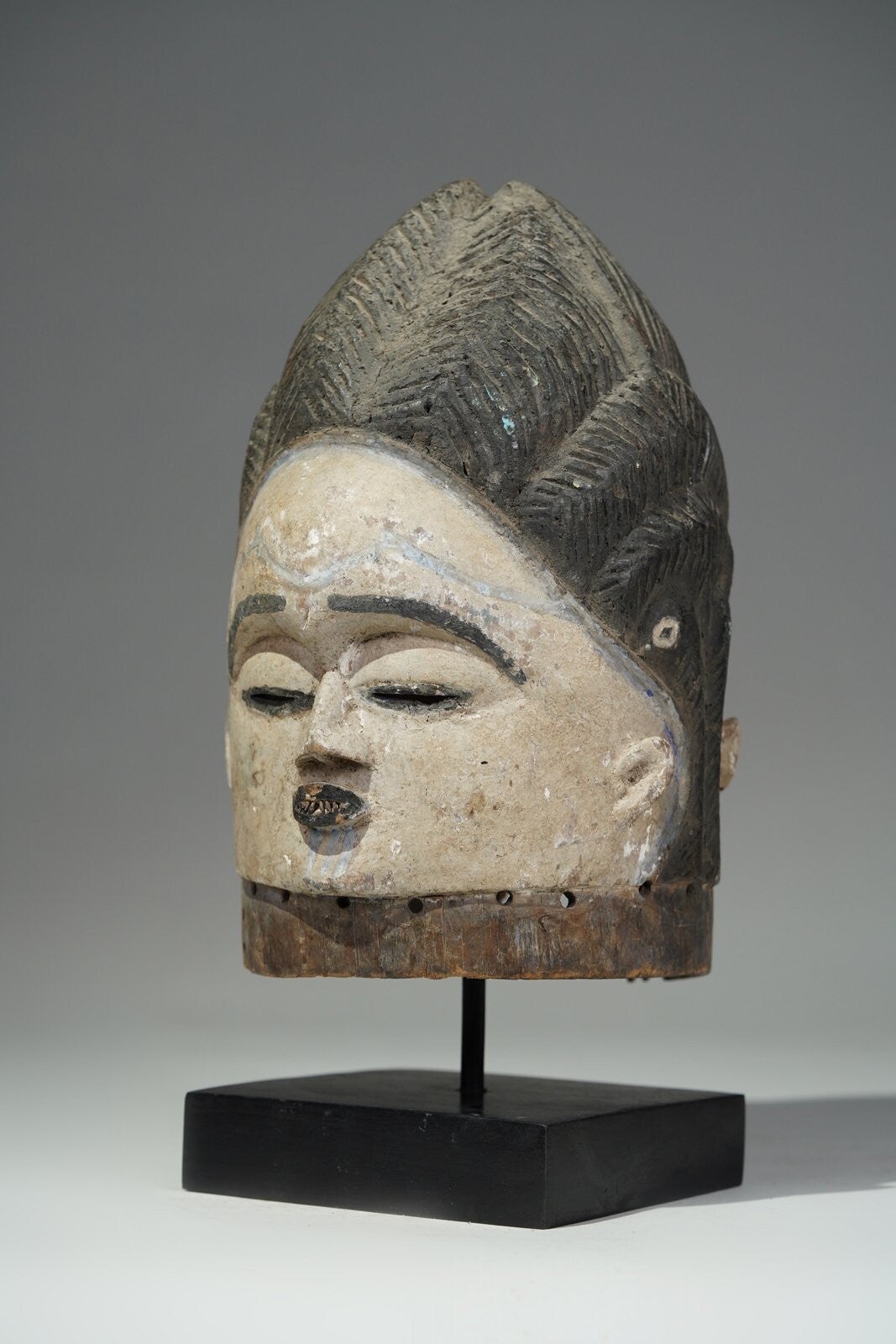
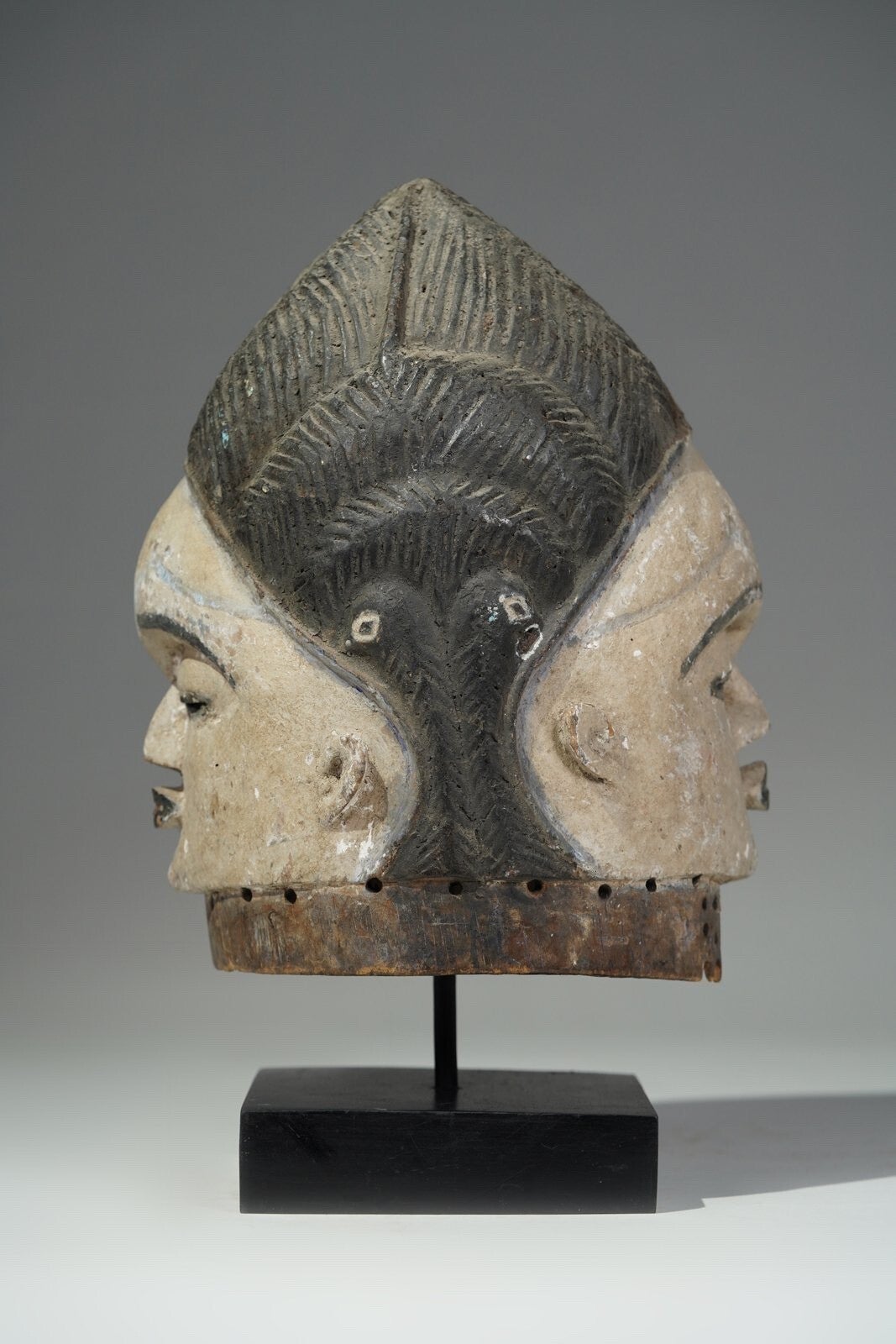
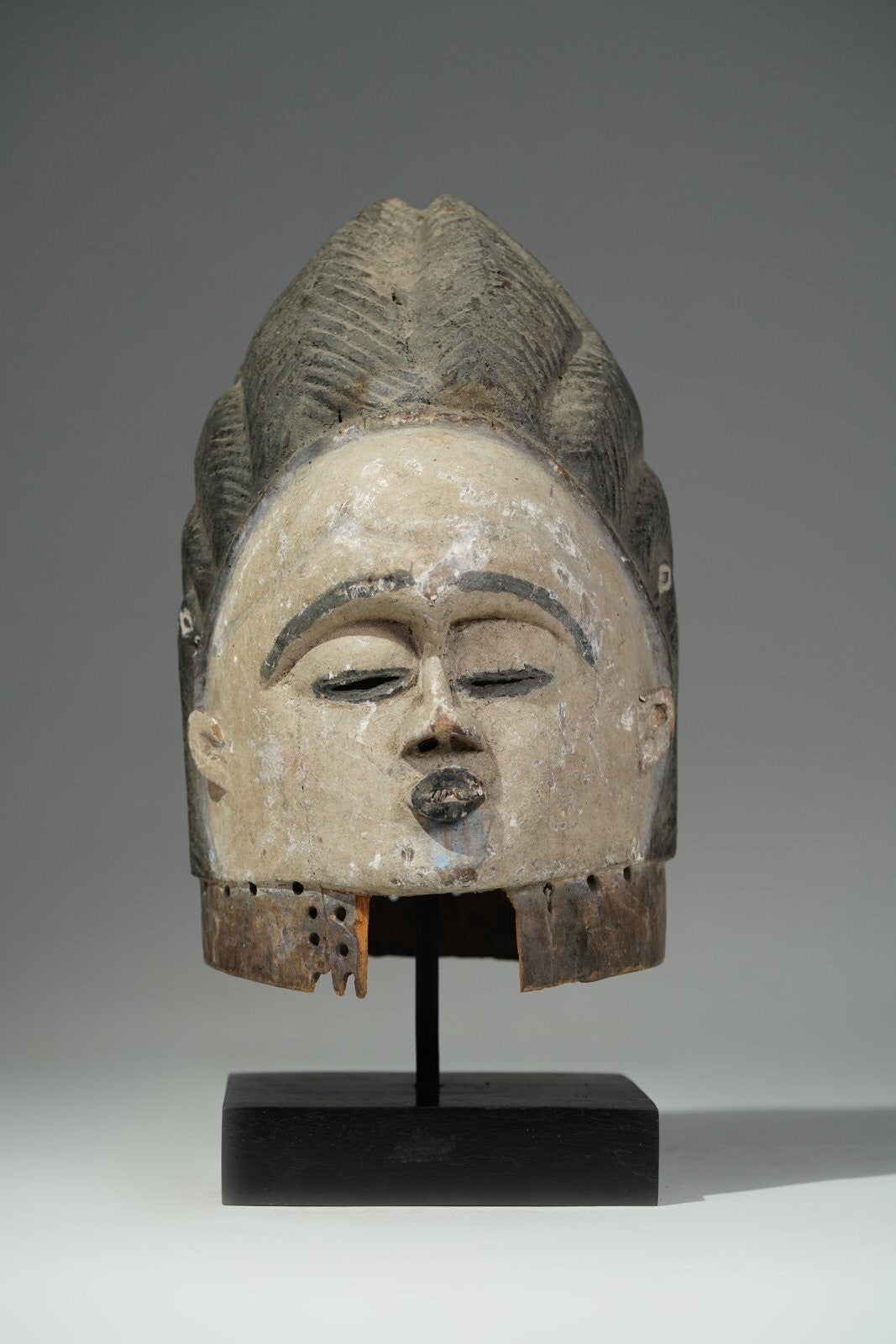
This finely crafted object depicts a double female face.
A Punu mask, Nyanga region, Gabon. Incl. stand.
This Janiform Punu mask is dated first half of the 20th century and was collected by a Belgium collector in 1939 in the Nyanga region. This mask comes with a certificate of authenticity.
Punu double-faced helmet mask (with two opposing faces). In Central African art, this double-faced form is called Janiform (in reference to the Roman god Janus). This carved wooden mask is a helmet-type mask known as Okuyi (or Mukudji) from the Punu culture. Intended to represent the idealized face of a female ancestor who has returned from the afterlife, it is distinguished by the whiteness of its face and the complexity of its black hairstyle.
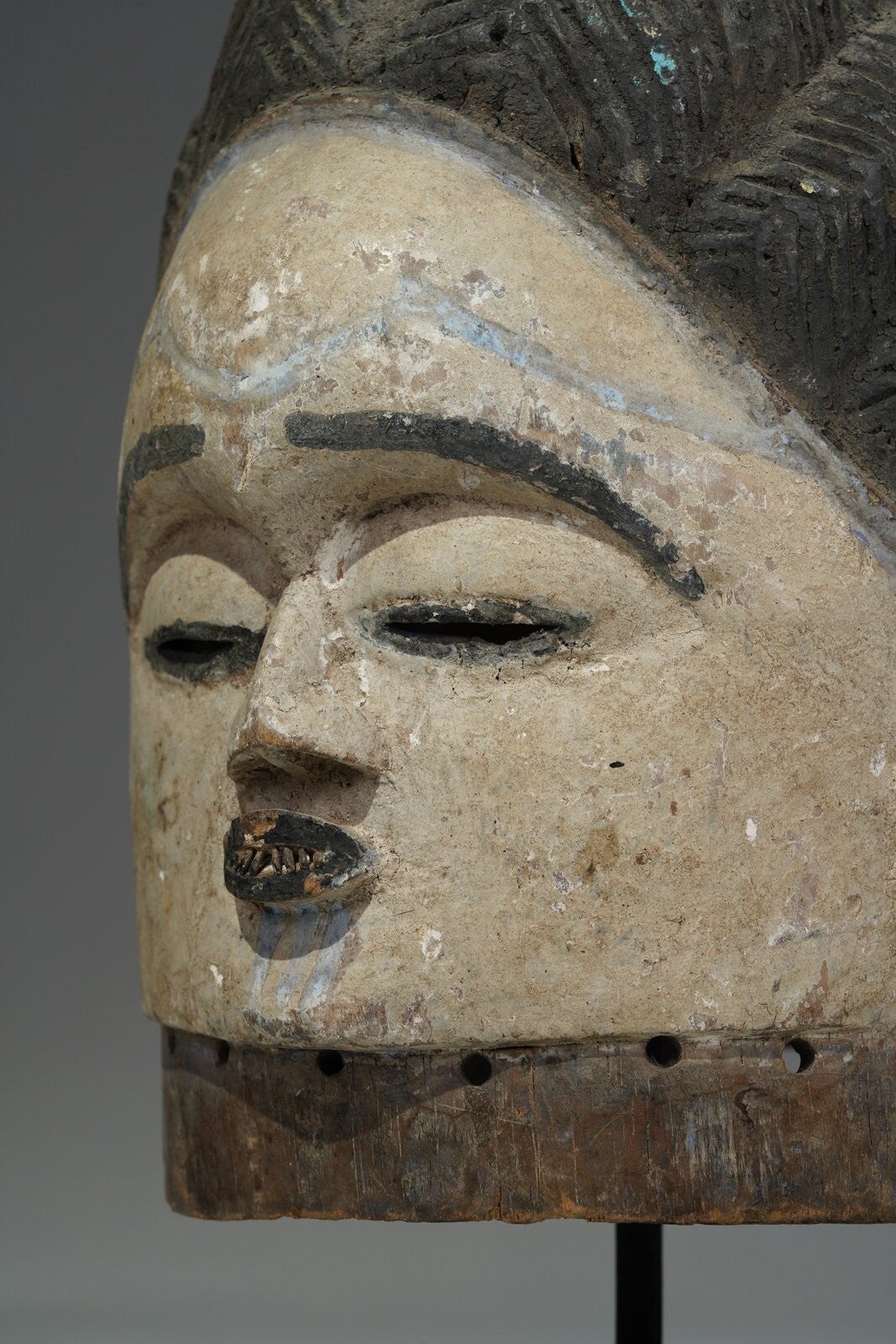
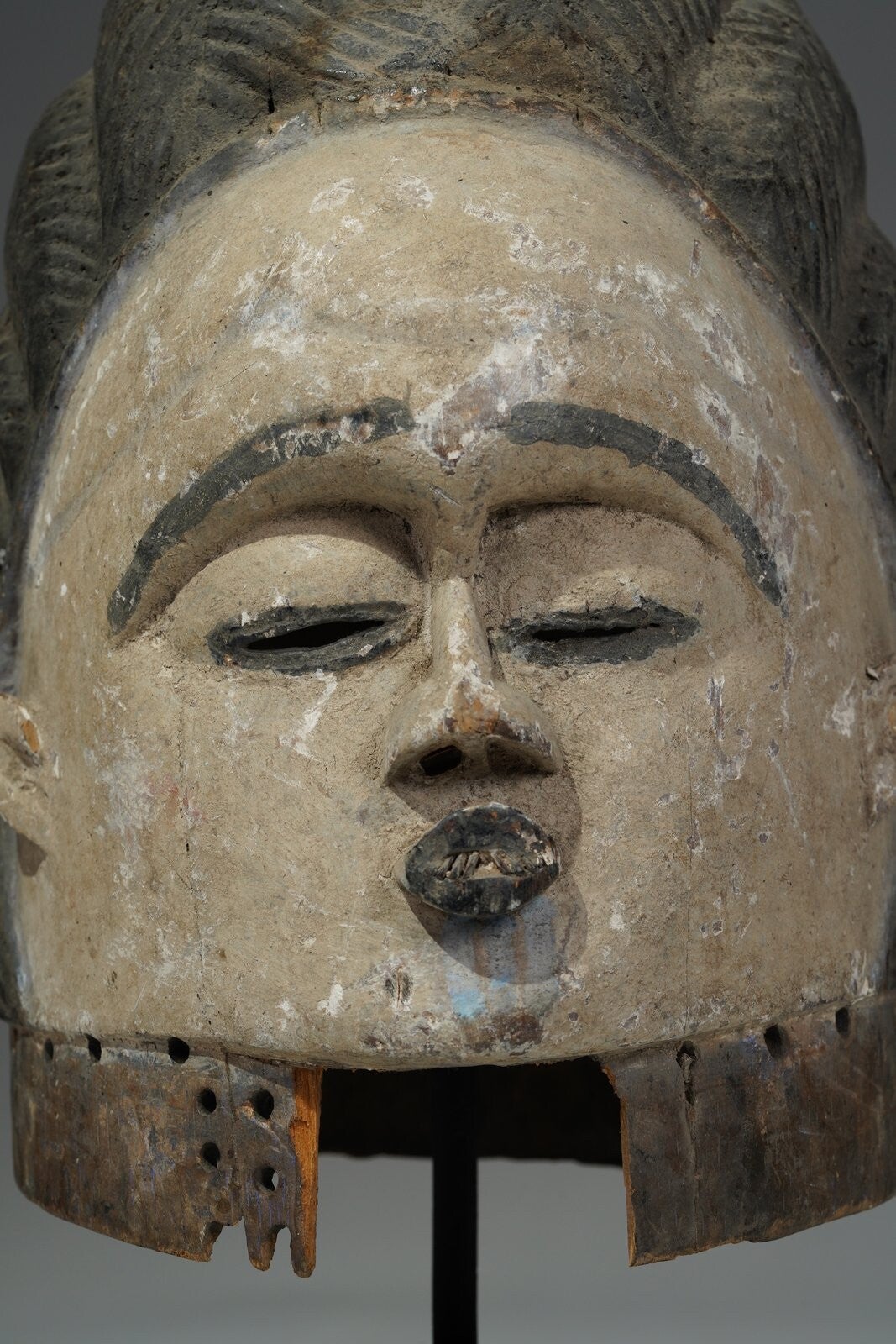
Two faces facing away from each other: The mask features two identical female faces carved back-to-back. They face in two diametrically opposite directions (forward and backward). The surface of the mask is entirely coated with a thick layer of white pigment (kaolin), which symbolizes the spirit world, purity, and death.
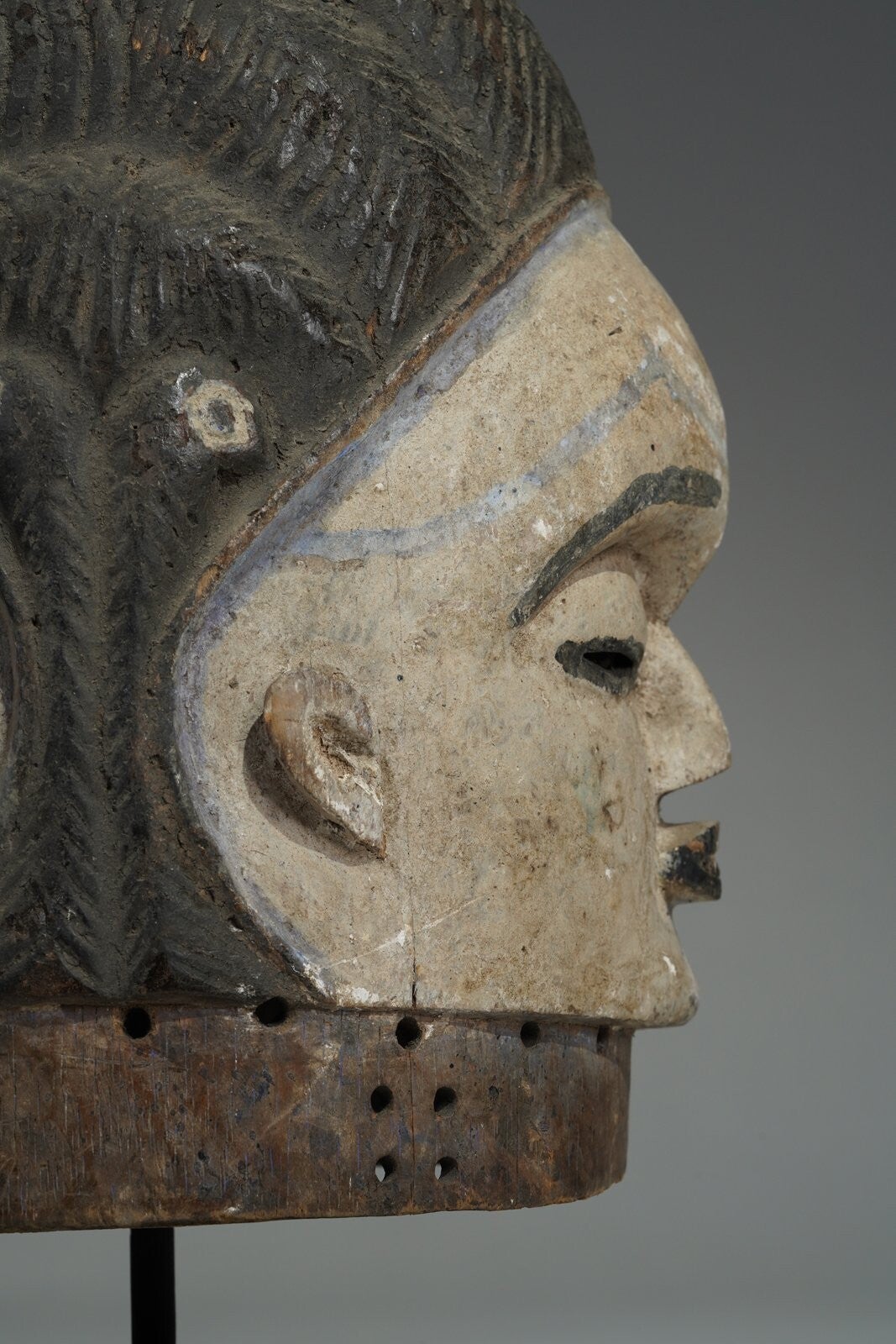
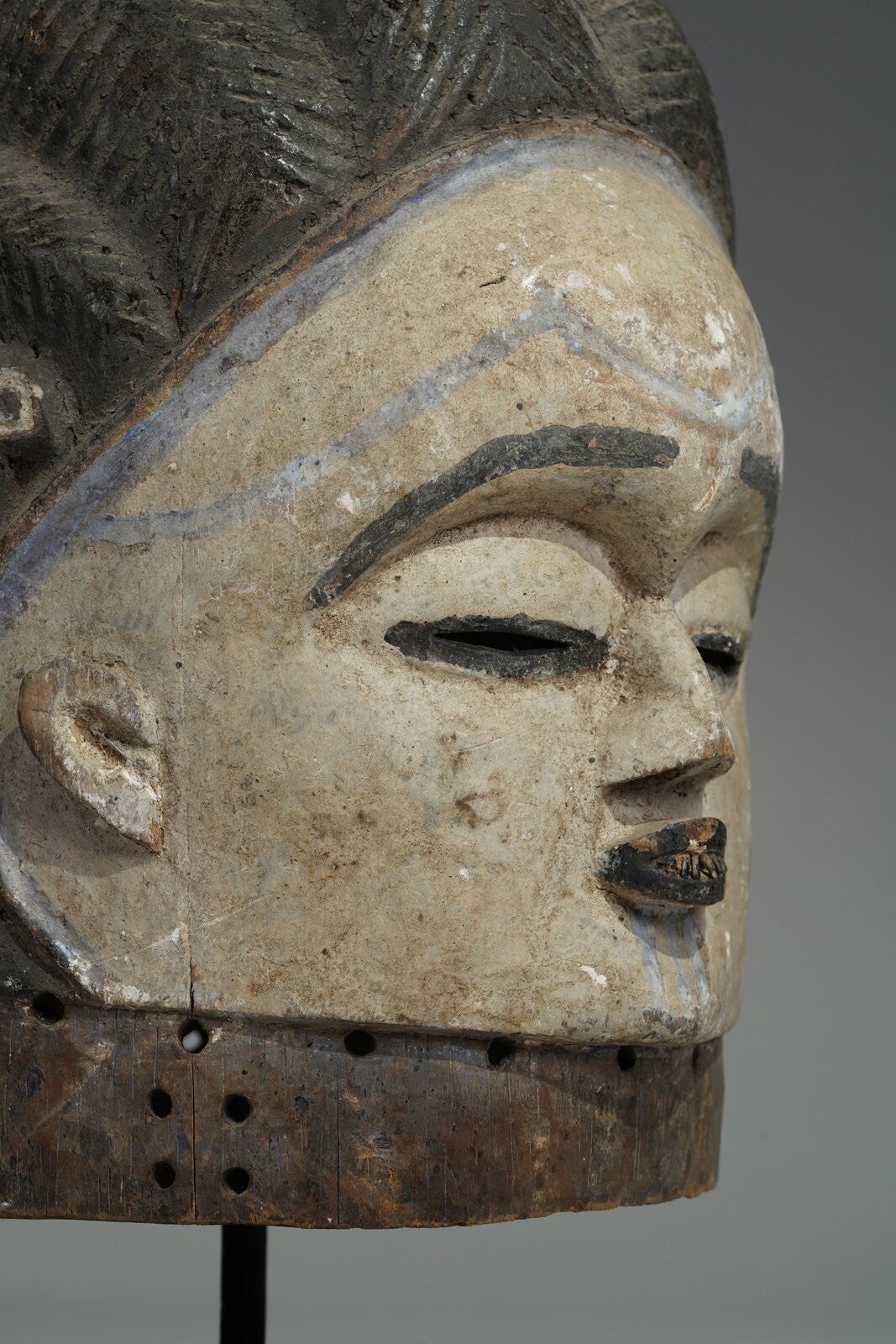
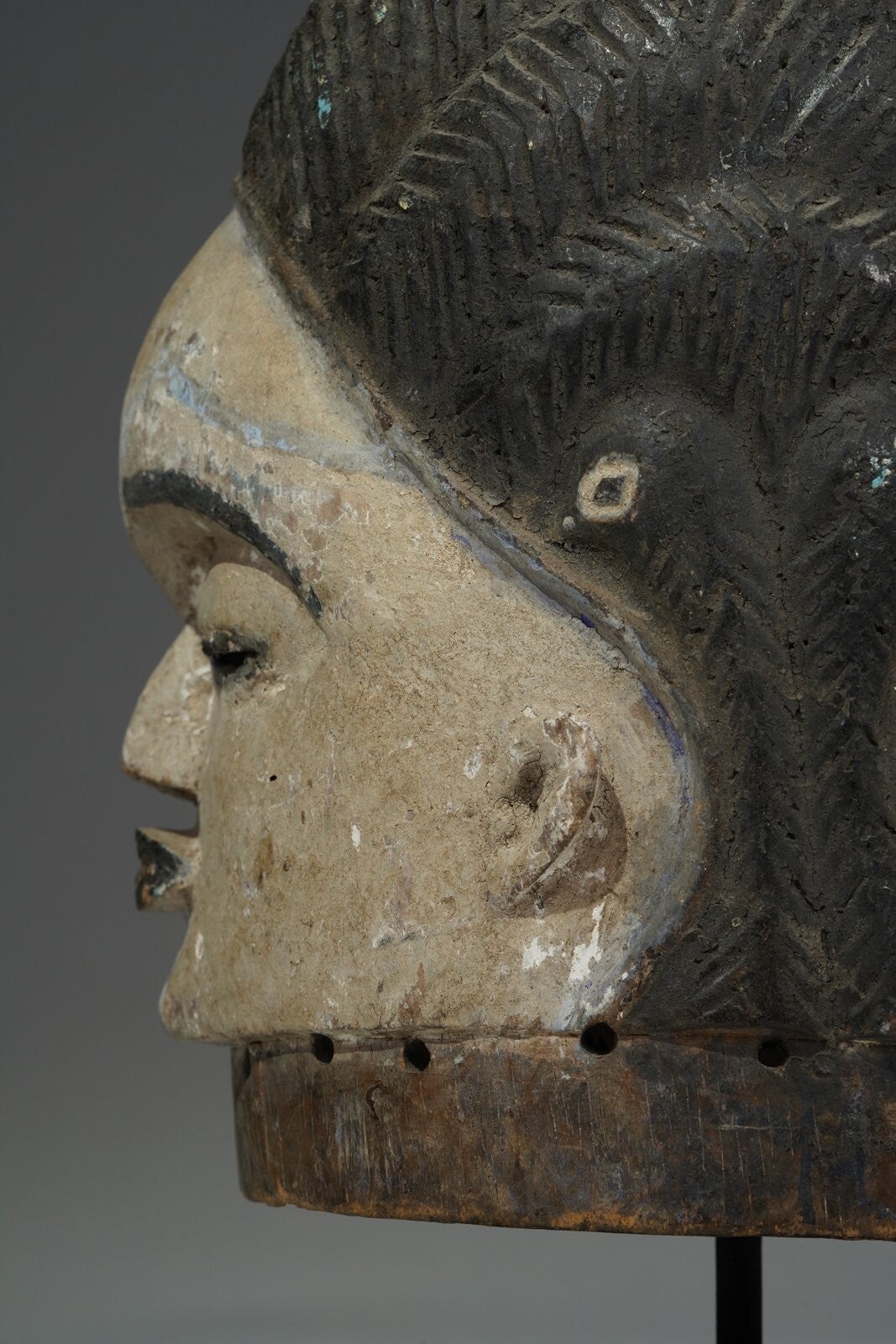
Symbolism of the dual gaze: This structure allows the spirit or the dancer to simultaneously see the past and the future, the world of the living and that of the ancestors, or to detect malevolent forces coming from all directions. Both faces are coated with white kaolin. This color signifies the object’s belonging to the world of spirits and the deceased. Viewed in profile, the facial features reveal domed foreheads, straight noses, and small, semicircular ears carved in relief. The black hair is engraved with fine parallel and curvilinear striations. The side braids of the two faces cross and merge on the side of the mask in a fluid motion. The hair of the two faces comes together at the center to form a single, monumental, pointed headdress.
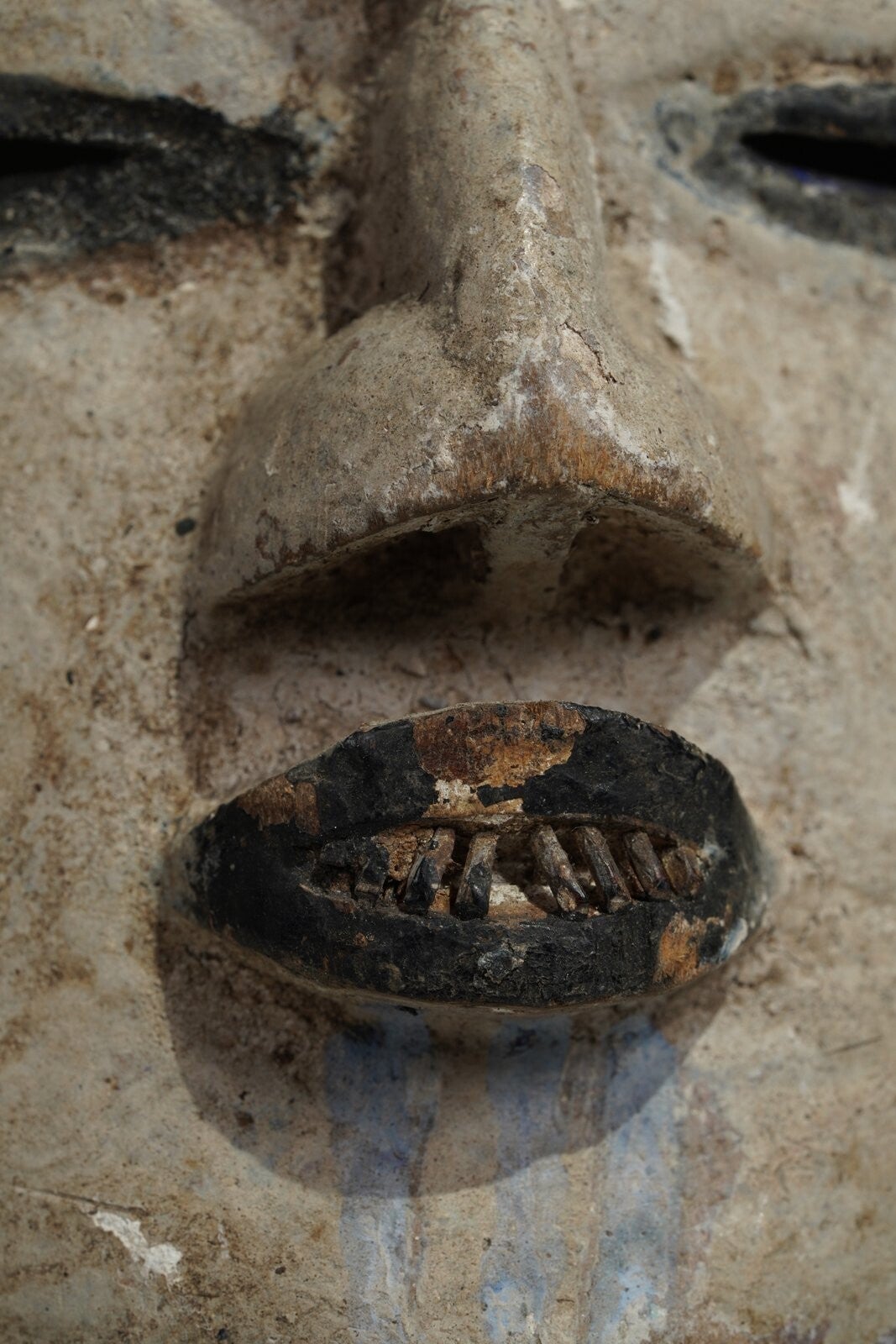
The closed almond-shaped eyes and thin eyebrows, painted black or dark blue-gray, clearly delineate the upper part of the white face from the dark hair. The black hair is engraved with fine parallel and curvilinear striations. The side braids of the two faces cross and merge on the side of the mask in a fluid motion. The lower part of the mask forms a cylindrical neck made of raw wood, left in its original brown hue. A regular row of small circular holes runs all the way around the base. These perforations were used to attach the adornment of fabric or plant fibers (raffia) intended to completely conceal the body of the dancer on stilts.
The Punu reside on the left bank of the Upper Ngoume River (Gabon) and belong to the group of tribes known as Shira which were originally part of the Luango kingdom of Angola. With the Eshira, the Lumbo, the Vili, the Galoa, and the Vungu people, the Punu migrated northwards during the 18th century and settled in the area where they continue to inhabit to this day. They live in independent villages divided into clans and families, and social cohesion is ensured by a society known as moukouji. Its primary role is to regulate community life with regards to social and judicial matters, and mainly it applies itself to the neutralization of evil forces. To this end, officiates of moukoudji utilize a cult kit that includes statuettes, human relics and masks. Source: Zyama