260977 - Nice African Baule mask - Iv. Coast.
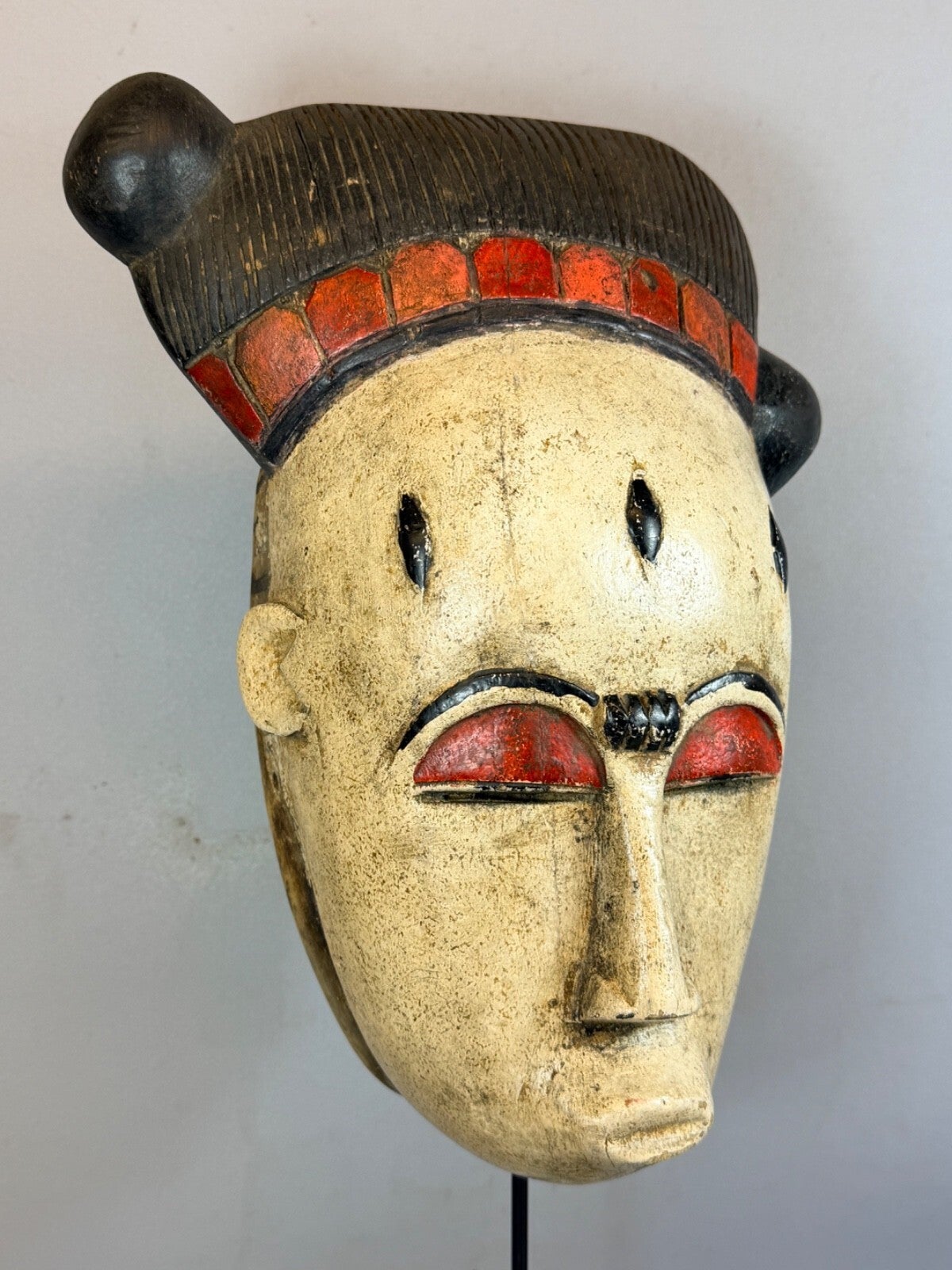
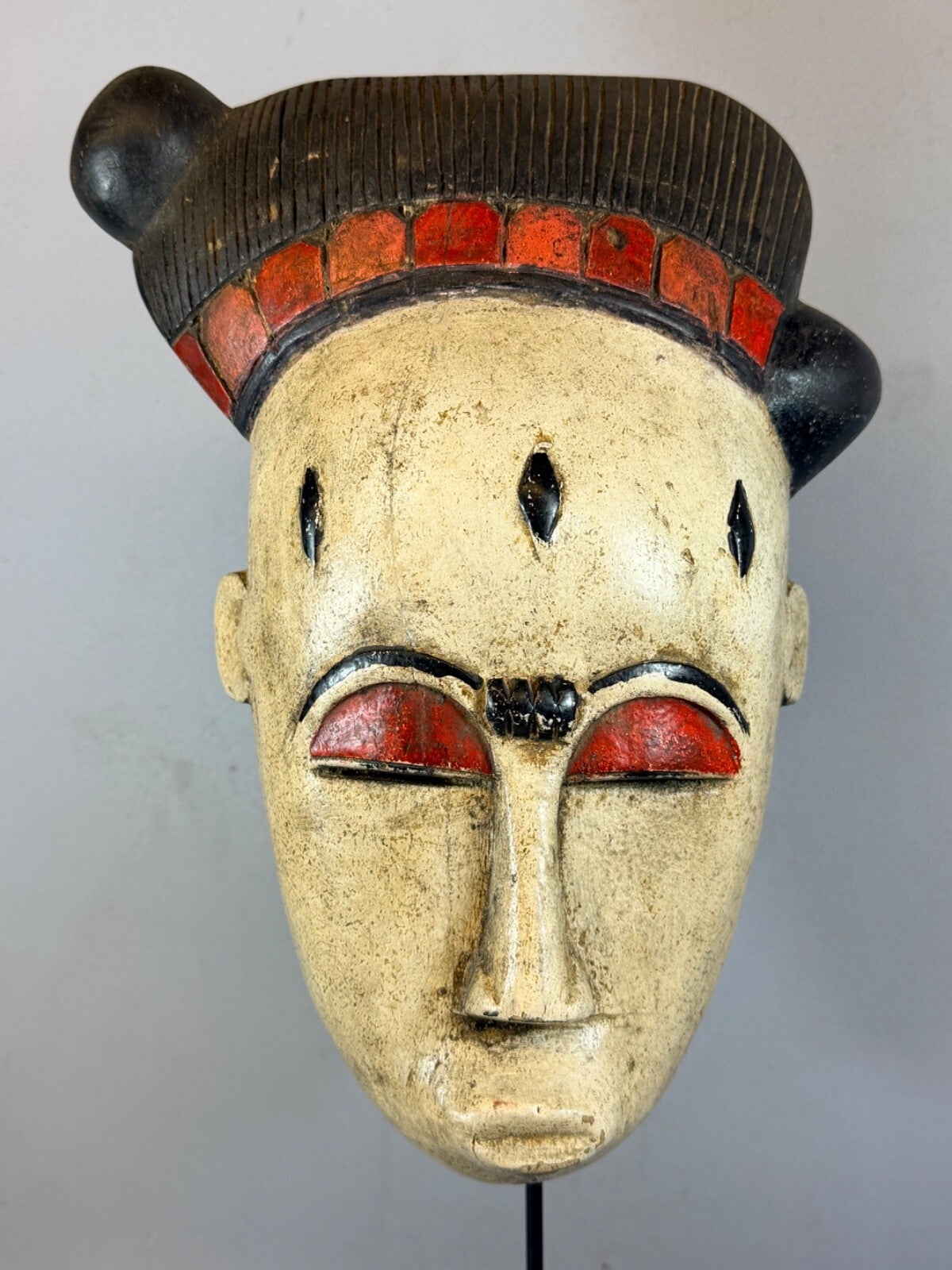
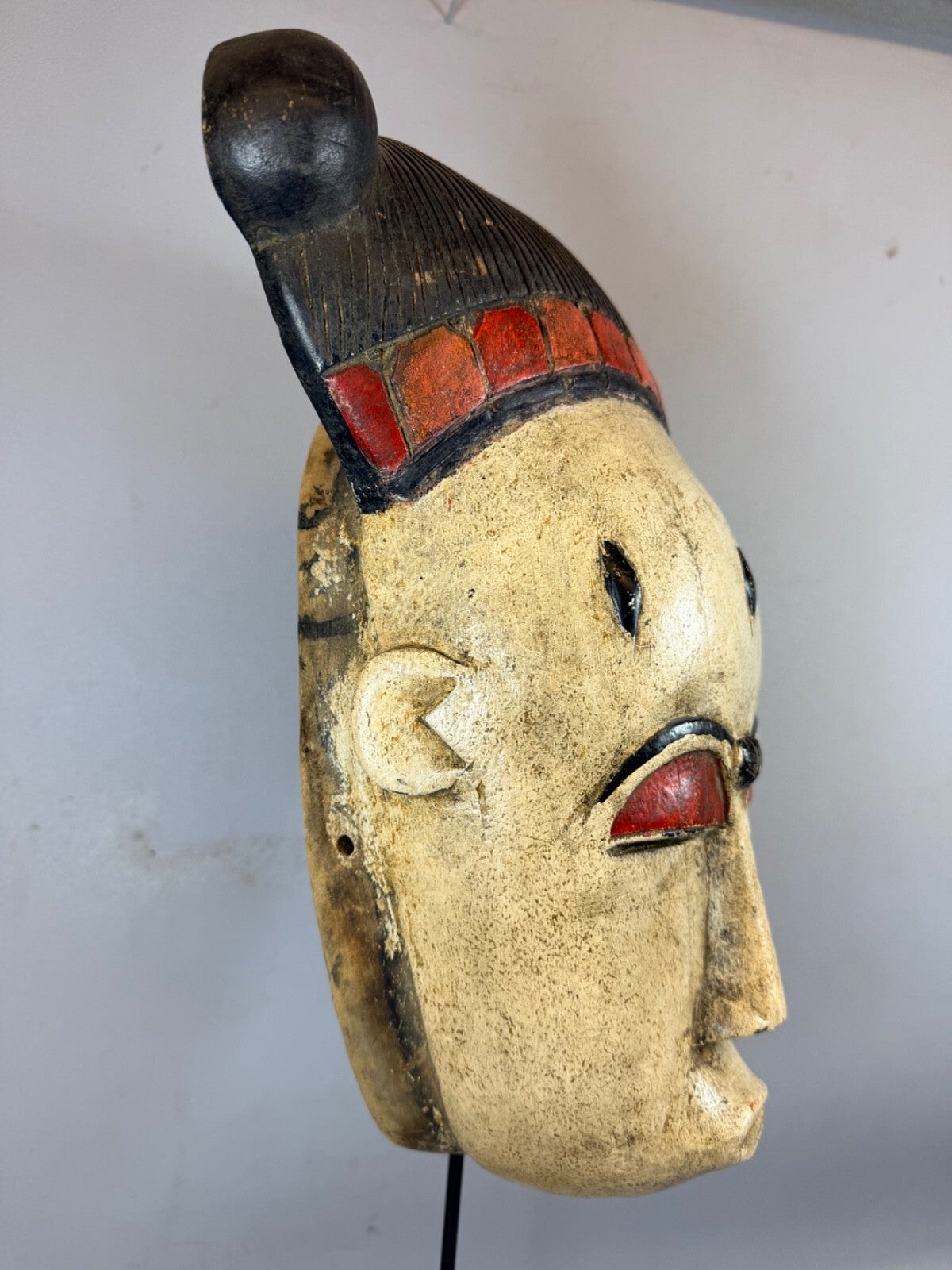
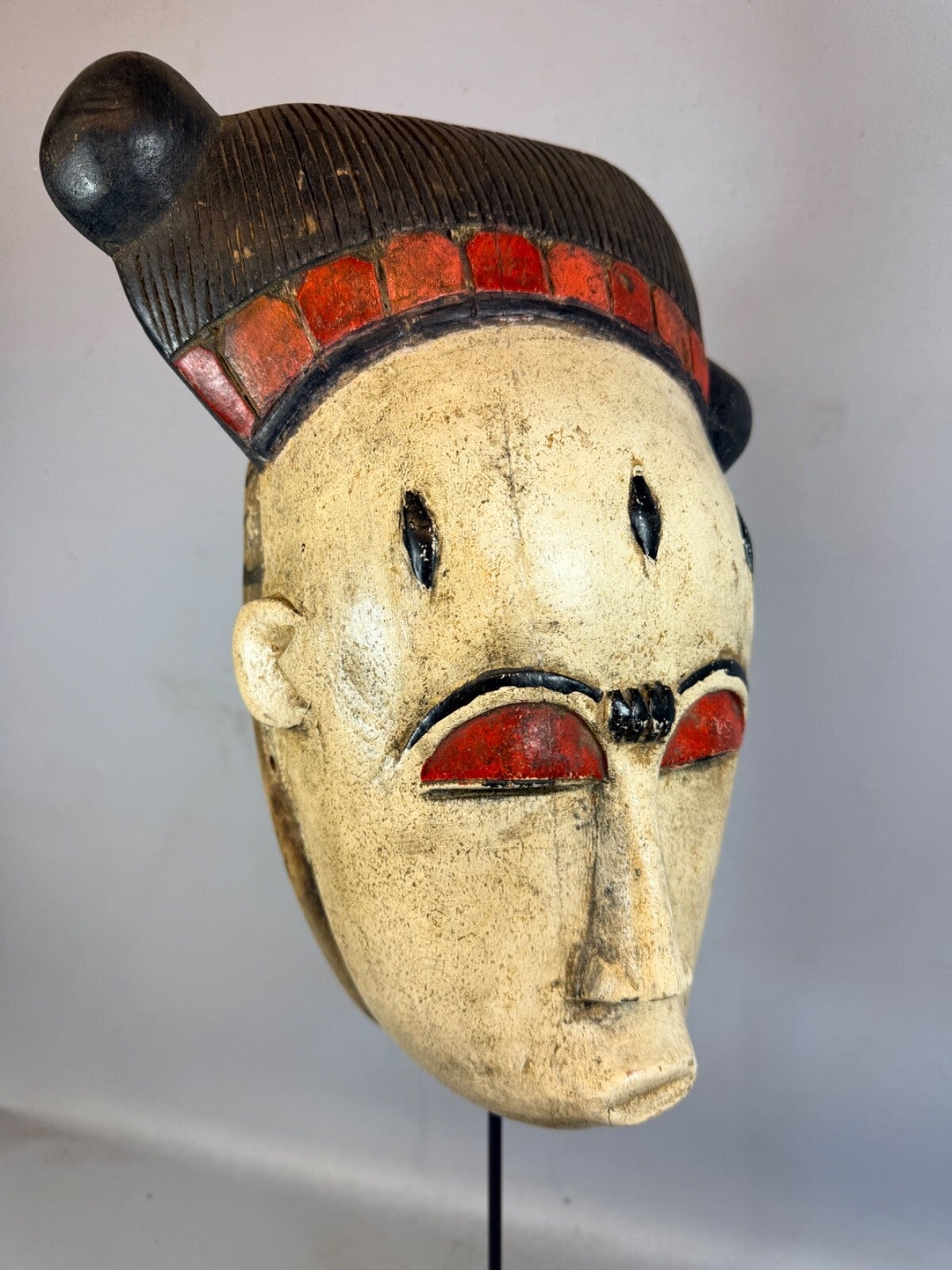
Iv. Coast: Nice African Baule mask.
Height: 35 cm.
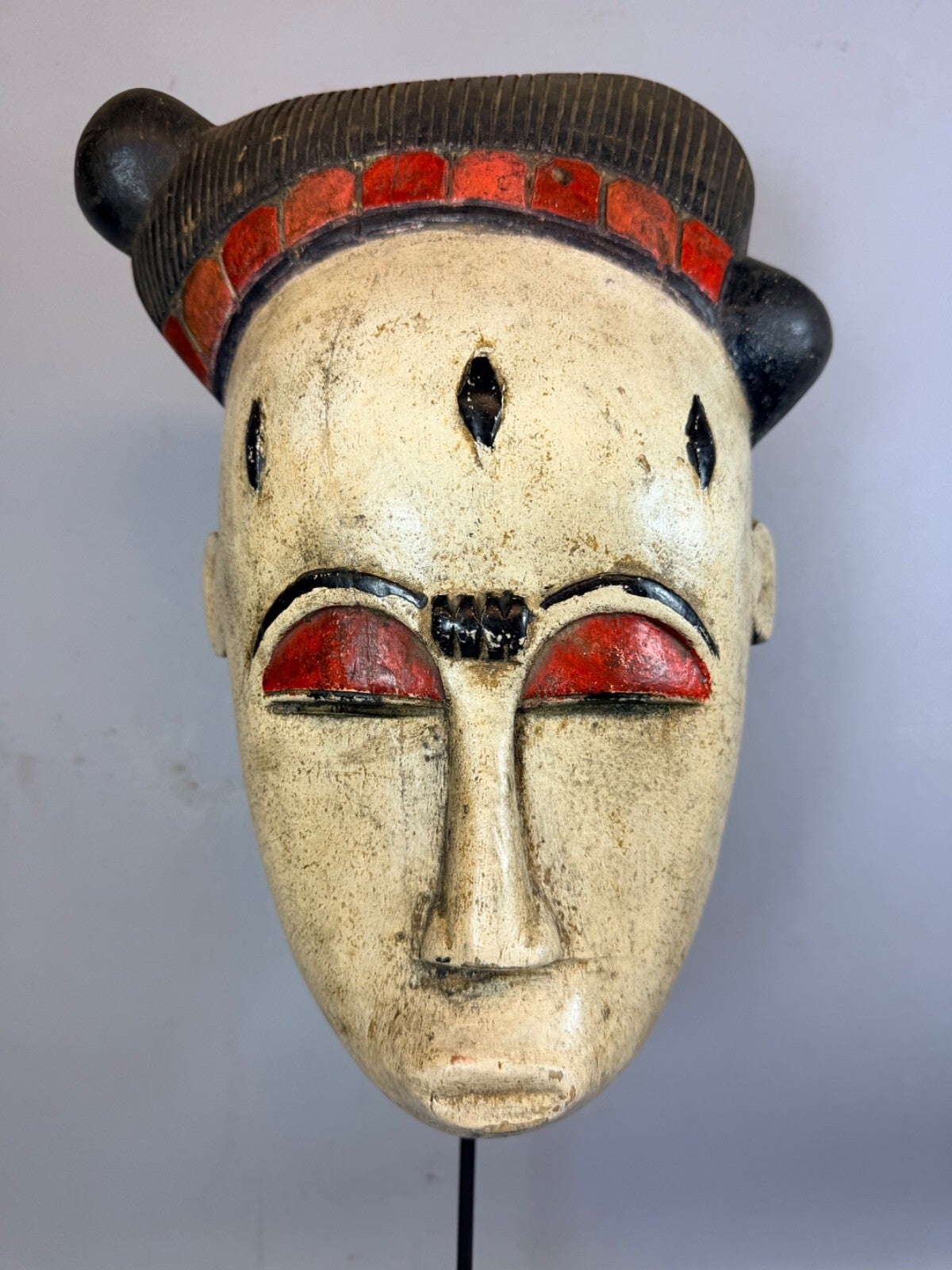
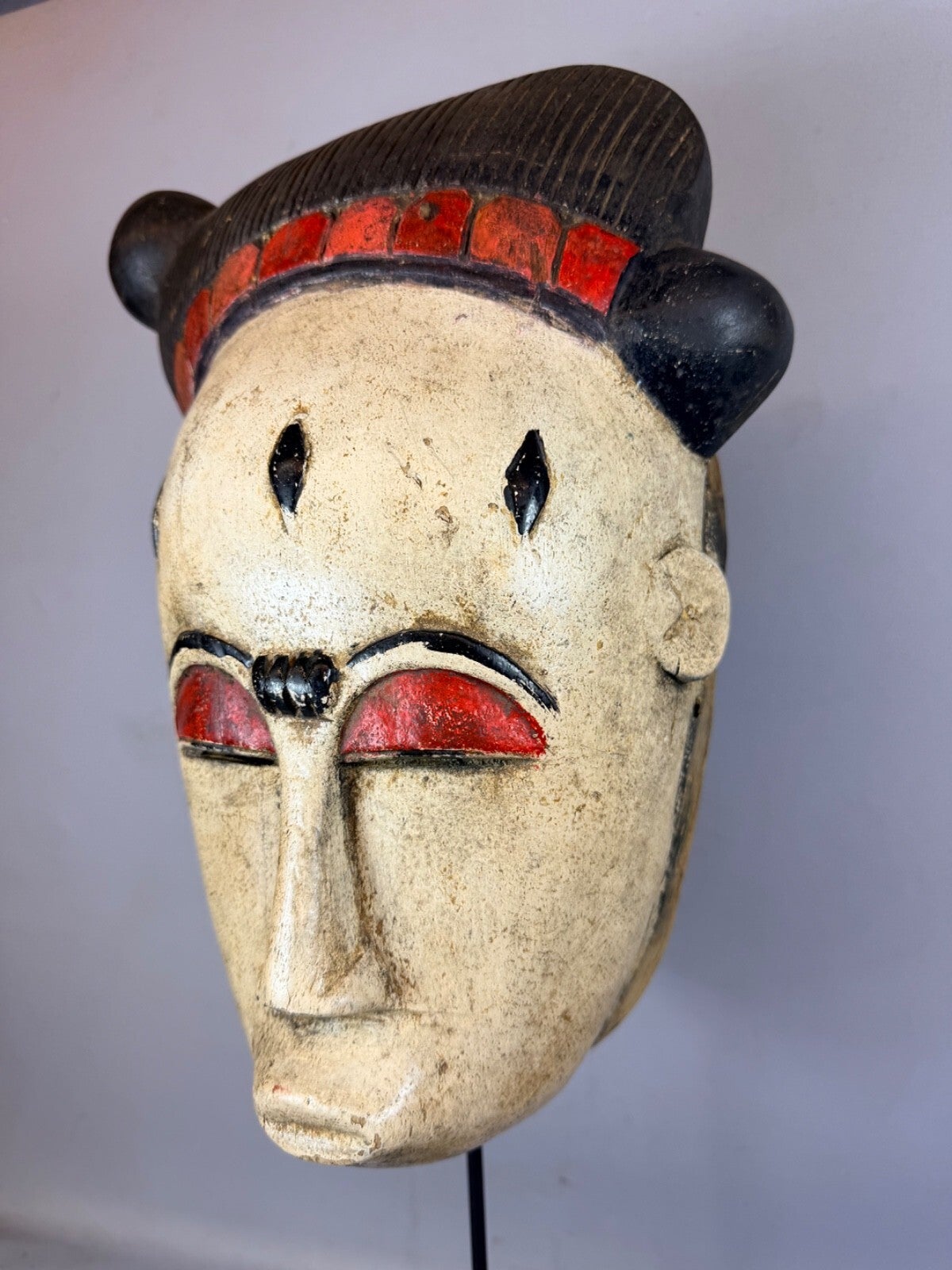
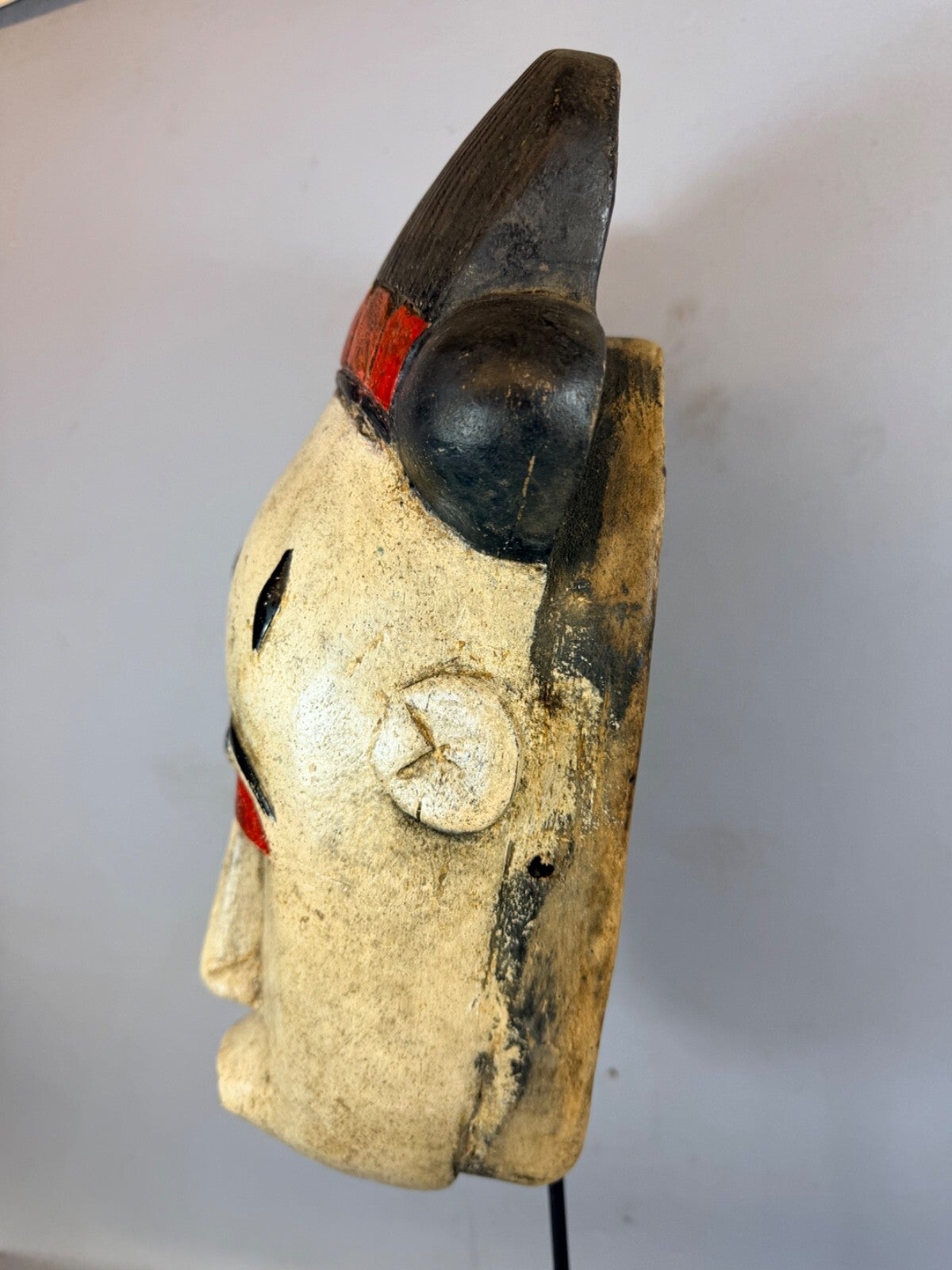
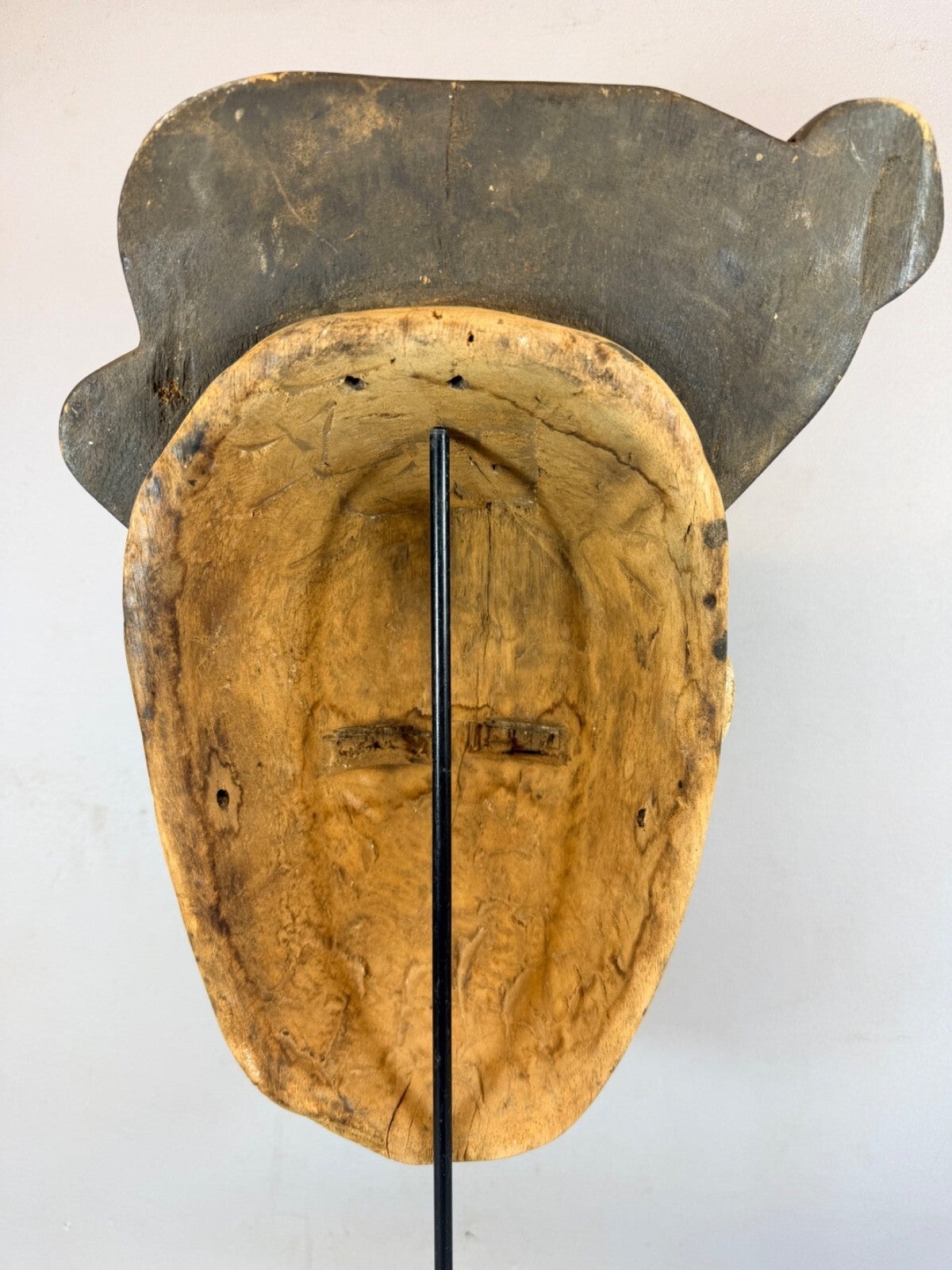
A carved wooden mask with polychrome finish from the Baule cultural region, Ivory Coast. The mask features a finely proportioned oval face with a narrow, elongated nose, a small closed mouth, and half-closed eyes. A particularly distinctive feature is the high, comb-like, profiled hairstyle. The surface has a striking finish in white, red, and black. The paintwork shows signs of partial wear and an irregular surface texture developed over time, with fine cracks and some loss of material. Attachment holes are arranged around the back. Traces of smoothing, wear, and contact are visible on the interior, particularly around the drill holes and on the projecting parts.
The Baule people is one of the largest ethnic group in the Côte d'Ivoire. They have played a central role in twentieth-century history of the country. They waged the longest war of resistance to French colonization of any West African people, and maintained their traditional objects and beliefs longer than many groups in such constant contact with European administrators, traders, and missionaries. The Baule belong to the Akan peoples who inhabit Ghana and Côte d'Ivoire.According to a legend, during the eighteenth century, the queen, Abla Poku, had to lead her people west to the shores of the Comoe, the land of Senufo. In order to cross the river, she sacrificed her own son. This sacrifice was the origin of the name Baule, for baouli means “the child has died.” Now about one million Baule occupy a part of the eastern Côte d'Ivoire between the Komoé and Bandama rivers that is both forest and savanna land. Baule society was characterized by extreme individualism, great tolerance, a deep aversion toward rigid political structures, and a lack of age classes, initiation, circumcision, priests, secret societies, or associations with hierarchical levels. Each village was independent from the others and made its own decisions under the presiding presence of a council of elders. Everyone participated in discussions, including slaves. It was an egalitarian society. The Baule compact villages are divided into wards, or quarters, and subdivided into family compounds of rectangular dwellings arranged around a courtyard; the compounds are usually aligned on either side of the main village street.