261001 - Large African Luba (Kiteya / Mboko) offering bowl - Congo.
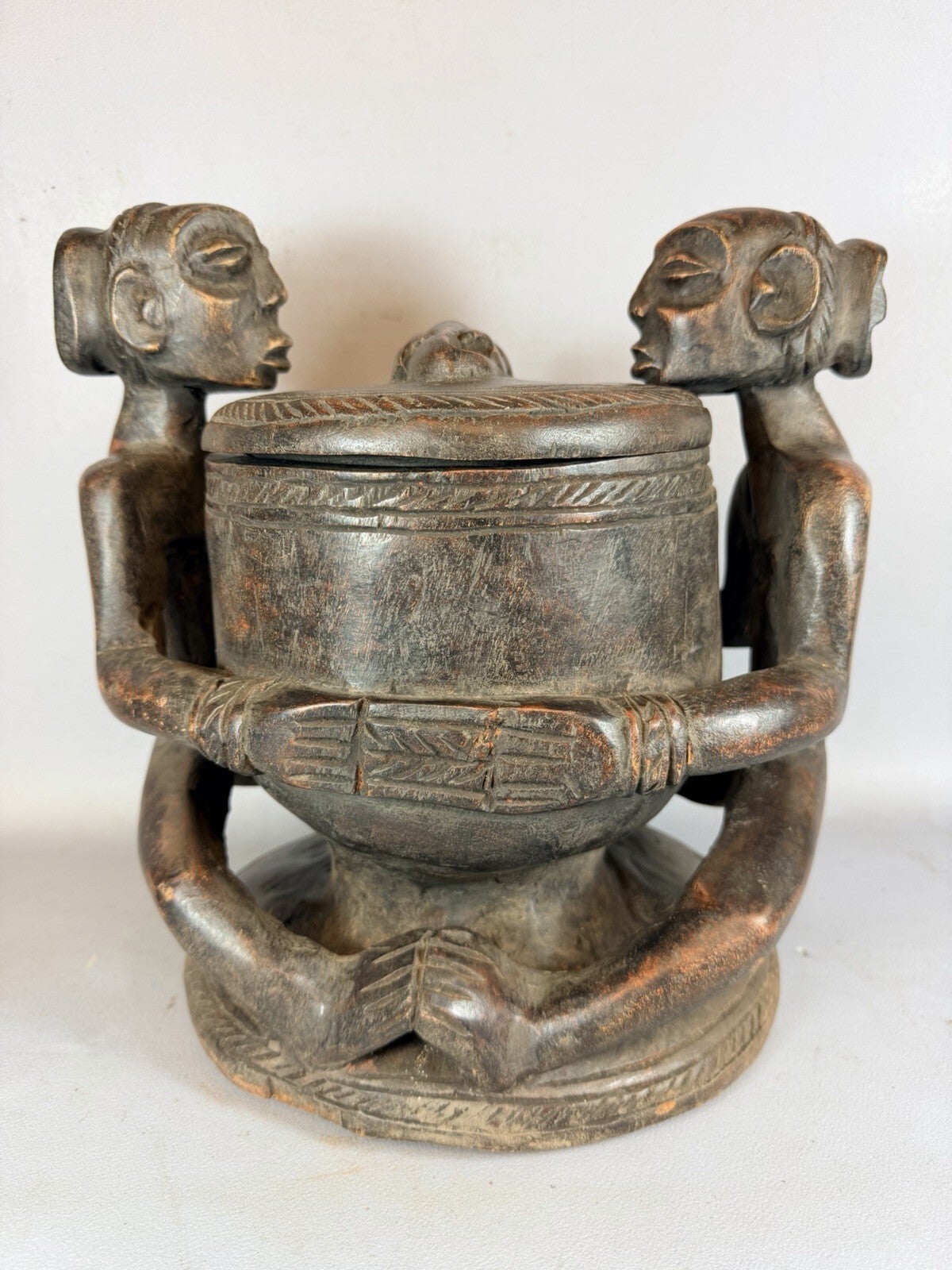
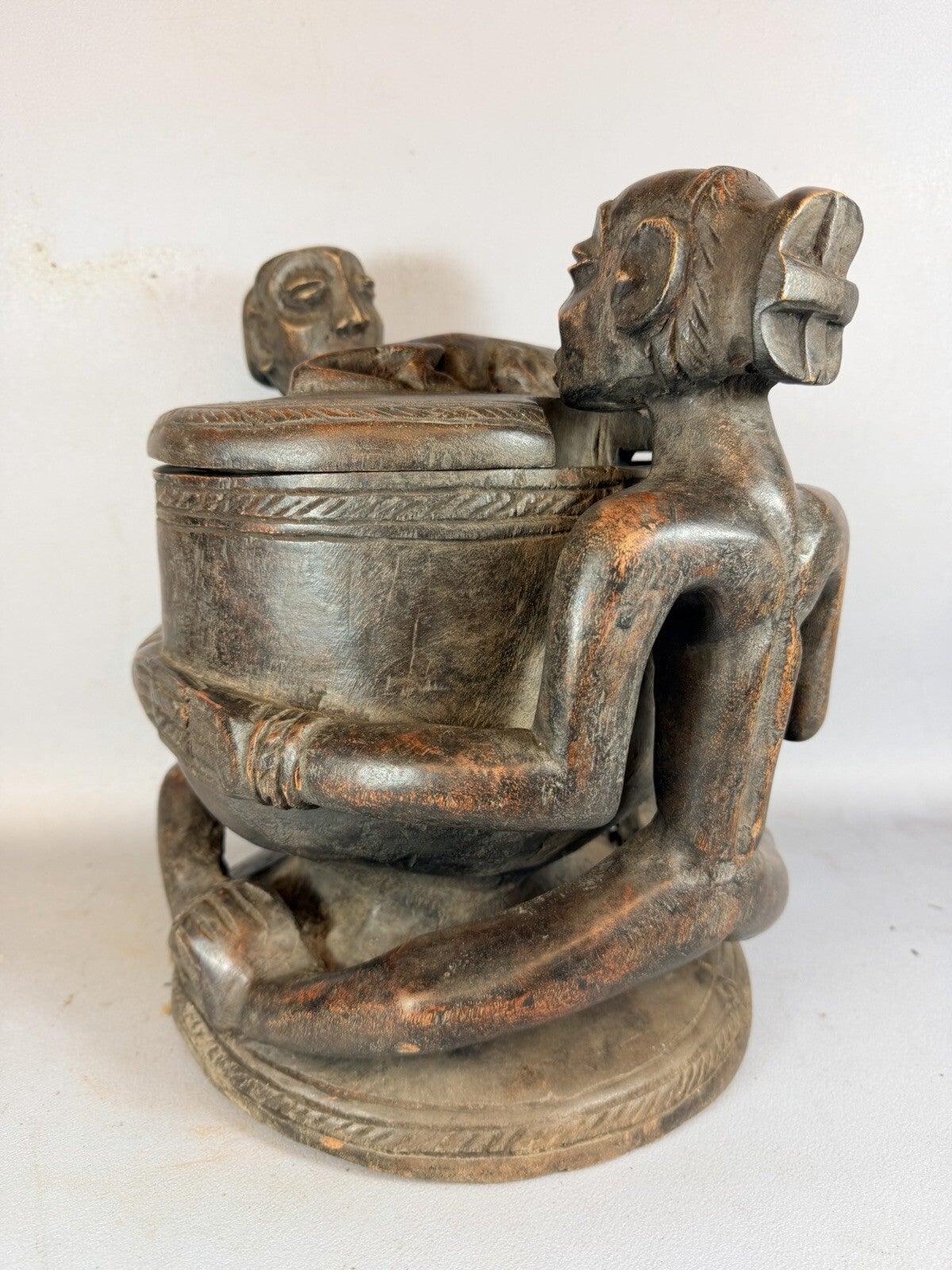
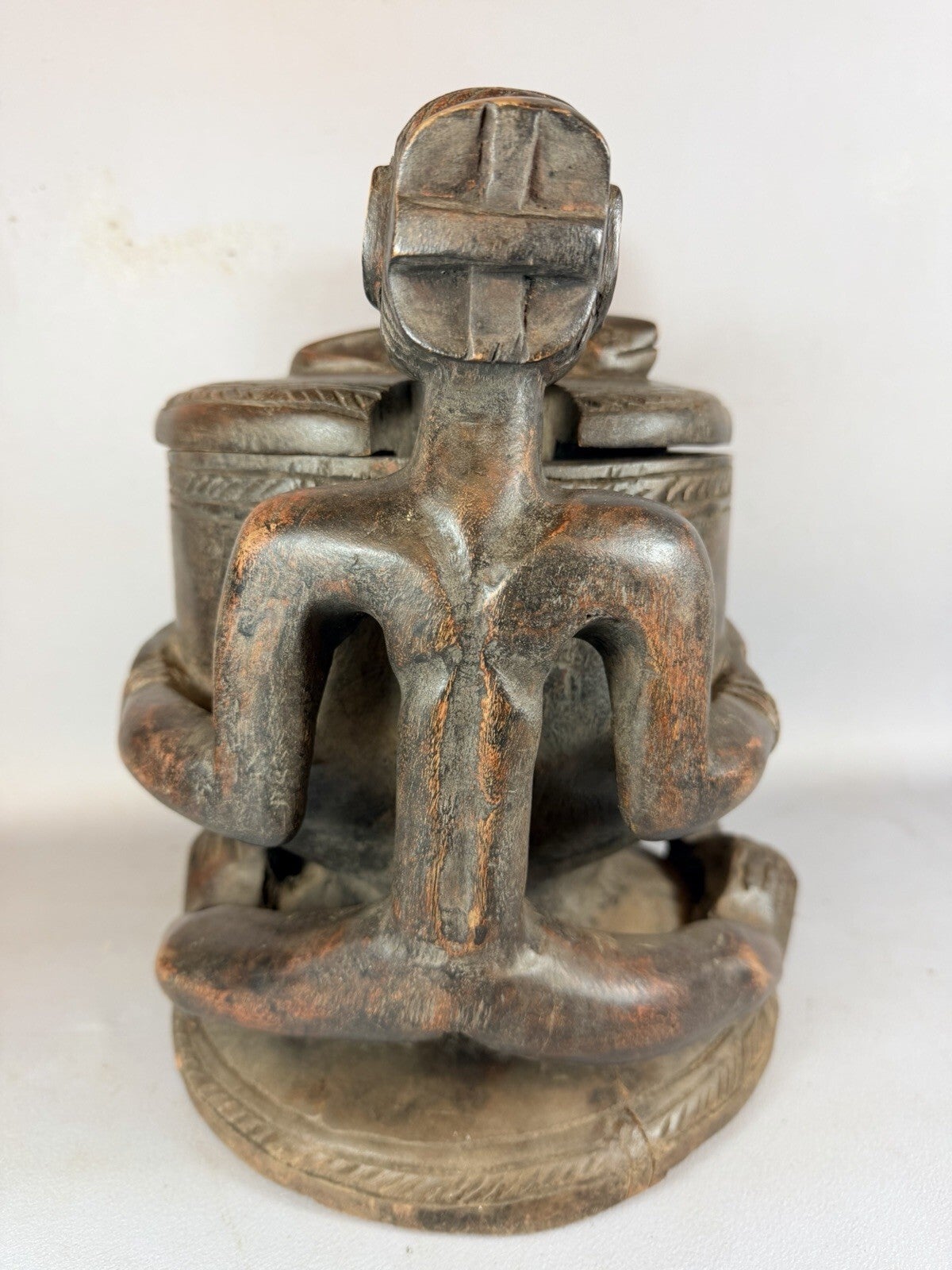
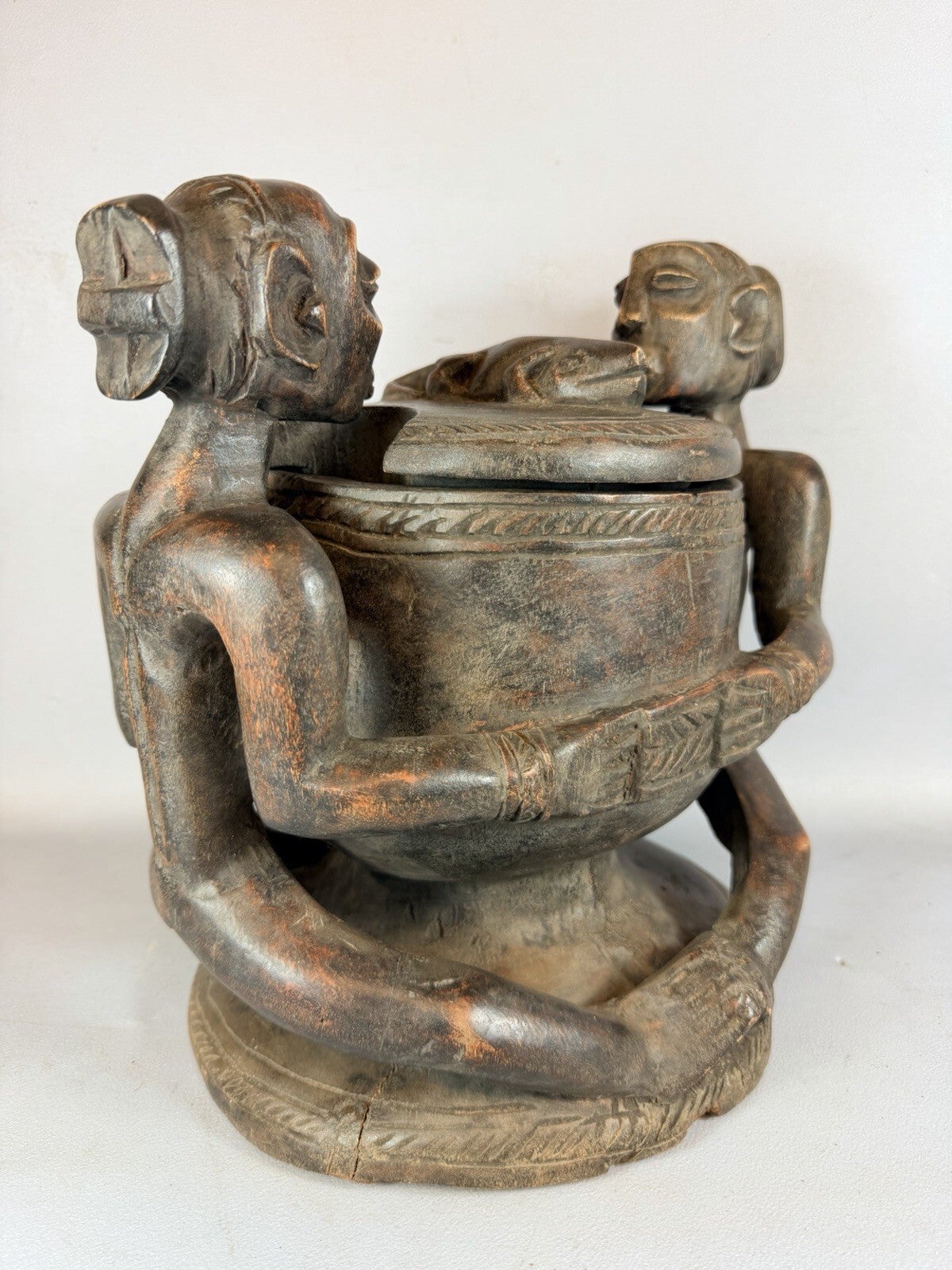
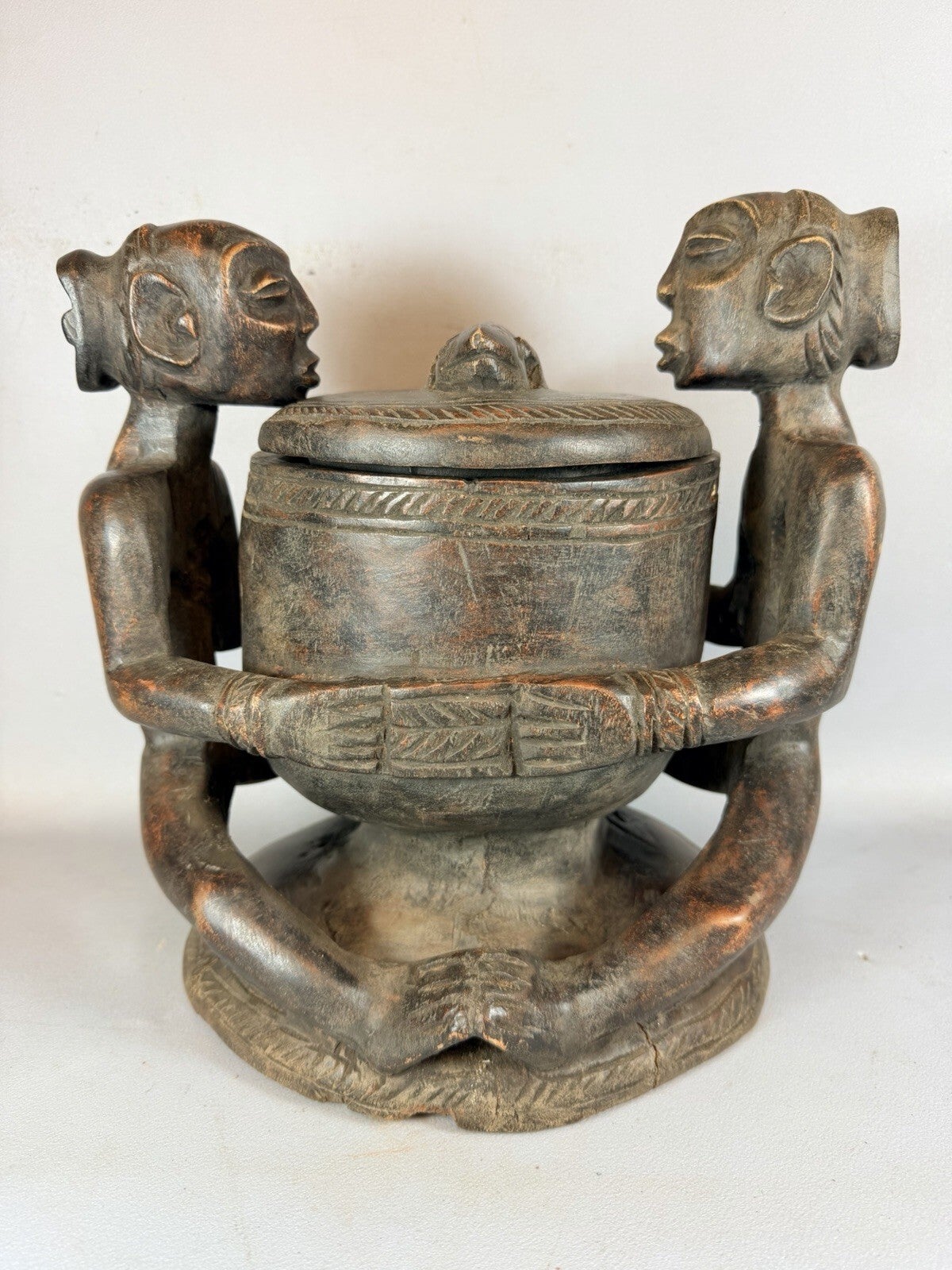
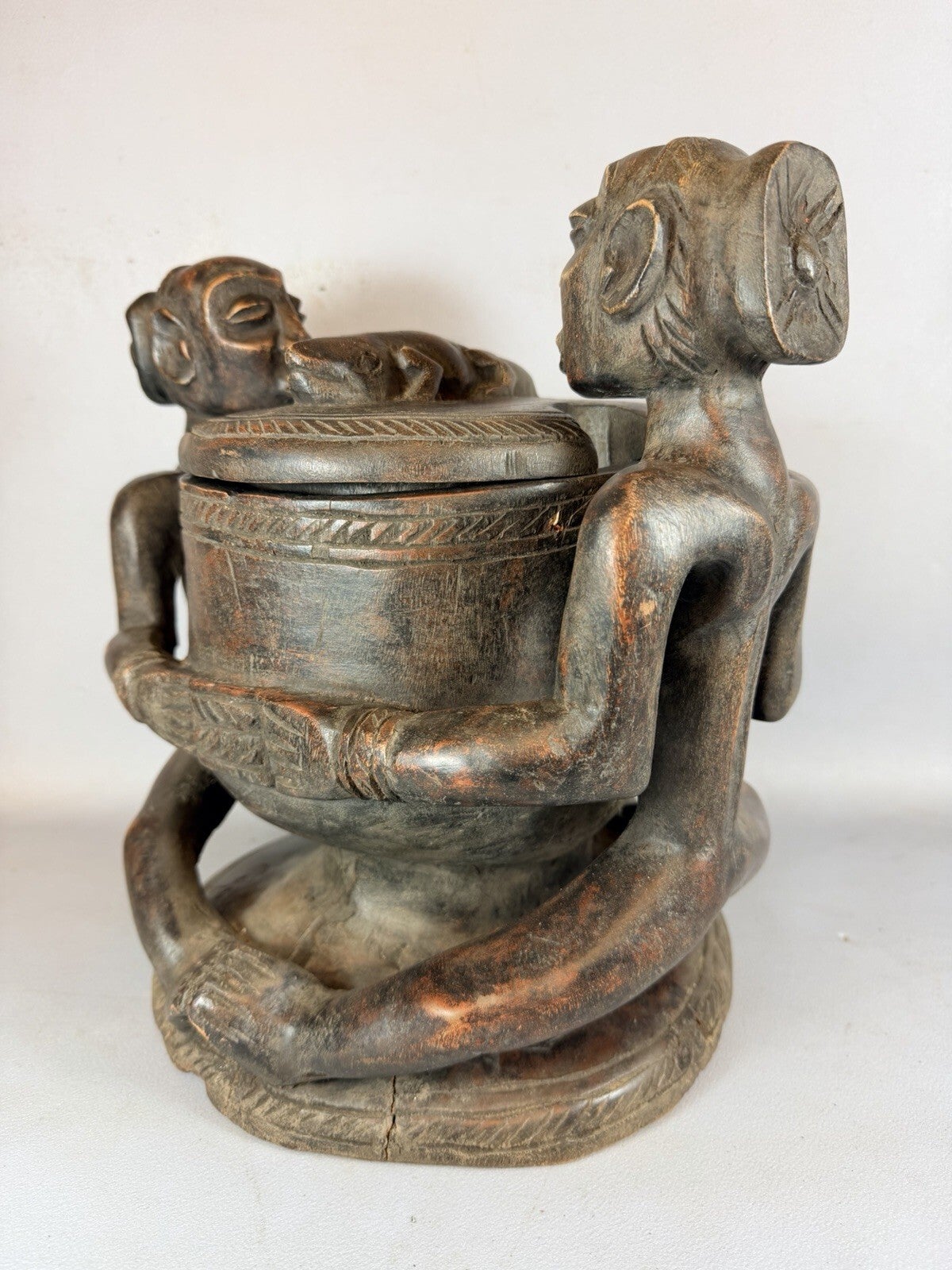
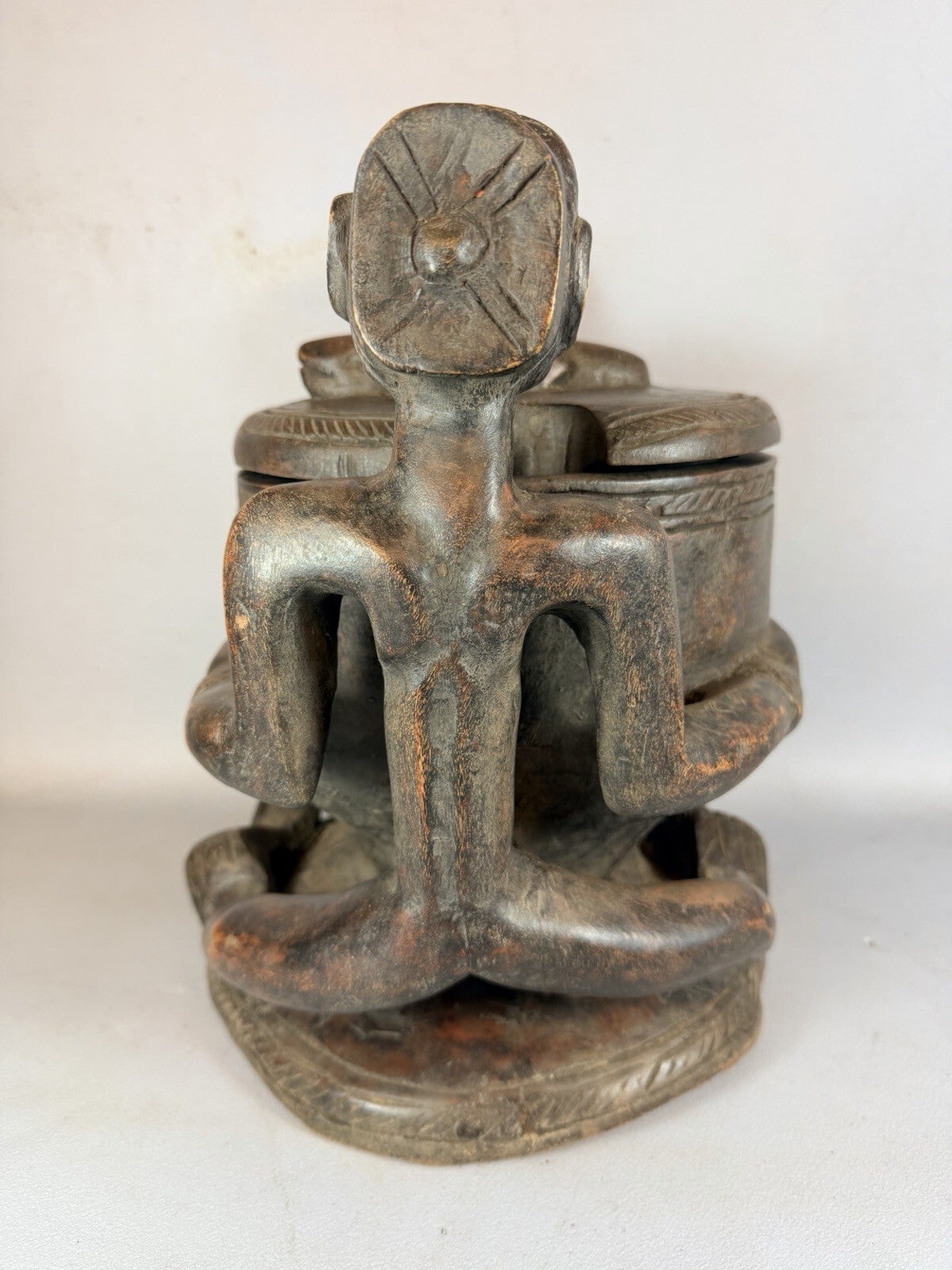
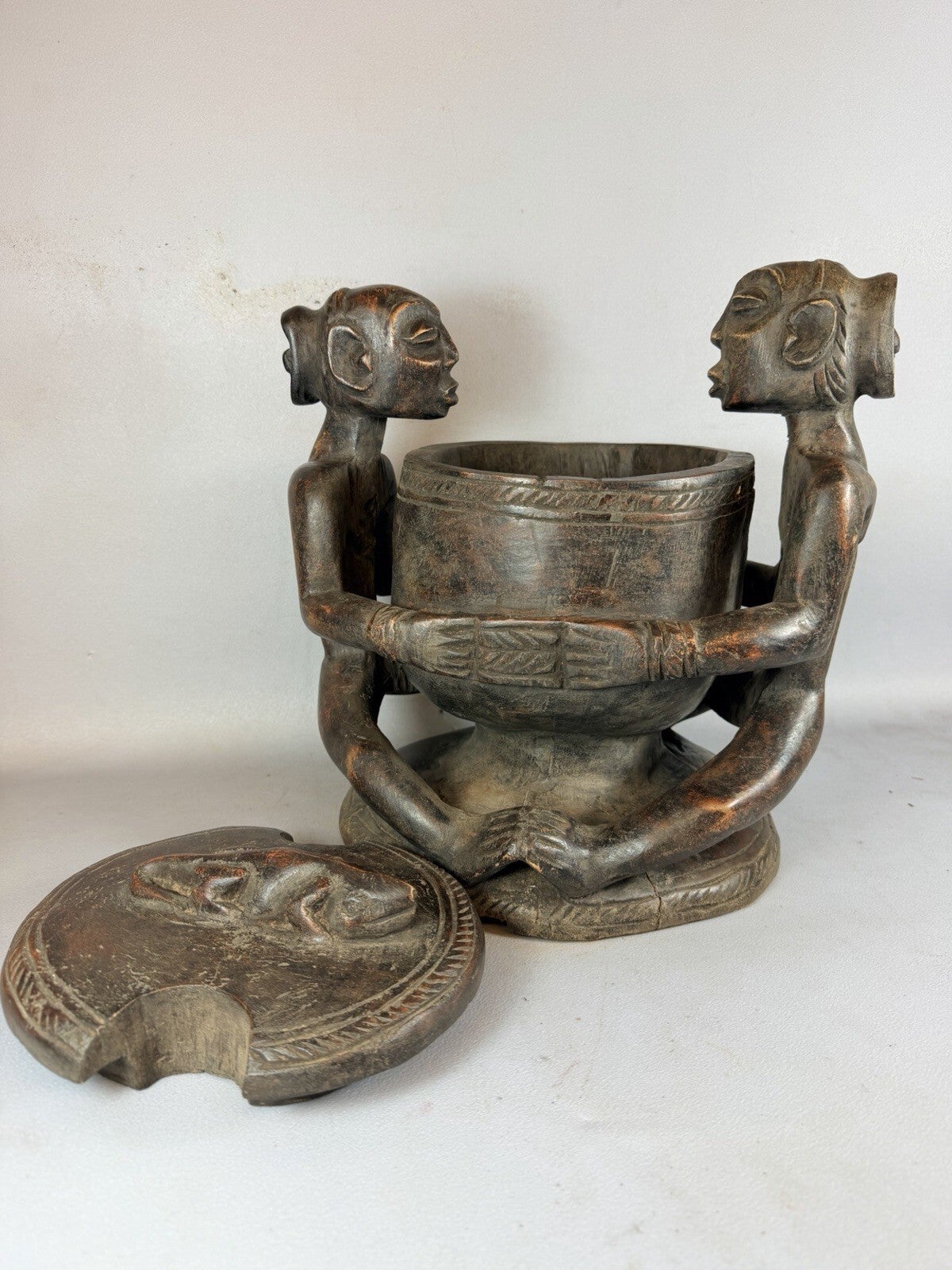
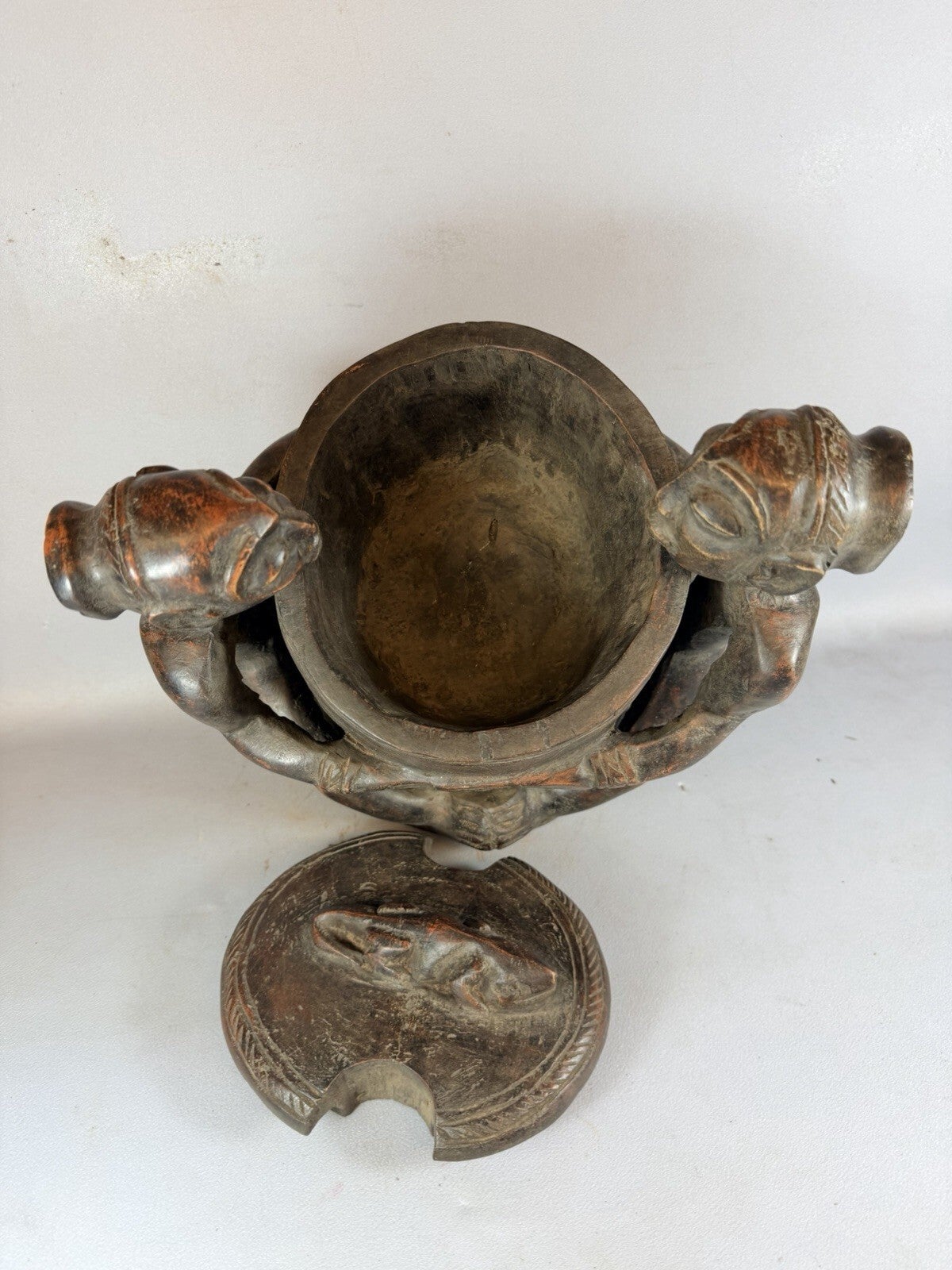
Large African Luba (Kiteya / Mboko) offering bowl - Congo.
Hand carved from a single piece wood.
Height: 30 cm high x 30 cm wide.
This Luba medicine bowl dates from the mid of the 20th century, with a certificate of authenticity.
Beautifully crafted mid-20th-century ceremonial medicine pot or offering bowl (Kiteya / Mboko) made in the distinct style of the Luba people from the Democratic Republic of the Congo.
The object is carved from a dense African hardwood. This type of carving is highly decorative and serves as an excellent mid-century example of tribal-inspired artistry from the region.
Condition: Good condition with normal signs of age, and light dryness lines in the wood (please see photos for an accurate impression).
Beautifully crafted mid-20th-century ceremonial medicine pot or offering bowl (Kiteya / Mboko) made in the distinct style of the Luba people from the Democratic Republic of the Congo.
The object is carved from a dense African hardwood. This type of carving is highly decorative and serves as an excellent mid-century example of tribal-inspired artistry from the region.
Condition: Good condition with normal signs of age, and light dryness lines in the wood (please see photos for an accurate impression).
Beautifully crafted mid-20th-century ceremonial medicine pot or offering bowl (Kiteya / Mboko) made in the distinct style of the Luba people from the Democratic Republic of the Congo.
The object is carved from a dense African hardwood. This type of carving is highly decorative and serves as an excellent mid-century example of tribal-inspired artistry from the region.
Condition: Good condition with normal signs of age, and light dryness lines in the wood (please see photos for an accurate impression).
Large African Luba (Kiteya / Mboko) offering bowl - Congo. the Luba cultural region (southeast part of the Democratic Republic of the Congo). Made of wood with carved geometric ornaments
The surface displays a dark, naturally formed patina with clear signs of use. Dark deposits are visible on the inside, indicating prolonged use as a ritual reliquary figurine. Age-related stress cracks are present in the base, the body, and the parts of the figurine; overall, the structure is stable.The Luba (Baluba in Chiluba) are a people from Central Africa. Their cradle is Katanga, more precisely the region of the Lubu River, hence the name (Baluba, meaning “the Lubas”). They were born from a secession of the Songhoy ethnic group, led by Ilunga Kalala, who executed the ancient King Kongolo, since venerated in the form of a python. In the 16th century they created a state, organized into decentralized chiefdoms, stretching from the Kasai River to Lake Tanganyika. The chiefdoms cover a small area without any real border, uniting a maximum of three villages.
The vast Luba territory, comprising the entire southeastern part of the DRC, as far as Tanganyika and Lake Mweru, is uniform as regards language and culture, but racially mixed. Although the history of the Luba people is one of violence and warfare, their artistic style is characterized by harmonious integration of organically related forms. The splendid artistic achievements of the Luba are due to a felicitous intermingling of different racial and cultural elements, and to the high standards prevailing at the court. Luba arts counts amongst the finest that Africa has to offer. Artists occupied a privileged place in the hierarchy. The Luba artist carried a ceremonial ax on his shoulder, an emblem of prestige and of dignity of his position. Some apprentices would be recruited from among the deformed, who could neither hunt nor be warriors and who were believed to have a close connection.