261105 Rare Mouse Oracles to predict and manipulate future events. - Iv. Coast.
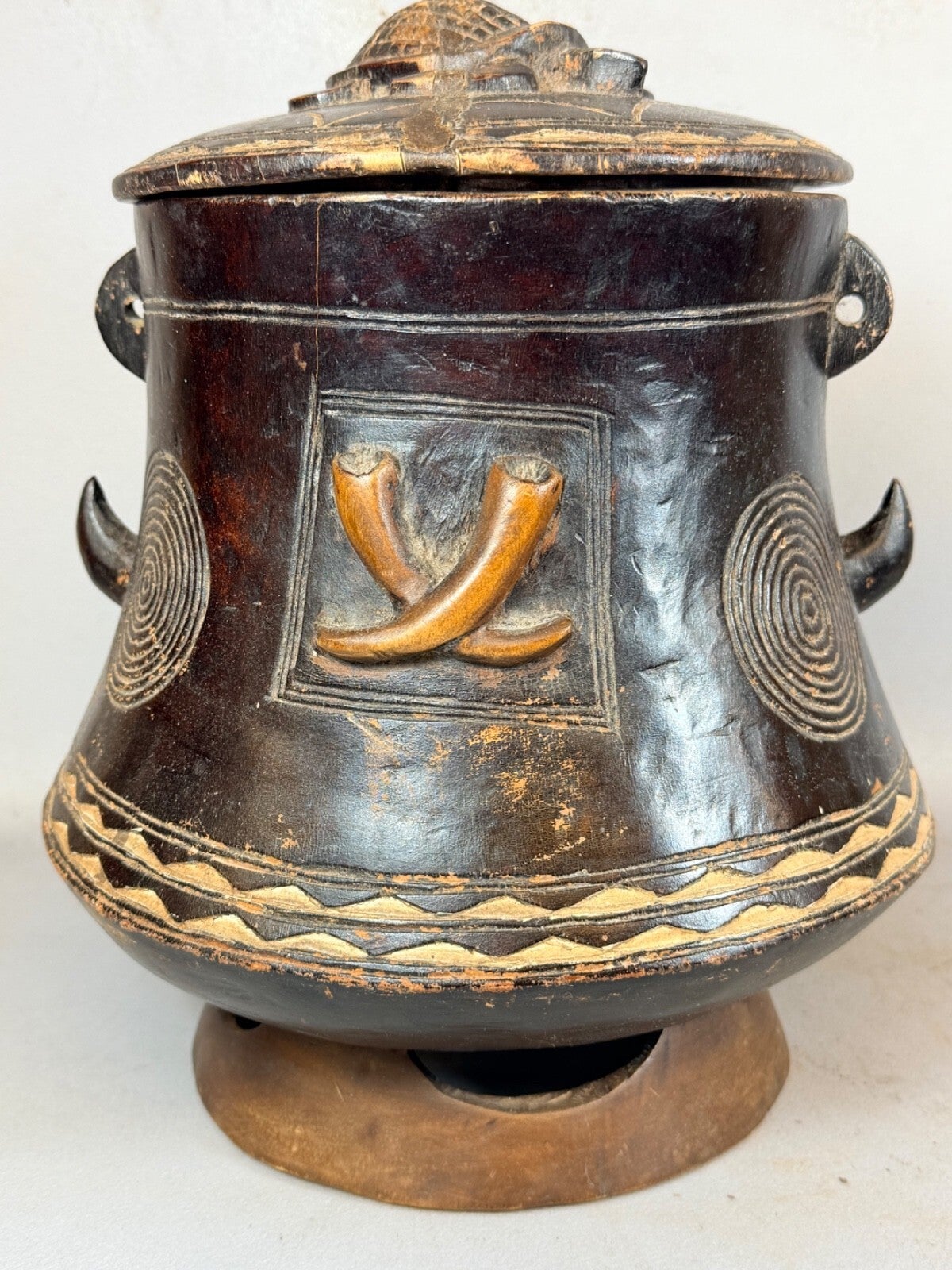
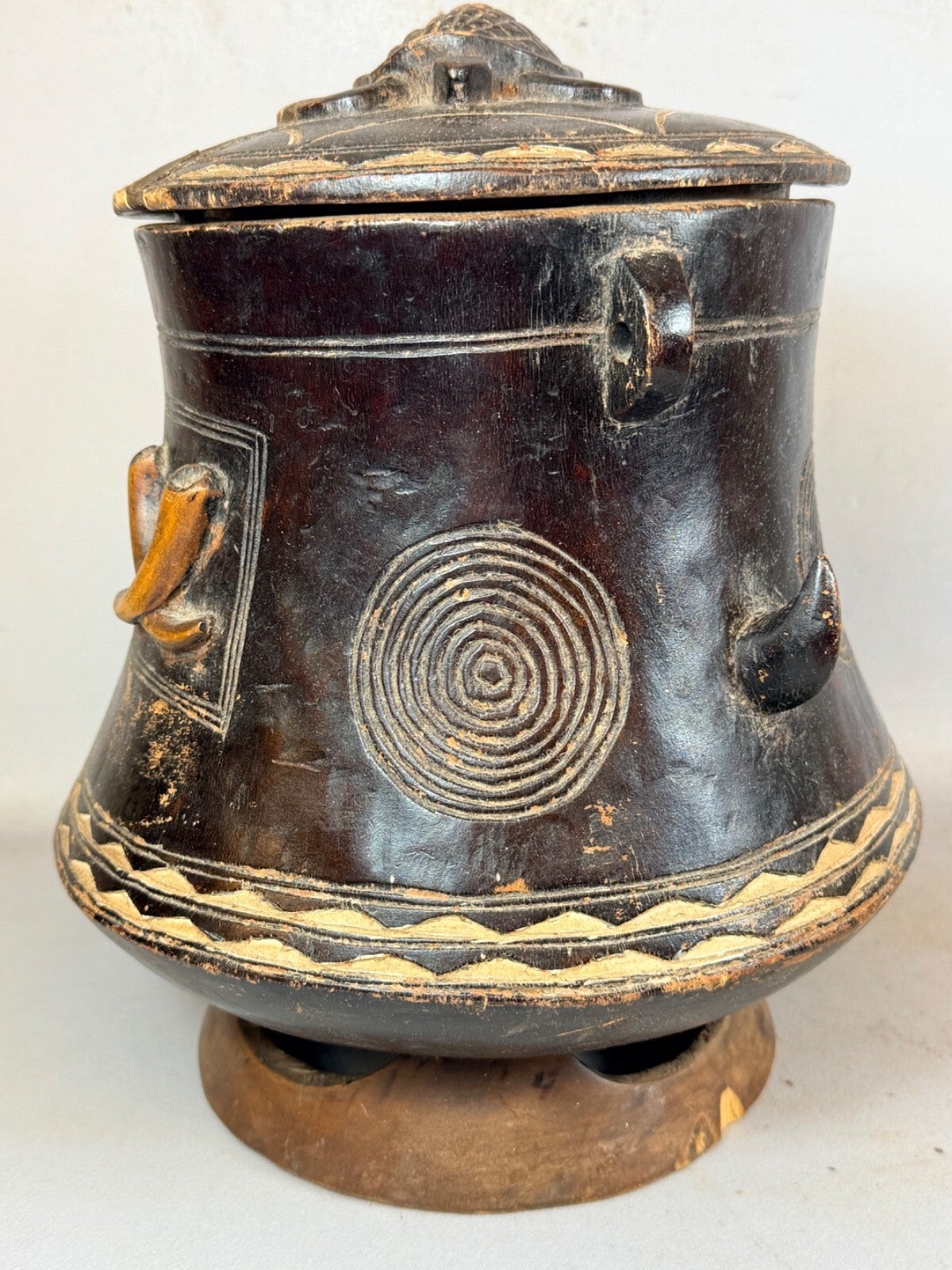
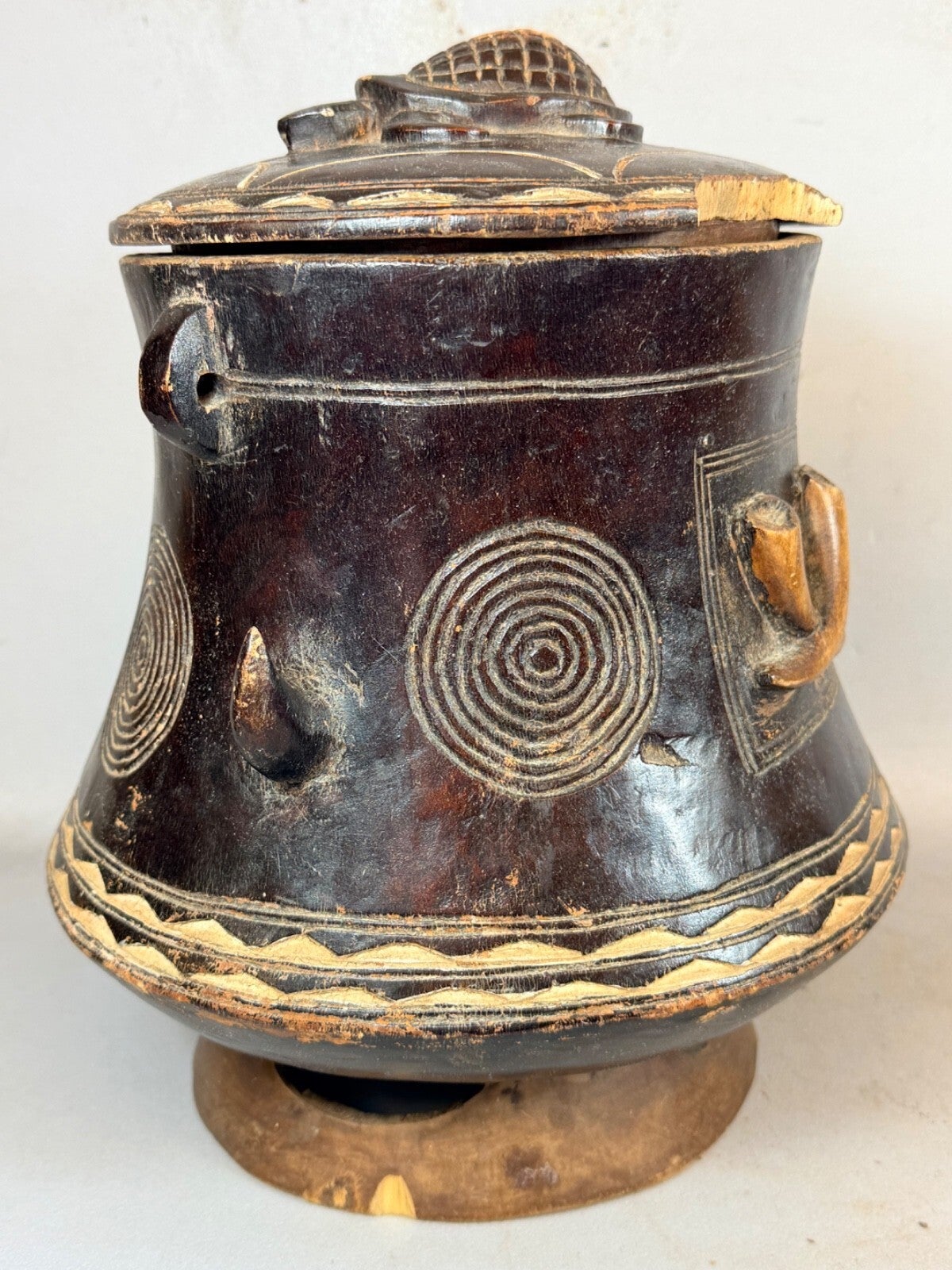
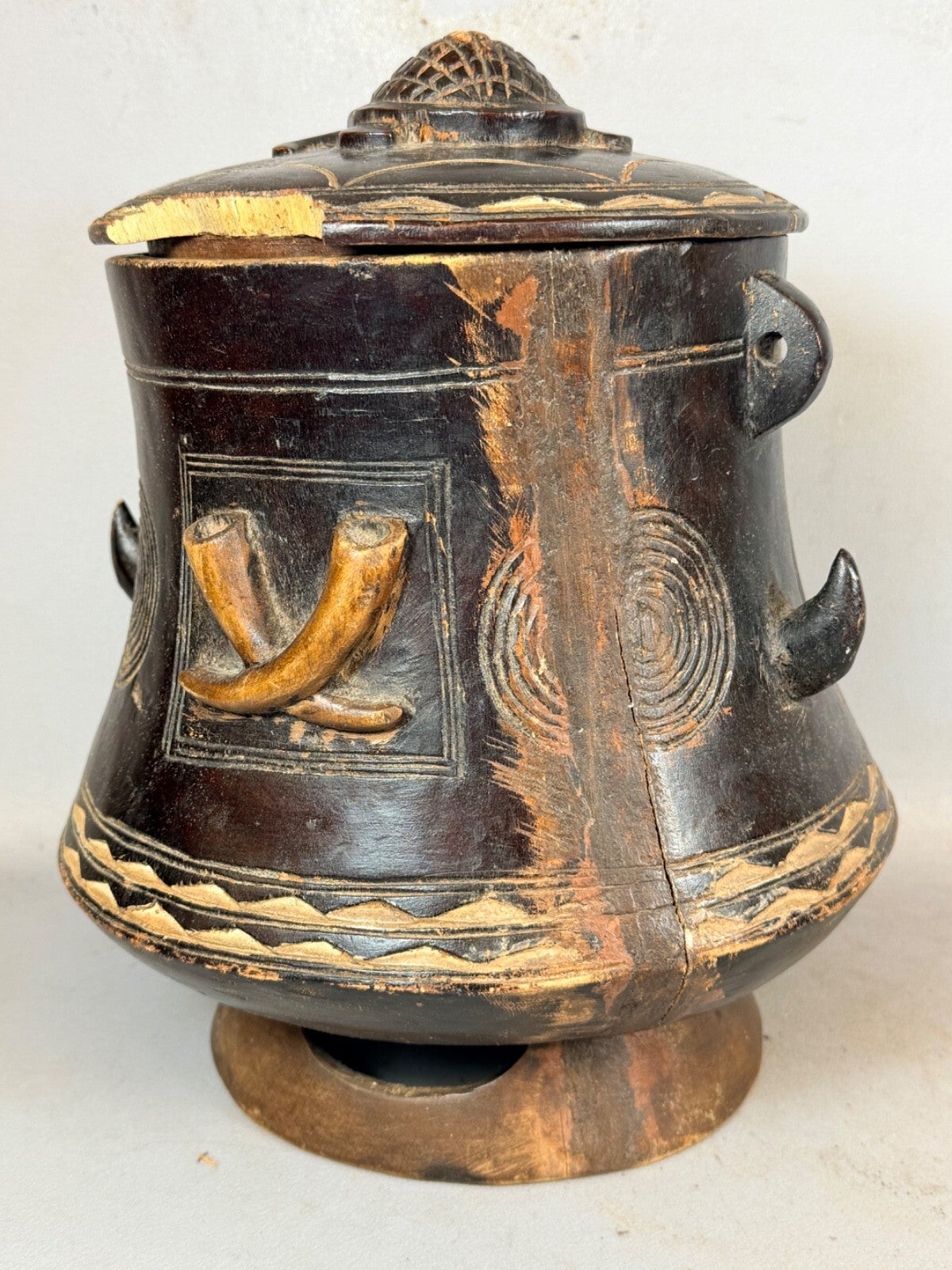
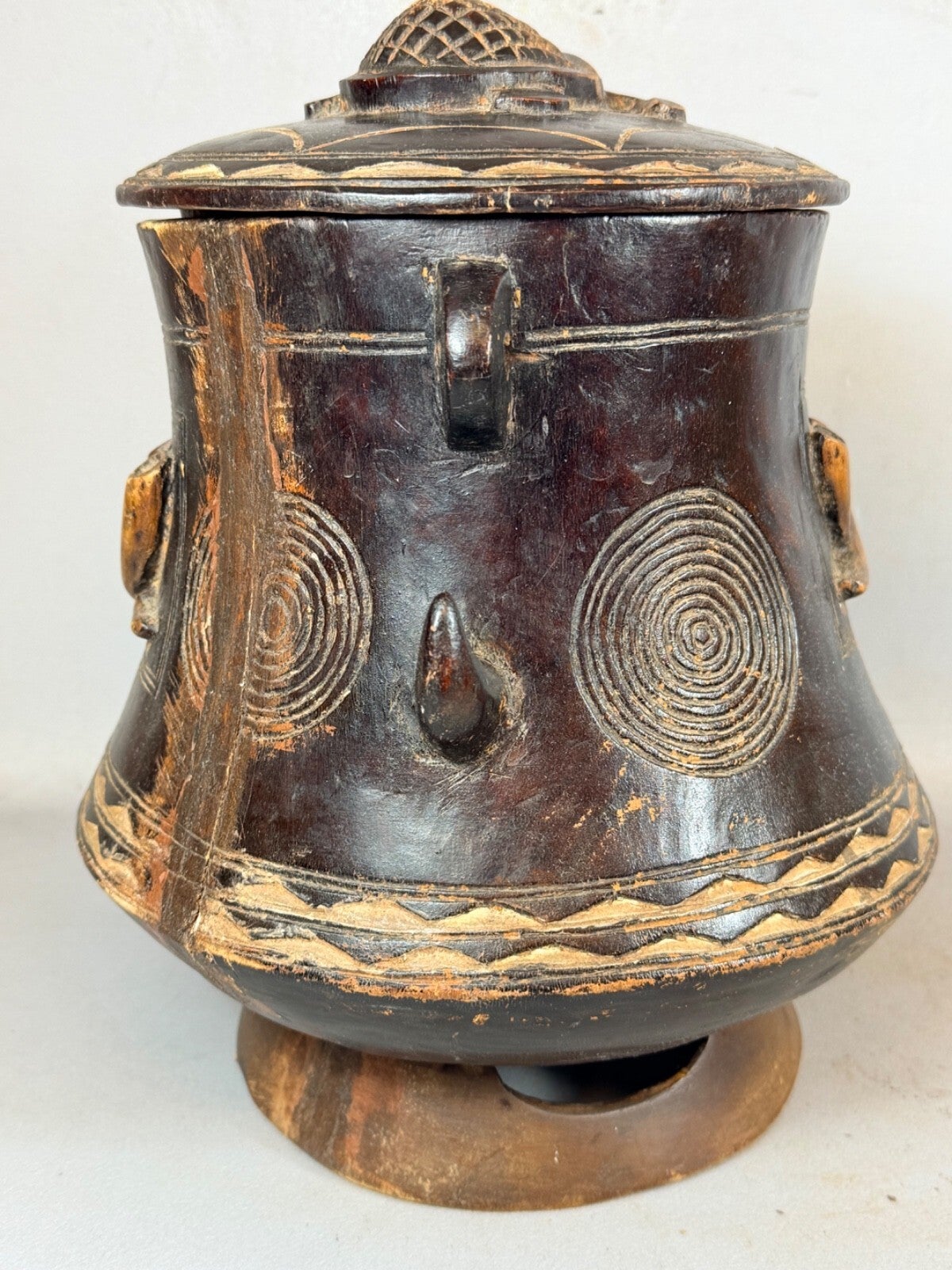
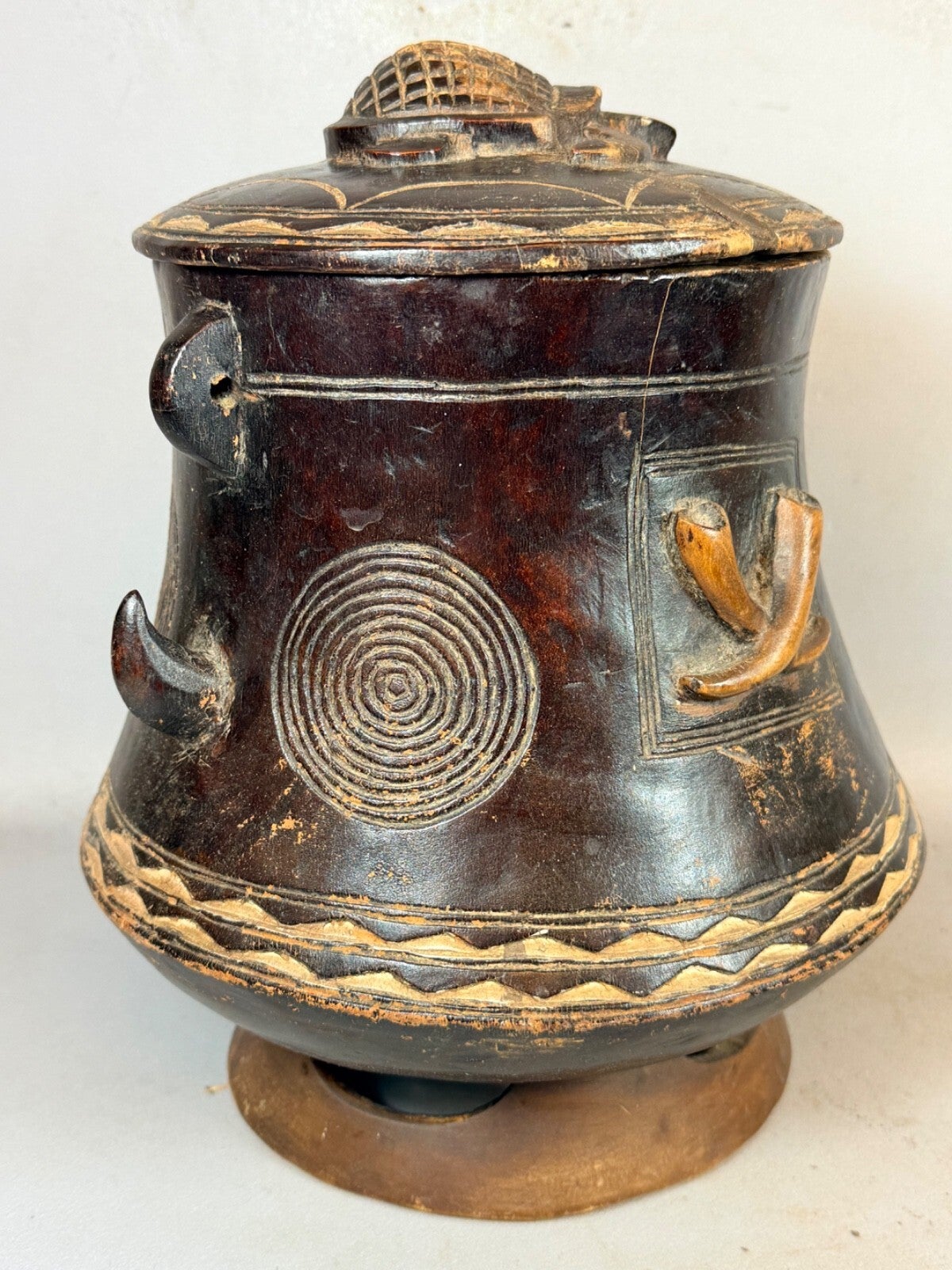
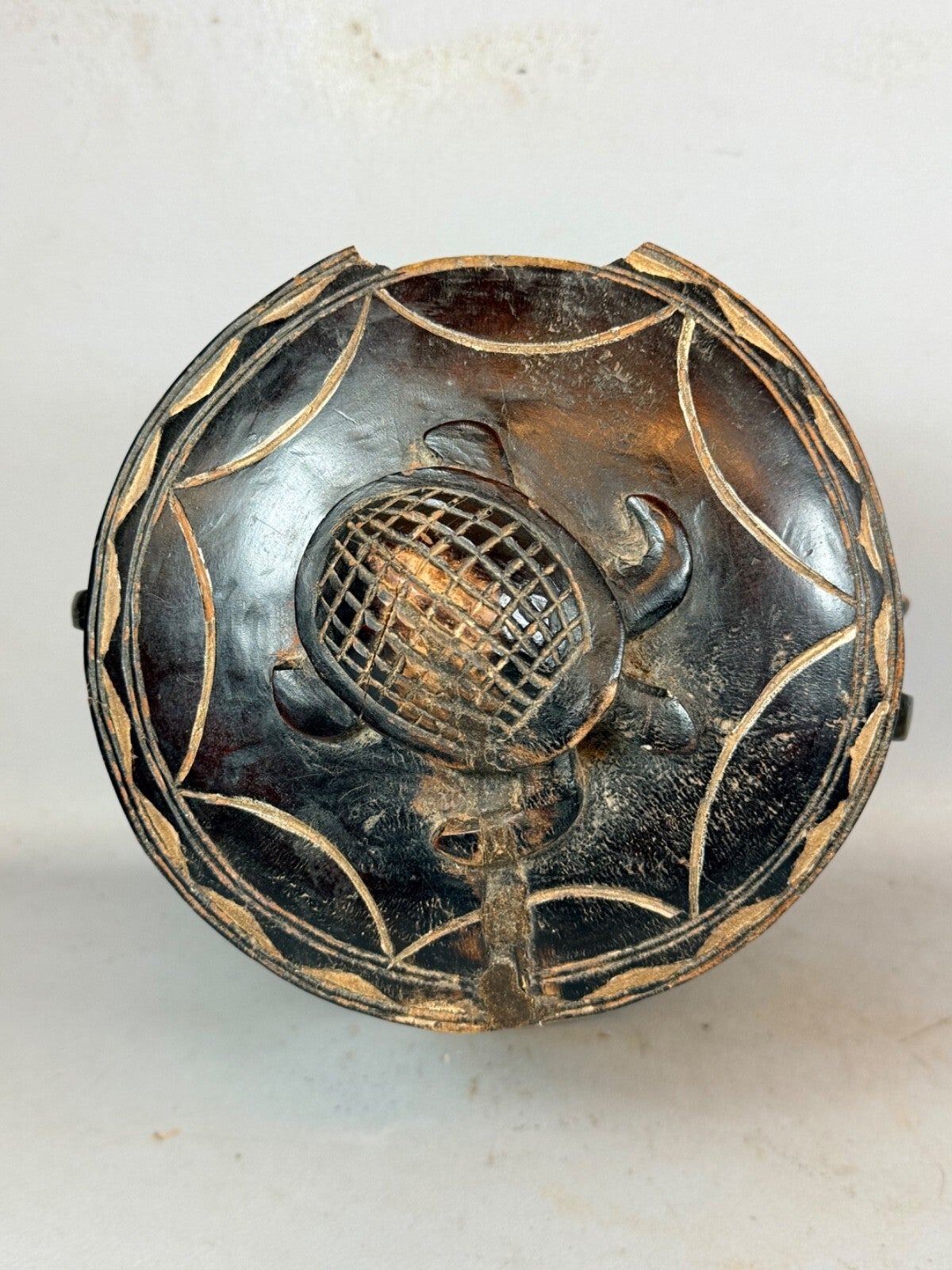
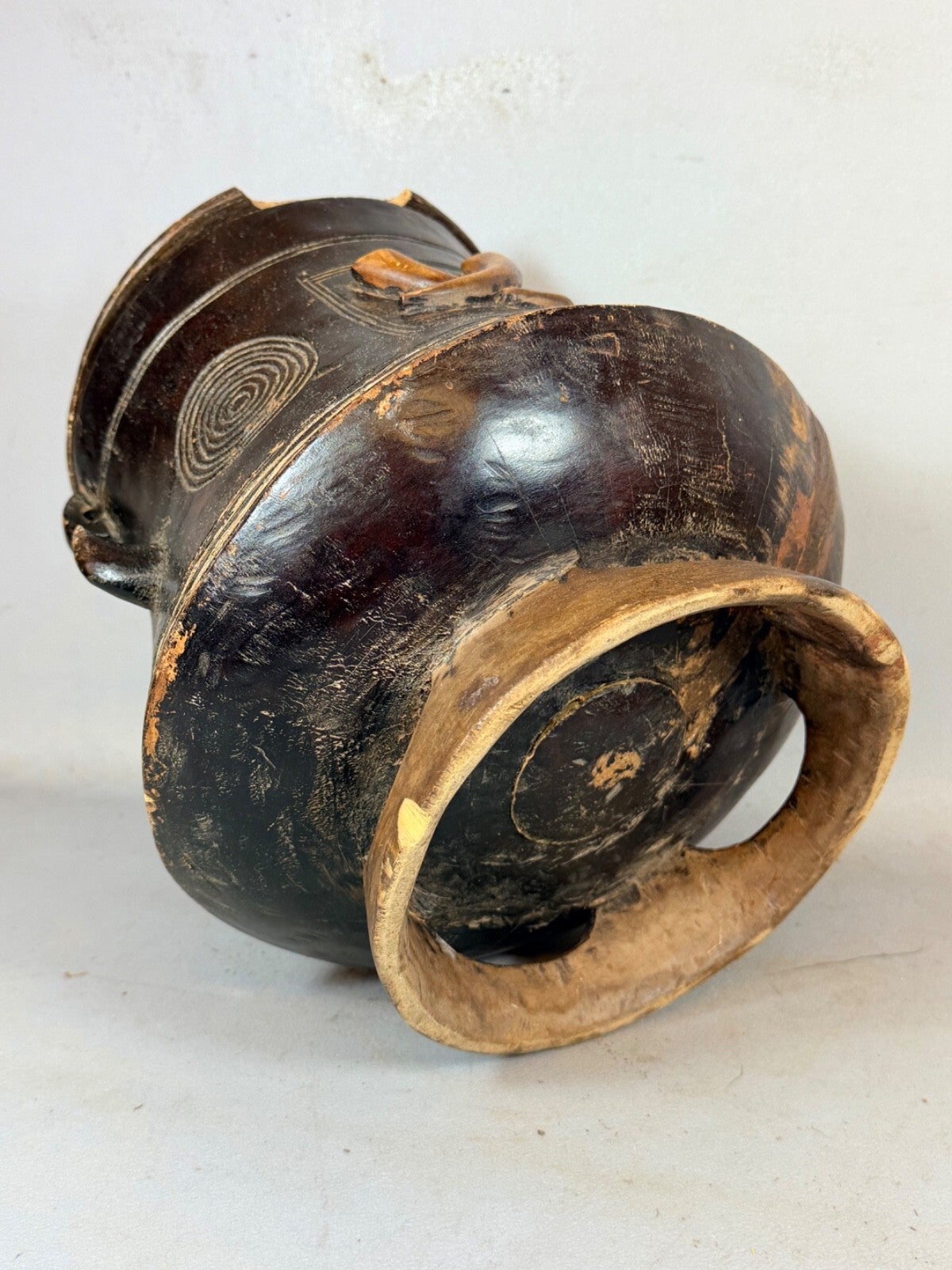
Iv. Coast: Extremely rare African Mouse Oracles to predict and manipulate future events.
Size: 24 cm wide and 29 cm high.
This Baule Mouse Oracles dated from the mid of the 20th century and comes with a certificate of authenticity.
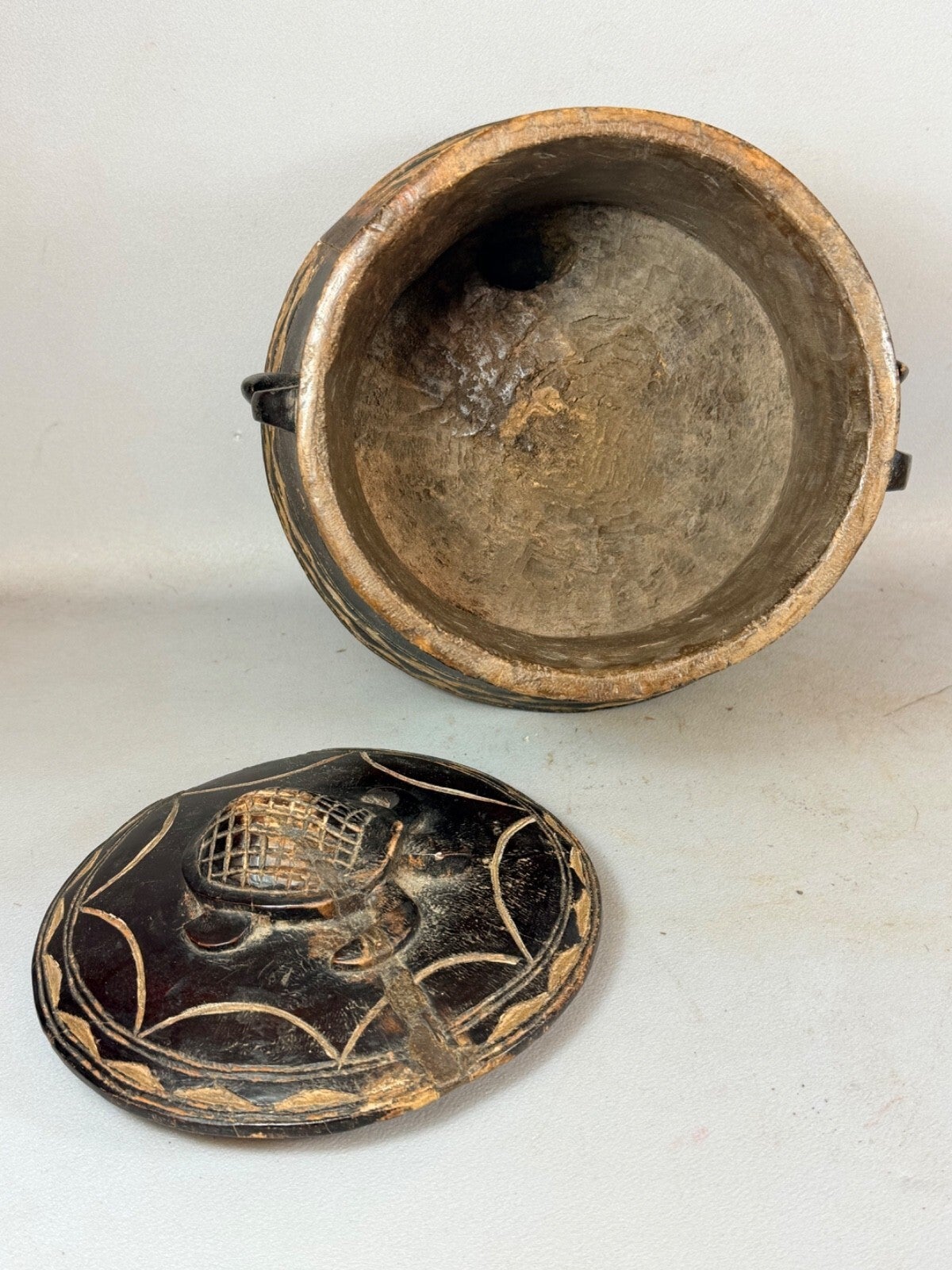
The Baule, a group belonging to the Akan peoples, migrated to the Ivory Coast over 200 years ago and adopted the sculpture and mask-making traditions of neighboring ethnic groups, such as the Guro, Senufo, and Yaure. As part of their divination practices, the Baule employed methods including "mouse oracles" to predict and influence future events. In this process, they would place food and a carefully arranged set of sticks into a container, which was then covered. A mouse would enter through an opening in the bottom to reach the food, inadvertently shifting the sticks in the process. Upon returning, the diviner would interpret the new arrangement of the sticks to gain insight into the prophecy.
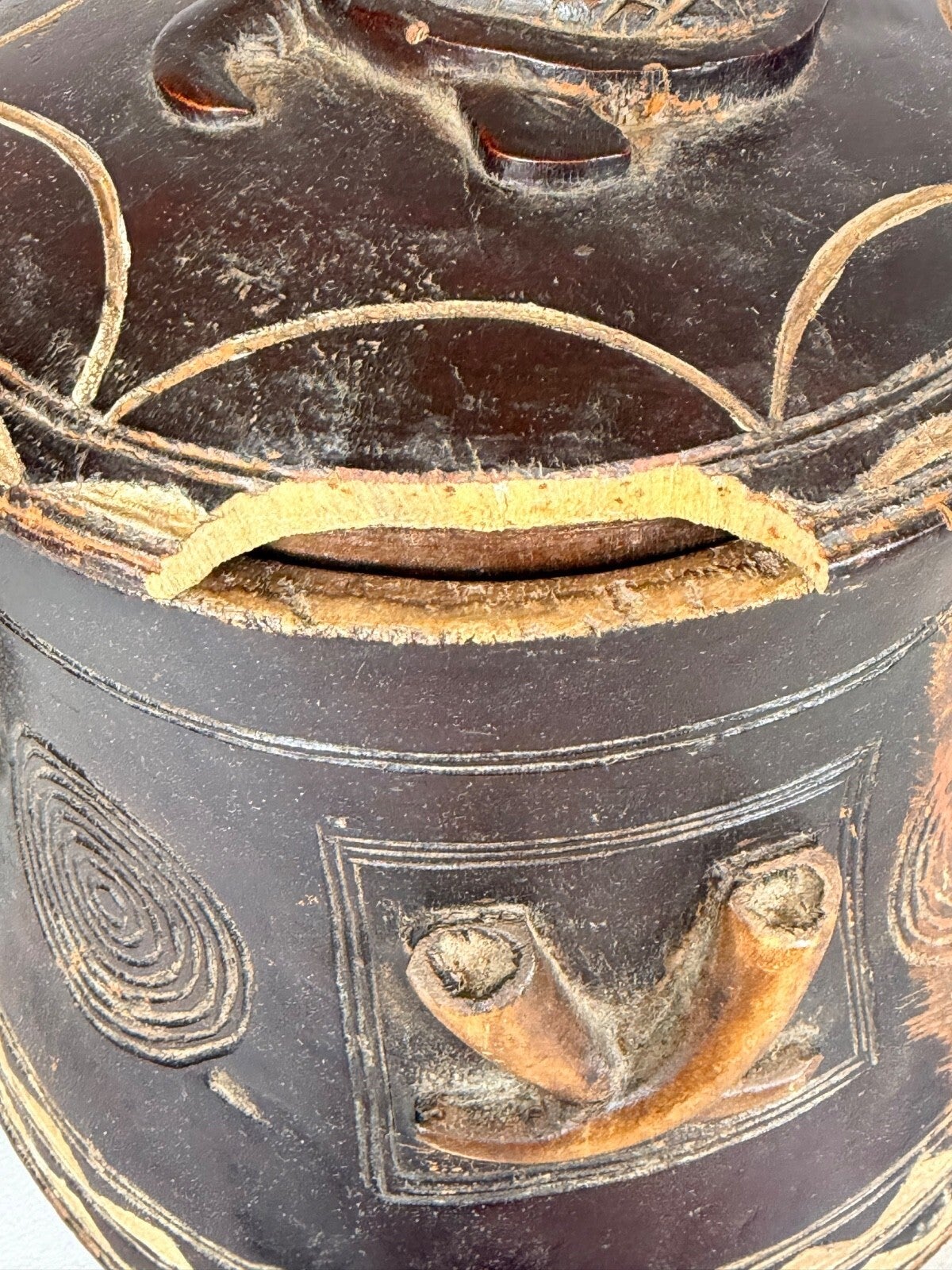
The missing section in the lid was intended for the divination sticks; there is also a small chip at the base and signs of wear. All details—including a shrinkage crack that was repaired in a traditional, tribal manner—are visible in the accompanying photographs.Among the Baule, various types of statues called Waka Sran (wooden people) are found. Two types are particularly common and documented: the Usu, which are said to embody the spirits of the scrub, and the Blolo Bian or Blolo Bla, which represent the husband in the afterlife. But these statues, too, are much less documented and are associated with social events such as the inauguration of a king or village leader, images of justice, and this statue of a blind companion, likely a family member.
The Baule people is one of the largest ethnic group in the Côte d'Ivoire. They have played a central role in twentieth-century history of the country. They waged the longest war of resistance to French colonization of any West African people, and maintained their traditional objects and beliefs longer than many groups in such constant contact with European administrators, traders, and missionaries. The Baule belong to the Akan peoples who inhabit Ghana and Côte d'Ivoire. According to a legend, during the eighteenth century, the queen, Abla Poku, had to lead her people west to the shores of the Comoe, the land of Senufo. In order to cross the river, she sacrificed her own son.
This sacrifice was the origin of the name Baule, for baouli means “the child has died.” Now about one million Baule occupy a part of the eastern Côte d'Ivoire between the Komoé and Bandama rivers that is both forest and savanna land. Baule society was characterized by extreme individualism, great tolerance, a deep aversion toward rigid political structures, and a lack of age classes, initiation, circumcision, priests, secret societies, or associations with hierarchical levels. Each village was independent from the others and made its own decisions under the presiding presence of a council of elders. Everyone participated in discussions, including slaves. It was an egalitarian society. The Baule compact villages are divided into wards, or quarters, and subdivided into family compounds of rectangular dwellings arranged around a courtyard; the compounds are usually aligned on either side of the main village street.